
Motivation
This initiative marks a decisive step in fib’s strategic vision to support and guide the civil engineering community through the digital transformation that is reshaping the construction industry worldwide. fib recognizes the critical importance of this moment and reaffirms its commitment to proactively guide this transition by initiating the Special Activity Group on AI and Digitalization.
Scope and objective of technical work to achieve its goal, the SAG will focus on three objectives:
The SAG will operate through three dedicated tasks groups, ensuring that AI integration is addressed both at the strategic and operational levels, with a strong foundation in ethical responsibility and human oversight.
The SAG will carry out a series of targeted activities aimed at guiding the responsible integration of AI into structural engineering. This includes defining a long-term vision for AI’s role in the field, conducting sector-wide surveys to identify current challenges and opportunities, and developing data governance frameworks to ensure trustworthy deployment. A central goal is the creation of an AI knowledge platform that builds on fib’s technical heritage, making expertise more accessible and usable. These efforts will reinforce fib’s commitment to global knowledge exchange, technical excellence, and innovation in structural concrete.
As structural engineering enters the age of digital intelligence, fib invites researchers, practitioners, industry leaders, and stakeholders worldwide to join this initiative and help shape the future of structural concrete.
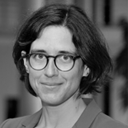
Sylvia Kessler

TBD
| First name | Last name | Country | Affiliation |
|---|---|---|---|
| Fernández-Ordóñez | David | Switzerland | fib |
| Kessler | Sylvia | Germany | Helmut-Schmidt-University/ University of the Federal Armed Forces Hamburg |
| Huber | Patrick | Austria | Vienna University of Technology |
| koç | Arman | Turkey | |
| Preinstorfer | Philipp | Austria | Technische Universität Wien |
| Vorwagner | Alois | Austria | AIT- Austrian Institute of Technology |
| Zandi | Kamyab | Canada | TIMEZYX, Canada | Sweden |
| Moro | Fabrizio | Switzerland | |
| Ghiassi | Bahman | United Kingdom | University of Birmingham / School of Engineering |
| Koehncke | Martin | Germany | Helmut-Schmidt-University |
| Marano | Giuseppe Carlo | Italy | |
| Tošić | Nikola | Spain | Universitat Politècnica de Catalunya |
| Rousakis | Theodoros | Greece | Democritus University of Thrace |
| Sas | Gabriel | Sweden | Luleå University of Technology |
| Andrade | Carmen | Spain | Centre Internacional de Mètodes Numèrics en l’Ènginyeria (CIMNE) |
| Noroozinejad | Ehsan | Australia | Western Sydney University |
| Triantafillou | Thanasis | Greece | University of Patras |
| Fernandes Paula | Raquel | Portugal | STAP, S.A. |
| Ramos | António | Portugal | NOVA School of Science &Technology |
| Spyridis | Panagiotis | Germany | |
| Coric | Vedad | Sweden | Luleå University of Technology |
| Gao | Yuqing | China | Tongji University |
| Strauss | Alfred | Austria | BOKU University |
| Zhang | Jiao-Long | China | Tongji University |
| Yu | Karin | Switzerland | ETH Zurich |
| Sisodiya | Chetan Singh | India | |
| Kyriakides | Nicholas | Cyprus | Cyprus University of Technology |
| Maslovsky | Daniel | Czech Republic | |
| Jedrzejewska | Agnieszka | Poland | Silesian University of Technology |
| Bigaj-van Vliet | Agnieszka | Netherlands | TNO - Buildings, Infrastructures and Maritime |
| Bakhoum | Mourad | Egypt | ACE Consulting Engineers (Moharram - Bakhoum) |
| Dias-da-Costa | Daniel | Australia | The Univ. of Sydney |
| Kuhn | Sophia | Switzerland | ETH Zurich |
| Ferrara | Liberato | Italy | Politecnico di Milano |
| Mariniello | Giulio | Italy | University of Naples - Federico II |
| Asprone | Domenico | Italy | University of Naples Federico II |
| Jiang | Chao | China | Tongji University |
| Rodrigues | Hugo | Portugal | University of Aveiro |
| Dogan | Gamze | Turkey | Konya Technical University |
| Chacón | Rolando | Spain | |
| Wan-Wendner | Roman | Belgium | Ghent University |
| Kryzhanovskyi | Vitalii | Germany | TU Dortmund |
| Komarizadehasl | Seyedmilad | Spain | Dept. of Civil and Environmental Engineering, Universitat Politècnica de Catalunya (UPC), BarcelonaTech. C/ Jordi Girona 1-3, 08034, Barcelona, Spain. |
| Azenha | Miguel | Portugal | Civil UMinho - Universidade do Minho |
| Leonardi | Maria Laura | Portugal | University of Minho |
| Guadagnini | Maurizio | United Kingdom | University of Sheffield |
| Al-Ani | Moustafa | New Zealand | |
| Mleczko | Wojciech | Poland | |
| Tao | Yaxin | China | Tongji University |
| Vasilic | Ksenija | Germany | German Society for Concrete and Construction Technology |
| Kang | Chongjie | Germany | |
| Song | Xiaoli | Germany | |
| Castro quispe | Viviana | Italy | POLITECNICO DI MILANO |
| Unger | Jörg | Germany | Bundesanstalt für Materialforschung und -prüfung, BAM |
| Decan | Geoffrey | Spain | |
| Simwanda | Lenganji | Czech Republic | Czech Technical University in Prague |
| Chatzi | Eleni | Switzerland | ETH Zurich |
| Biró | András | Hungary | Budapest University of Technology and Economics |
| Akrami | Hammam | Morocco | Civil Engineering and Environment Laboratory |
| Mediel | Diego | Germany | University of the Bundeswehr Munich |
| Mohammadi | Amirhossein | Portugal | Universidade de Minho |
- TG.SAG2.1 - Ethical AI Consideration
- TG.SAG2.2 - fib Large Language Model
- TG.SAG2.3 - Data Foundations and Ontologies
TG.SAG2.1 - fib Ethical AI Consideration
The fib recognizes that artificial intelligence (AI) and digital technologies are rapidly transforming structural concrete engineering. While these technologies offer significant opportunities to enhance efficiency, insight, and decision support, they also raise fundamental questions related to (1) professional responsibility, ethics, and accountability as well as (2) integrity, provenance, and governance of engineering knowledge.
The main objectives can be attributed to two main pillars:
(1) Responsibility and judgement
- Clarify the role and responsibility of engineers when using AI-based tools in design, assessment, construction, monitoring, and asset management of concrete structures.
- Identify ethical risks and challenges associated with AI adoption, including overreliance on automated outputs, lack of transparency, bias, explainability, and accountability gaps.
- Define the boundaries between AI-supported decision-making and human judgment, ensuring that final responsibility remains with qualified professionals.
- Promote awareness that AI tools, particularly generative AI, should complement - not replace - engineering expertise, critical thinking, and professional ethics.
- Develop guidance on human-in-the-loop and human-on-the-loop approaches suitable for structural concrete engineering applications.
- Align ethical AI use with existing engineering codes of ethics, professional standards, and fib’s mission and values.
(2) Knowledge integrity and stewardship
- Address ethical issues related to the use of AI in accessing, processing, and disseminating fib knowledge and technical documents, including intellectual property, copyright, provenance, attribution, and preservation of the normative intent of standards and recommendations.
- Promote principles for transparency, traceability, and governance of AI-supported engineering tools, ensuring that sources, assumptions, limitations, and applicability domains are clearly communicated to users.
Sylvia Kessler

Moustafa Al Ani
| First name | Last name | Country | Affiliation |
|---|---|---|---|
| Kessler | Sylvia | Germany | Helmut-Schmidt-University/ University of the Federal Armed Forces Hamburg |
| Fernández-Ordóñez | David | Switzerland | fib |
| Tošić | Nikola | Spain | Universitat Politècnica de Catalunya |
| Jedrzejewska | Agnieszka | Poland | Silesian University of Technology |
| Asprone | Domenico | Italy | University of Naples Federico II |
| Rodrigues | Hugo | Portugal | University of Aveiro |
| koç | Arman | Turkey | |
| Rousakis | Theodoros | Greece | Democritus University of Thrace |
| Al-Ani | Moustafa | New Zealand | |
| Noroozinejad | Ehsan | Australia | Western Sydney University |
| Jiang | Chao | China | Tongji University |
| Triantafillou | Thanasis | Greece | University of Patras |
| Andrade | Carmen | Spain | Centre Internacional de Mètodes Numèrics en l’Ènginyeria (CIMNE) |
| Bakhoum | Mourad | Egypt | ACE Consulting Engineers (Moharram - Bakhoum) |
| Mariniello | Giulio | Italy | University of Naples - Federico II |
| Decan | Geoffrey | Spain | |
| Kyriakides | Nicholas | Cyprus | Cyprus University of Technology |
| Castro quispe | Viviana | Italy | POLITECNICO DI MILANO |
| Komarizadehasl | Seyedmilad | Spain | Dept. of Civil and Environmental Engineering, Universitat Politècnica de Catalunya (UPC), BarcelonaTech. C/ Jordi Girona 1-3, 08034, Barcelona, Spain. |
| Ross | Fenella | United Kingdom |
TG.SAG2.2 - fib Large Language Model
The fib has accumulated an unparalleled body of technical knowledge over decades, including design codes, guidelines, state-of-the-art reports, scientific publications, proceedings, and technical documents. While this knowledge forms the foundation of best practice in structural concrete engineering worldwide, its growing volume and complexity increasingly challenge efficient access, interpretation, and practical application.
The main objectives are to:
- Define the functional objectives of the fib knowledge-based digital framework, such as controlled knowledge retrieval, contextual interpretation of existing fib documents, decision-support assistance, design guidance, and recommendations aligned with best practices.
- Establish the scope and limitations of the framework’s application in structural concrete engineering, clearly distinguishing informational support from engineering responsibility and final decision-making.
- Curate, structure, and maintain a high-quality, authoritative knowledge base composed exclusively of fib resources, ensuring accuracy, consistency, traceability, and representation of diverse perspectives (e.g. structural engineering, materials, academia, and practice).
- Develop an LLM-based AI-supported system architecture optimized for domainspecific reasoning in structural concrete engineering, incorporating knowledge representation strategies that reflect engineering logic and terminology.
- Implement transparent and explainable AI mechanisms, allowing users to understand the origin, rationale, and limitations of AI-generated responses.
- Validate the framework through rigorous testing, expert review, and user acceptance testing (UAT) to ensure reliability, relevance, and alignment with fib’s objectives.
- Address legal, ethical, security, and data protection requirements, ensuring compliance with applicable regulations (e.g. GDPR) and alignment with fib ethical guidelines.
- Design processes for deployment, user support, performance monitoring, continuous improvement, and long-term adaptability of the system.
Sylvia Kessler
Giulio Mariniello
| First name | Last name | Country | Affiliation |
|---|---|---|---|
| Kessler | Sylvia | Germany | Helmut-Schmidt-University/ University of the Federal Armed Forces Hamburg |
| Fernández-Ordóñez | David | Switzerland | fib |
| Ghiassi | Bahman | United Kingdom | University of Birmingham / School of Engineering |
| Dogan | Gamze | Turkey | Konya Technical University |
| Spyridis | Panagiotis | Germany | |
| Asprone | Domenico | Italy | University of Naples Federico II |
| Rodrigues | Hugo | Portugal | University of Aveiro |
| Strauss | Alfred | Austria | BOKU University |
| Gao | Yuqing | China | Tongji University |
| Kryzhanovskyi | Vitalii | Germany | TU Dortmund |
| Moro | Fabrizio | Switzerland | |
| Coric | Vedad | Sweden | Luleå University of Technology |
| Mariniello | Giulio | Italy | University of Naples - Federico II |
| Akrami | Hammam | Morocco | Civil Engineering and Environment Laboratory |
| Patel | Ravi | Germany | Institute of Building materials (IMB) |
| Decan | Geoffrey | Spain | |
| Castro quispe | Viviana | Italy | POLITECNICO DI MILANO |
| Komarizadehasl | Seyedmilad | Spain | Dept. of Civil and Environmental Engineering, Universitat Politècnica de Catalunya (UPC), BarcelonaTech. C/ Jordi Girona 1-3, 08034, Barcelona, Spain. |
| Kang | Chongjie | Germany | |
| Zandi | Kamyab | Canada | TIMEZYX, Canada | Sweden |
| Fernandes Paula | Raquel | Portugal | STAP, S.A. |
| Chacón | Rolando | Spain | |
| Kuhn | Sophia | Switzerland | ETH Zurich |
| Chatzi | Eleni | Switzerland | ETH Zurich |
| Biró | András | Hungary | Budapest University of Technology and Economics |
TG.SAG2.3 - Data Foundations and Ontologies
The successful and responsible application of artificial intelligence in structural concrete engineering depends fundamentally on the availability of structured, high-quality, and semantically consistent data. While the fib possesses a rich and diverse body of technical knowledge, spanning materials, design, durability, construction, monitoring, and lifecycle performance, this knowledge is currently distributed across documents, databases, and models that are not uniformly structured or semantically aligned.
The main objectives are to:
- Identify and classify key data domains within fib that are most relevant for AI applications, such as materials properties, structural performance, durability, environmental exposure, construction processes, degradation phenomena relevant to existing structures and structural health monitoring.
- Review existing fib documents, databases, models, and terminologies to identify overlaps, inconsistencies, gaps, and opportunities for harmonization.
- Develop shared ontologies and data models that define essential entities, relationships, and metadata in a machine-readable and consistent manner.
- Align fib ontologies with relevant international standards and initiatives (e.g. ISO, CEN, buildingSMART) to promote compatibility beyond fib.
- Establish interoperability frameworks that enable structured data exchange between fib databases, digital tools, AI workflows, and external systems.
- Support ontology-based integration into AI applications, enabling automated reasoning, information retrieval, and cross-domain analysis.
- Define a governance concept for maintaining, updating, and extending shared ontologies over time.
- Facilitate capacity building and alignment across fib commissions and task groups to promote consistent terminology and data modeling practices.
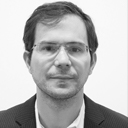
Roman Wan-Wendner

Agnieszka Jedrzejewska
| First name | Last name | Country | Affiliation |
|---|---|---|---|
| Wan-Wendner | Roman | Belgium | Ghent University |
| Jedrzejewska | Agnieszka | Poland | Silesian University of Technology |
| Ghiassi | Bahman | United Kingdom | University of Birmingham / School of Engineering |
| Ramos | António | Portugal | NOVA School of Science &Technology |
| Leonardi | Maria Laura | Portugal | University of Minho |
| Spyridis | Panagiotis | Germany | |
| koç | Arman | Turkey | |
| Strauss | Alfred | Austria | BOKU University |
| Noroozinejad | Ehsan | Australia | Western Sydney University |
| Jiang | Chao | China | Tongji University |
| Preinstorfer | Philipp | Austria | Technische Universität Wien |
| Kryzhanovskyi | Vitalii | Germany | TU Dortmund |
| Yu | Karin | Switzerland | ETH Zurich |
| Moro | Fabrizio | Switzerland | |
| Coric | Vedad | Sweden | Luleå University of Technology |
| Koehncke | Martin | Germany | Helmut-Schmidt-University |
| Patel | Ravi | Germany | Institute of Building materials (IMB) |
| Kessler | Sylvia | Germany | Helmut-Schmidt-University/ University of the Federal Armed Forces Hamburg |
| Fernández-Ordóñez | David | Switzerland | fib |
| Kang | Chongjie | Germany | |
| Zandi | Kamyab | Canada | TIMEZYX, Canada | Sweden |
| Fernandes Paula | Raquel | Portugal | STAP, S.A. |
| Chatzi | Eleni | Switzerland | ETH Zurich |
| Song | Xiaoli | Germany | |
| Depoli | Matteo | Switzerland |