
Motivation
The goal of Commission 3 (COM3) is to define appropriate and reliable procedures to establish the safety of existing structures and any associated requirements for interventions to extend the safe operation or working life of such structures.
Scope and objective of technical work
COM3 will deliver this through the preparation of comprehensive guidance for the assessment of existing concrete structures, providing complementary recommendations to those given in the fib Model Code for Concrete Structures 2010 (fib MC2010), which was prepared primarily for the design of new concrete structures. To that end, COM3 will produce documents supporting the development of fib Model Code 2020 (fib MC2020) to be used for the assessment of the present structural performance and the prediction and evaluation of future structural performance of existing concrete structures with or without damage and/or revised operational requirements, together with any associated interventions required to extend their service life. It is envisaged that the documents to be produced could include technical reports, reviews of the state-of-the-art and technical history/evolution, technical guidelines, specifications and recommendations.
Currently, within the tasks groups of the commission further developments are made to extend, broaden, deepen and harmonize the recently developed guidelines within fib Model Code 2020.
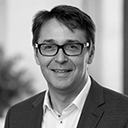
Alfred Strauss
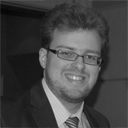
Robby Caspeele
| First name | Last name | Country | Affiliation |
|---|---|---|---|
| Walraven | Joost | Netherlands | Dutch fib Delegation |
| Sykora | Miroslav | Czech Republic | Czech Technical University in Prague, Klokner Institute |
| Strauss | Alfred | Austria | BOKU University |
| Steenbergen | Raphael | Netherlands | TNO Structures and Safety |
| Mancini | Giuseppe | Italy | Politecnico Torino |
| Dieteren | Gerrie | Netherlands | TNO |
| Fernández-Ordóñez | David | Switzerland | fib |
| Matthews | Stuart | United Kingdom | Matthews Consulting |
| Kessler | Sylvia | Germany | Helmut-Schmidt-University/ University of the Federal Armed Forces Hamburg |
| Campos e Matos | José | Portugal | University of Minho |
| Braml | Thomas | Germany | Universität der Bundeswehr München |
| Ueda | Tamon | China | Shenzhen University |
| Caspeele | Robby | Belgium | Ghent University |
| Coronelli | Dario | Italy | Politecnico di Milano |
| Bigaj-van Vliet | Agnieszka | Netherlands | TNO - Buildings, Infrastructures and Maritime |
| Botte | Wouter | Belgium | Ghent University |
| Shimomura | Takumi | Japan | Nagaoka Univ. of Technology |
| Zandi | Kamyab | Canada | TIMEZYX, Canada | Sweden |
| Limongelli | Maria Pina | Italy | Politecnico di MIlano |
| Granzner | Maximilian | Austria | University of Natural Resources and Life Sciences - Vienna |
- TG3.1 - Reliability and safety evaluation: full-probabilistic and semi-probabilistic methods for existing structures
- TG3.2 - Modeling of structural performance of existing concrete structures
- TG3.3 - Existing Concrete Structures: Life Management, Testing and Structural Health Monitoring
- TG3.4 - Selection and implementation of interventions / through-life management activities and measures for concrete structures
- TG3.5 - Forensic engineering
- TG3.6 - Quality Management of Concrete Structures
- TG3.7 - Integrated Limit State Assessment and Expert Framework for Existing Concrete Structures
TG3.1 - Reliability and safety evaluation: full-probabilistic and semi-probabilistic methods for existing structures
fib Task Group 3.1 (TG3.1) focuses on the reliability and safety evaluation of existing structures and focuses on the development of risk and reliability target levels for assessment and retrofitting, the full-probabilistic modelling of the structural safety and semi-probabilistic assessment methods for existing structures. In the framework of development of fib MC, TG 3.1 is revising also basis of structural design.
The TG aims to (i) resolve pending questions with respect to the full-probabilistic assessment and target safety levels for the assessment and retrofitting of existing structures, and (ii) support the risk and reliability related questions arising due to the developments in TG3.2, TG3.3 and TG3.4.
In probabilistic assessment of degrading structures, TG3.1 is cooperating with COM8, mainly through TG8.8.2.
Working topics include:
- Risk acceptance and decision-making for existing structures
- Probabilistic models and Bayesian updating framework for the assessment of existing structures
- Full-probabilistic and semi-probabilistic reliability analysis of new and existing structures
| First name | Last name | Country | Affiliation |
|---|---|---|---|
| Diamantidis | Dimitris | Germany | Fachhochschule Regensburg |
| Allaix | Diego Lorenzo | Netherlands | TNO Neitherlands |
| Prieto | Miguel | Sweden | RISE Research Institutes of Sweden |
| Achenbach | Marcus | Germany | LGA KdöR |
| Hendriks | Max | Netherlands | Delft University of Technology |
| Mancini | Giuseppe | Italy | Politecnico Torino |
| Strauss | Alfred | Austria | BOKU University |
| Sykora | Miroslav | Czech Republic | Czech Technical University in Prague, Klokner Institute |
| Steenbergen | Raphael | Netherlands | TNO Structures and Safety |
| Fernández-Ordóñez | David | Switzerland | fib |
| Tanner | Peter | Spain | Cesma Ingenieros, SL |
| Campos e Matos | José | Portugal | University of Minho |
| Castaldo | Paolo | Italy | Politecnico di Torino |
| Gino | Diego | Italy | Politecnico di Torino |
| Lara Sarache | Carlos Paul | Spain | Instituto Eduardo Torroja |
| Botte | Wouter | Belgium | Ghent University |
| Sangiorgio | Filippo | Sweden | Lektus |
| Muttoni | Aurelio | Switzerland | École polytechnique fédérale de Lausanne (EPF Lausanne) |
| Melhem | Mayer | Australia | Monash University |
| André | João | Portugal | Portuguese National Laboratory for Civil Engineering |
| Caspeele | Robby | Belgium | Ghent University |
| van der Spuy | Pierre | South Africa | Stellenbosch University |
| Yu | Qianhui | China | École polytechnique fédérale de Lausanne (EPF Lausanne) |
| Monti | Giorgio | Italy | Sapienza Università di Roma |
| Olalusi | Oladimeji | South Africa | University of Kwazulu-Natal |
| Rajeev | Pathmanathan | Australia | Swinburne University of Technology |
| Hingorani | Ramon | Norway | SINTEF |
| Miceli | Elena | Italy | Politecnico Torino |
| Silva Sousa | Hélder Manuel | Portugal | HS Consulting |
| Simwanda | Lenganji | Czech Republic | Czech Technical University in Prague |
| Engen | Morten | Norway | Multiconsult AS |
| de Vries | Rein | Netherlands | TU Delft |
| Jiang | Chao | China | Tongji University |
TG3.2 - Modeling of structural performance of existing concrete structures
It is widely understood and accepted that existing concrete structures are different entities to contemporary new concrete structures. There are numerous flexibilities inherent to the process of the design of new concrete structures and in their construction. Existing structures are entities that can, in principle, be interrogated and assessed to establish their actual nature and condition. However, such processes have their difficulties and uncertainties and it is in fact often very difficult to interrogate an existing structure. These difficulties increase when an existing structure has experienced damage or deterioration. Accordingly, substantial and different uncertainties remain with respect to existing structures and these uncertainties need to be taken into account in the structural assessment process.
During recent years Task Group 3.2 has distinguished three main areas relevant for the determination of the structural behaviour of existing structures:
- The real bearing capacity of existing structures: in order to make as much as possible use of the residual bearing capacity of existing structures, advanced behavioural models are necessary;
- The bearing capacity of structures with components damaged due to deterioration;
- The bearing capacity of structures designed on the basis of old codes or recommendations, not anymore meeting the actual state of the art.
A state of the art bulletin dealing with the subjects mentioned previously has recently been produced by TG 3.2. For the forthcoming period focus will be directed to aspects that have turned out to be important, but suffer from the absence of particular knowledge. This applies particularly to:
- The bearing capacity of structures with corroded reinforcement;
- Optimizing proof-loading procedures and interpretation of the results;
- Optimum use of the Levels of Approximation approach when assessing structural safety, serviceability and remaining service life.

Dario Coronelli
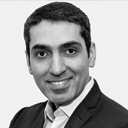
Kamyab Zandi
| First name | Last name | Country | Affiliation |
|---|---|---|---|
| Hendriks | Max | Netherlands | Delft University of Technology |
| Dunkelberg | Daniel | Germany | Pirlet & Partner Ingenieurgesellschaft mbh |
| Belletti | Beatrice | Italy | Univ. degli Studi di Parma - Engineering and Architecture |
| Andrade | Carmen | Spain | Centre Internacional de Mètodes Numèrics en l’Ènginyeria (CIMNE) |
| Rinaldi | Zila | Italy | University of Rome “Tor Vergata” |
| Strauss | Alfred | Austria | BOKU University |
| Dieteren | Gerrie | Netherlands | TNO |
| Zwicky | Daia | Switzerland | Univ. of Applied Sciences Fribourg |
| de Boer | Ane | Netherlands | Ane de Boer Consultancy |
| Chrysostomou | Christis | Cyprus | Cyprus University of Technology |
| Matthews | Stuart | United Kingdom | Matthews Consulting |
| Fernández-Ordóñez | David | Switzerland | fib |
| Yang | Yuguang | Netherlands | TU Delft |
| Tondolo | Francesco | Italy | Politecnico di Torino |
| Ueda | Tamon | China | Shenzhen University |
| Nakamura | Hikaru | Japan | Nagoya University |
| Coronelli | Dario | Italy | Politecnico di Milano |
| Del Zoppo | Marta | Italy | University of Naples Federico II |
| Nuti | Camillo | Italy | Università degli Studi Roma Tre |
| Zandi | Kamyab | Canada | TIMEZYX, Canada | Sweden |
| Di Nunzio | Giuseppe | Italy | |
| Prieto | Miguel | Sweden | RISE Research Institutes of Sweden |
| Vardai | Attila | Hungary | NYUGTAN Mernoki Szolgaltato Kft. |
| Lantsoght | Eva | Ecuador | Universidad San Francisco de Quito |
| Lavorato | Davide | Italy | Università Roma Tre, Italia |
| Martínez Sierra | Isabel | Spain | Consejo Superior de Investig. Cientificas |
| Ju | Hyunjin | Korea, Republic of | Hankyong National University |
| Markovic | Ivan | Switzerland | Eastern Switzerland University of Applied Sciences / Ostschweizer Fachhochschule Rapperswil |
| Casprini | Elena | Italy | University |
| Castagnone | Adriano | Italy | STA DATA Structural Software |
| FRANCESCHINI | Lorenzo | Italy | |
| Walraven | Joost | Netherlands | Dutch fib Delegation |
| Meda | Alberto | Italy | University of Rome “Tor Vergata” |
| Mirzaei | Zanyar | Switzerland | Pini Gruppe AG |
| di Carlo | Fabio | Italy | University of Rome Tor Vergata |
| Ravasini | Simone | Italy | University of Parma |
| Fernandez | Ignasi | Sweden | |
| Kashani | Mohammad Mehdi | United Kingdom | Associate Professor of Structural Engineering |
| Shekhovtsov | Vladyslav | Ukraine | Odesa State Academy of Civil Engineering and Architecture |
| Amir | Sana | United Arab Emirates | University of Wollongong in Dubai, Delft University of Technology |
| Rodrigues | Hugo | Portugal | University of Aveiro |
| Rincón | Adolfo | Spain |
- Modelling techniques for half joints, with complex geometry and reinforcement design. Examples are: half joints with distributed hanger and diagonal reinforcement, half joint plate structures combined with torsional moment in width direction. The approaches include: strut-and-tie methods, kinematically based methods and numerical modelling.
- Modelling of half joints with typical non-conforming detailing’s: diagonal and horizontal reinforcement with insufficient anchorage, hanger reinforcement bent in wrong direction, hanger reinforcement with insufficient anchorage, etc.
- Advanced inspection methods for internal damage (cracking) of half joints. This includes inspection methods for internal crack and corrosion damage.
- Modelling the residual capacity of half joints with known corrosion damage.
- The development of an estimation tool for the global structural reliability based on inspection data and damage-based half joint models.
| First name | Last name | Country | Affiliation |
|---|---|---|---|
| Yang | Yuguang | Netherlands | TU Delft |
| Fernández-Ordóñez | David | Switzerland | fib |
| Caspeele | Robby | Belgium | Ghent University |
| Vergoossen | Rob | Netherlands | Haskoning |
| Laaksonen | Anssi | Finland | Tampere University of Technology |
| Coronelli | Dario | Italy | Politecnico di Milano |
| di Prisco | Marco | Italy | Politecnico di Milano |
| Orlando | Maurizio | Italy | Università degli Studi di Firenze |
| Mihaylov | Boyan | Belgium | University of Liege |
| Rinaldi | Zila | Italy | University of Rome “Tor Vergata” |
| Belletti | Beatrice | Italy | Univ. degli Studi di Parma - Engineering and Architecture |
| Zhang | Fengqiao | Netherlands | TU Delft |
TG3.3 - Existing Concrete Structures: Life Management, Testing and Structural Health Monitoring
The Task Group 3.3 (TG 3.3) specifies and extends their focus in the framework of Non-Destructive-Testing (NDT) and Structural Health Monitoring (SHM) required for the through-life management of existing concrete structures according to the following:
- Concepts for extension of service life of reinforced concrete structures supported by NDT and SHM;
- Specific testing/ specific monitoring; testing/ techniques combined with autonomous robotic systems (remote monitoring systems) or based on digital images as well as innovative self-monitoring materials (repair, strengthening);
- Monitoring of site-specific load actions (e.g. traffic loads, etc.);
- Data management for reinforced concrete structures using NDT/SHM: data reporting and data analysis of NDT/SHM applying AI;
- Reliability assessment of NDT/SHM methods applied on reinforced concrete;
- Building Information Modelling (BIM) and Digital Twins (DT) for existing concrete structures as a decision-making tool using NDT/SHM data; implementation of SHM in BIM;
- Decision-making on structural level to foster the transformation from periodic to predictive/preventive maintenance including the assessment on the environmental impact of the decision: How can NDT/SHM contribute to operate our infrastructure in the most sustainable way?
- SHM guidelines for newly designed complex concrete structures concerning their exploitation phase, also including BIM and DT.
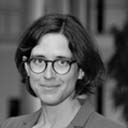
Sylvia Kessler

Maria Pina Limongelli
| First name | Last name | Country | Affiliation |
|---|---|---|---|
| Bertagnoli | Gabriele | Italy | Politecnico di Torino |
| Lehky | David | Czech Republic | Brno University of Technology |
| Novak | Drahomir | Czech Republic | Technical University of Brno |
| Maas | Stefan | Luxembourg | Université du Luxembourg |
| Petraschek | Thomas | Austria | OBB-Infrastruktur AG |
| Ahrens | Mark Alexander | Germany | Ruhr-Univ. Bochum |
| Hansen | Michael | Germany | Leibniz Universität Hannover |
| Lavorato | Davide | Italy | Università Roma Tre, Italia |
| Lombaert | Geert | Belgium | University of Leuven |
| Ralbosky | Marian | Austria | Austrian Research Institute |
| Gulikers | Joost | Netherlands | Rijkswaterstaat Centre for Infrastructure |
| Mancini | Giuseppe | Italy | Politecnico Torino |
| Andrade | Carmen | Spain | Centre Internacional de Mètodes Numèrics en l’Ènginyeria (CIMNE) |
| Meda | Alberto | Italy | University of Rome “Tor Vergata” |
| Strauss | Alfred | Austria | BOKU University |
| Sykora | Miroslav | Czech Republic | Czech Technical University in Prague, Klokner Institute |
| Dieteren | Gerrie | Netherlands | TNO |
| Dyson | Jonathon | Australia | BCRC |
| Pielstick | Brett | United States | Eisman & Russo |
| Matthews | Stuart | United Kingdom | Matthews Consulting |
| Fernández-Ordóñez | David | Switzerland | fib |
| Kessler | Sylvia | Germany | Helmut-Schmidt-University/ University of the Federal Armed Forces Hamburg |
| Tanner | Peter | Spain | Cesma Ingenieros, SL |
| Campos e Matos | José | Portugal | University of Minho |
| Monti | Giorgio | Italy | Sapienza Università di Roma |
| Tondolo | Francesco | Italy | Politecnico di Torino |
| Braml | Thomas | Germany | Universität der Bundeswehr München |
| Casas Rius | Joan | Spain | Tech. Univ. of Catalunya, UPC-BarcelonaTech |
| Górski | Marcin | Poland | Silesian University of Technology |
| Caspeele | Robby | Belgium | Ghent University |
| Apostolidi | Eftychia | Germany | Donges SteelTec GmbH |
| Hendy | Chris | United Kingdom | Atkins |
| Keuser | Manfred | Germany | BUNG Ingenieure A |
| Holicky | Milan | Czech Republic | Czech Techn. Univ. of Prague - CVUT |
| Nuti | Camillo | Italy | Università degli Studi Roma Tre |
| Hoffmann | Marcus | Austria | Transport Infrastructure Asset Management |
| Bastidas-Arteaga | Emilio | France | Universite de Nantes |
| Ueda | Tamon | China | Shenzhen University |
| Zimmert | Florian | Germany | Bundeswehr University Munich |
| Duprat | Frédéric | France | INSA Toulouse |
| Aktan | A. Emin | United States | Drexel University |
| Bien | Jan | Poland | Wroclaw University of Science and Technology |
| Bouteiller | Véronique | France | University Gustave Eiffel |
| Catbas | Necati | United States | University of Central Florida |
| Celebi | Mehmet | United States | USGS |
| Chatzi | Eleni | Switzerland | ETH Zurich |
| Guido | De Roeck | Belgium | KU Leuven |
| Duvnjak | Ivan | Croatia | University of Zagreb |
| Elfgren | Lennart | Sweden | Luleå University of Technology |
| Godart | Bruno | France | Gustave Eiffel University |
| Limongelli | Maria Pina | Italy | Politecnico di MIlano |
| Moon | Franklin | United States | Rutgers School of Engineering |
| Oliveira Santos | Luis | Portugal | LNEC |
| Prieto | Miguel | Sweden | RISE Research Institutes of Sweden |
| Rafiq | Muhammad Imran | United Kingdom | University of Brighton |
| Rosko | Peter | Austria | Technical University of Vienna |
| Schmidt | Franziska | France | Université Gustave Eiffel, MAST/EMGCU |
| Torrent | Roberto | Switzerland | Quali- Ti-Mat Sagl |
| Ley Urzaiz | Jorge | Spain | INTEMAC |
| Zonta | Daniele | Italy | University of Trento |
| Bartolac | Marko | Croatia | University of Zagreb |
| De Azua | Ruiz | Spain | Kinesia Structural Monitoring |
| Eustáquio | Elsa | Portugal | Laboratório Nacional de Engenharia Civil |
| Küttenbaum | Stefan | Germany | Universität der Bundeswehr München |
| Maack | Stefan | Germany | Bundesanstalt für Materialforschung und -prüfung |
| Ptacek (Mold) | Lisa | Austria | Universität für Bodenkultur |
| Shan | Jiazeng | China | Tongji University |
| Wenzel | Helmut | Austria | VCE |
| Zabel | Volkmar | Germany | Bauhaus University Weimar |
| Bergmeister | Konrad | Austria | Univ. Bodenkultur |
| Volpatti | Giovanni | Switzerland | Bluewin |
| Ribeiro | Diogo | Portugal | University of Porto |
| Basheer | Muhammed | United Kingdom | University of Leeds |
| Vorwagner | Alois | Austria | AIT- Austrian Institute of Technology |
| Kużawa | Mieszko | Poland | Wroclaw University of Technology |
| Castagnone | Adriano | Italy | STA DATA Structural Software |
| Verstrynge | Els | Belgium | KU Leuven |
| Silva Sousa | Hélder Manuel | Portugal | HS Consulting |
| Moreira de Sousa | Helder Filipe | Portugal | Brisa Group |
| Marsili | Francesca | Germany | Helmut-Schmidt-University/ University of the Federal Armed Forces Hamburg |
| Kainz | Christian | Germany | Bundeswehruni München |
| Civera | Marco | Italy | Politecnico di Torino, Department of Structural, Geotechnical and Building Engineering |
| Torcinaro | Mario | Spain | RWE Renewables Iberia |
| Wardeh | George | France | Un. de Cergy-Pontoise |
| Waldmann-Diederich | Danièle | Germany | Technical University of Darmstadt |
| Vereecken | Eline | Belgium | Hasselt University |
| Bertola | Numa Joy | Luxembourg | University Luxemburg |
| Beyer | Katrin | Switzerland | EPFL |
| Bilotta | Antonio | Italy | University of Naples Federico II |
| Lu | Xilin | China | Tongji University |
| Pantoja Moyano | Juan Carlos | Portugal | Minho University |
| Lozano Valcarcel | Juan Mauricio | Germany | Technical University of Munich |
| Wang | Jiehui | Hong Kong | City University of Hong Kong |
| AL MAHMOUD | Firas | France | Université de Lorraine, CNRS, IJL, F-54000 Nancy, France |
| Fogue Djombou | Yannick Igor | France | |
| Gazale | Gabriel | Italy | |
| Paulik | Peter | Slovakia | Slovak University of Technology in Bratislava |
| Soetens | Tim | Belgium | Sanacon |
| Jaigopal | Ronur Krishnappa | India |
TG3.4 - Selection and implementation of interventions/through-life management activities and measures for concrete structures
The focus is on the selection and implementation of interventions, especially advanced methods for structural retrofit, and through-life management activities and measures for concrete structures.
The following aspects related to the intervention are addressed:
- Types of intervention methods with focus on advanced strengthening techniques
- Materials for intervention with focus on high performance materials
- Development of suitable design method for intervention
- Consideration of application methods with respect to execution and installation requirements as well as quality assurance
- Assessment of long-term performance, maintenance and possible future re-intervention
- Incorporation of sustainability aspects in design of interventions including LCA quantification
- Selection method for intervention and potential incorporation of AI, including information needed for design/execution
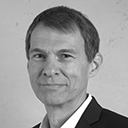
Norbert Randl

Giuseppe Mancini
| First name | Last name | Country | Affiliation |
|---|---|---|---|
| Kikuta | Etsuji | Japan | Civil Engineering Research Institute for Cold Region |
| Zhang | Dawei | China | Zhejiang University |
| McKenna | Philip | Ireland | Halcrow Group Ltd., a CH2M HILL Company |
| Mancini | Giuseppe | Italy | Politecnico Torino |
| Andrade | Carmen | Spain | Centre Internacional de Mètodes Numèrics en l’Ènginyeria (CIMNE) |
| Rahimi | Amir | Germany | Bundesanstalt für Wasserbau |
| Vítek | Jan | Czech Republic | Metrostav a. s. |
| Bevc | Lojze | Slovenia | ZAG Slovenije |
| Kobayashi | Koichi | Japan | Gifu University |
| Dyson | Jonathon | Australia | BCRC |
| Vardai | Attila | Hungary | NYUGTAN Mernoki Szolgaltato Kft. |
| Bencardino | Francesco | Italy | University of Calabria |
| Gehlen | Christoph | Germany | TUM School of Engineering and Design |
| Papworth | Frank | Australia | BCRC |
| Fernández-Ordóñez | David | Switzerland | fib |
| Su | Meini | United Kingdom | University of Manchester |
| Triantafillou | Thanasis | Greece | University of Patras |
| Lu | Xilin | China | Tongji University |
| Menna | Costantino | Italy | University of Naples Federico II |
| Randl | Norbert | Austria | Carinthia Univ. of Applied Sciences |
| Nakamura | Hikaru | Japan | Nagoya University |
| Ueda | Tamon | China | Shenzhen University |
| Saetta | Anna | Italy | Università Iuav di Venezia |
| Savoia | Marco | Italy | University of Bologna |
| Zhu | Ji-hua | China | Shenzhen University |
| Corres | Hugo | Spain | FHECOR Ingenieros Consultores |
| Del Zoppo | Marta | Italy | University of Naples Federico II |
| Shimomura | Takumi | Japan | Nagaoka Univ. of Technology |
| Cascardi | Alessio | Italy | University of Salento |
| Martínez Sierra | Isabel | Spain | Consejo Superior de Investig. Cientificas |
| Mirzaei | Zanyar | Switzerland | Pini Gruppe AG |
| Shrestha | Justin | Taiwan, Province of China | Shenzhen University |
| Palmeri | Alessandro | Germany |
TG3.5 - Forensic engineering
We have an enormous and an ever-increasing heritage of reinforced and prestressed concrete structures, many of which are currently approaching the end of their intended service life. However, there are pressing societal, economic and environmental needs to safely extend the service lives of many of these structures. This poses a delicate and challenging task if we are to make appropriate decisions on the through-life management and care of these constructed assets to achieve this while avoiding transferring an excessive burden onto the next generation. To do this we need a better understanding of the real behaviours of structures, why they may not achieved the required performance and, ultimately, what may cause them to fail.
Scope:
- To advance the use of techniques, processes and procedures employed in forensic engineering studies and to undertake forensic investigations – the scientific and engineering process.
- Examine how forensic engineering studies can provide improved understanding of the performance and behaviours of constructed assets (i.e. the lessons learned), with the goals of formulating improved models, identifying deficiencies / limitations and desired improvements in professional practice, etc including (amongst others) those concerned with:
- Structural safety and performance
- The economic aspects of performance / through-life cost (potentially in conjunction with TG8.4)
- Post-fire assessment of existing buildings (in conjunction with TG2)
- Durability aspects (in conjunction with COM8)
- To facilitate feedback from the understanding gained from forensic engineering studies into professional practice to improve the through-life performance of structures and buildings, such as the achievement of performance requirements, durability etc. This would include liaison and feedback as appropriate to fib Commissions and other collaborating bodies.
- Investigate how the provisions of fib MC2020 / the fib Model Code for Concrete Structures facilitate forensic investigations and the benefits arising thereof.
- To advise what changes / additions are required in future editions of the fib Model Code for Concrete Structures from the understanding gained from forensic engineering studies and to facilitate the application of forensic engineering / forensic investigations of structural condition and performance.
- To work with other fib Commissions / other bodies as appropriate
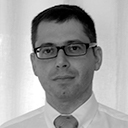
Daniele Zonta
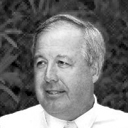
Frank Papworth
| First name | Last name | Country | Affiliation |
|---|---|---|---|
| Zonta | Daniele | Italy | University of Trento |
| van den bos | ab | Netherlands | NLyse |
| Noroozinejad | Ehsan | Australia | Western Sydney University |
| Beushausen | Hans-Dieter | South Africa | University of Cape Town |
| Brühwiler | Eugen | Switzerland | EPFL |
| Donchev | Ted | United Kingdom | Kingston University |
| Felicetti | Roberto | Italy | Politecnico di Milano |
| Papworth | Frank | Australia | BCRC |
| Strauss | Alfred | Austria | BOKU University |
| Limongelli | Maria Pina | Italy | Politecnico di MIlano |
| Palmisano | Fabrizio | Italy | PPV Consulting Studio Palmisano Perilli Associati |
| Robery | Peter | United Kingdom | Robery Forensic Engineering Ltd |
| Glisic | Branko | United States | Princeton University |
| Hübl | Johannes | Austria | University of Natural Resources and Applied Life Sciences |
| Catbas | Necati | United States | University of Central Florida |
| Nassif | Hani | United States | Rutgers University-New Brunswick |
| Possidente | Luca | Italy | |
| Lantsoght | Eva | Ecuador | Universidad San Francisco de Quito |
| Bado | Mattia | Italy | |
| Hohberg | Jörg-Martin | Switzerland | Freelance Auditor |
| Lampropoulos | Andreas | United Kingdom | University of Brighton |
| André | João | Portugal | Portuguese National Laboratory for Civil Engineering |
| van den bos | ab | Netherlands | NLyse |
| Rajeshirke | Umesh | India | Spectrum Techno Consultants Pvt. Ltd |
| Parisi | Fulvio | Italy | University of Naples Federico II |
| Heggade | Venkataramana | India | Indian National Academy of Engineers |
| Volpatti | Giovanni | Switzerland | Bluewin |
| Moretti Sanchez | Leandro | Canada | University of Ottawa |
| Giarlelis | Christos | Greece | EQUIDAS Consulting Engineers |
TG3.6 - Quality Management of Concrete Structures
Quality Management (QM) can be defined as the systematic planning and control of processes concerning their quality through suitable activities and measures to achieve the required product or service standards. In business, QM refers to a management function that incorporates all organisational measures to monitor and improve processes and thus achieve the required product and service quality standards.
Scope:
From the state of the art, a comprehensive QM framework must involve key dimensions to ensure that C&RC structures meet the required standards and perform as expected over their lifespan. A general framework will be established to relate the principles of quality management to the realization of specific safety levels, as well as environmental and other targets. The importance of competence among all involved personnel will be highlighted, as performance is often hindered by a lack of understanding rather than intent. More precisely, this includes (Figure 1):
- Material Quality: Ensuring that the concrete and reinforcements meet the specified standards and are made from high-quality materials through certified processes.
- Design Quality: Ensuring that the structural design adheres to relevant codes and standards, and it can withstand the expected loads and environmental conditions.
- Construction Quality: Ensuring the construction process, including explicit quality control measures, follows the design specifications and quality standards.
- Inspection and Testing: Ensuring inspection and testing to verify that the materials and construction processes meet the required standards.
- Documentation and Record Keeping: Ensuring the maintenance of detailed records of all materials, tests, inspections, and construction activities, including the creation of an as-built "Birth Certificate".
- Training and Competence: Ensuring that all personnel involved in the design and construction process are adequately trained, competent, and qualified.
- Health and Safety: Ensuring that all construction activities are carried out safely, protecting the health and safety of workers and the public.
- Environmental Considerations: Ensuring the construction process minimises impact on the environment.
- Structural Robustness: Ensuring that quality management processes contribute to assuring overall structural robustness against unforeseen events.
Alfred Strauss

Konrad Bergmeister
| First name | Last name | Country | Affiliation |
|---|---|---|---|
| Fernández-Ordóñez | David | Switzerland | fib |
| Strauss | Alfred | Austria | BOKU University |
| Bergmeister | Konrad | Austria | Univ. Bodenkultur |
| Moreira de Sousa | Helder Filipe | Portugal | Brisa Group |
TG3.7 - Integrated Limit State Assessment and Expert Framework for Existing Concrete Structures
Within the activities on existing concrete structures, it has been agreed to establish Task Group TG 3.7, addressing both the development of a comprehensive verification framework and the clarification of expert involvement in the assessment process.
Scope:
The overall aim of TG 3.7 is to develop a practice-oriented limit state verification framework for the assessment of existing concrete structures, while also defining the roles, responsibilities, and required expert input throughout the assessment process. The framework will integrate all relevant aspects from data acquisition and measurements through to limit state verification, taking due account of recent developments within fib in relation to durability, structural assessment, reliability-based approaches, repair and strengthening. It will also appropriately consider specific characteristics of existing structures, such as uncertainties, spatial variability, and the updating of information based on additional knowledge (e.g. inspection and monitoring).
Alfred Strauss
Robby Caspeele
| First name | Last name | Country | Affiliation |
|---|---|---|---|
| Fernández-Ordóñez | David | Switzerland | fib |
| Strauss | Alfred | Austria | BOKU University |
| Caspeele | Robby | Belgium | Ghent University |
| Belletti | Beatrice | Italy | Univ. degli Studi di Parma - Engineering and Architecture |
- WP3.7.1 - Integrated Limit State Verification Framework for Existing Concrete Structures
- WP3.7.2 - Expert Roles and Responsibilities for the Assessment of Existing Concrete Structures
- time-dependent aspects of degradation processes using annual verification concepts;
- uncertainties in deterioration initiation and propagation phases;
- updating procedures based on inspection and monitoring information;
- qualitative and quantitative assessment approaches depending on the extent and severity of deterioration.
Robby Caspeele

Beatrice Belletti
| First name | Last name | Country | Affiliation |
|---|---|---|---|
| Fernández-Ordóñez | David | Switzerland | fib |
| Caspeele | Robby | Belgium | Ghent University |
| Strauss | Alfred | Austria | BOKU University |
| Belletti | Beatrice | Italy | Univ. degli Studi di Parma - Engineering and Architecture |
- the required expertise at the different stages of the assessment process;
- the interaction between experts from different disciplines;
- the interpretation and validation of assessment results;
- the allocation of responsibilities;
- and the integration of expert judgement into engineering decision-making.
Alfred Strauss
Robby Caspeele