
Motivation
fib Commission 8 (COM8) aims to identify concrete-related durability issues, consider and review current information available on the topic, and provide guidance on materials and methods that will assist in optimal durability design of new structures and restoration design of existing structures.
Scope and objective of technical work
Service life design forms one part of this and COM8 will develop rational procedures to obtain an optimal technical-economic performance of concrete structures in service and to ensure that sustainability, whole-life cost and associated through-life perspectives are taken into account as part of the process by which experience gained from practice is fed back to the design, execution, maintenance and rehabilitation stages. COM8 work will address the structural service life aspects of structures with rational strategies, procedures and criteria for design, assessment, maintenance and remediation.
COM8 work also includes review of methods for the determination of inspection frequencies as well as methods based on sound engineering principles that will provide optimal information for the durability assessment of marine structures.
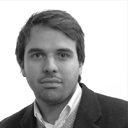
José Campos e Matos

Manu Santhanam

Carmen Andrade
| First name | Last name | Country | Affiliation |
|---|---|---|---|
| Solgaard | Anders Ole Stubbe | Denmark | Cowi A/S |
| Helland | Steinar | Norway | S Helland Konsult |
| van der Horst | Aad | Netherlands | |
| Andrade | Carmen | Spain | Centre Internacional de Mètodes Numèrics en l’Ènginyeria (CIMNE) |
| Edvardsen | Carola K. | Denmark | Cowi AS |
| Meda | Alberto | Italy | University of Rome “Tor Vergata” |
| Randl | Norbert | Austria | Carinthia Univ. of Applied Sciences |
| Rinaldi | Zila | Italy | University of Rome “Tor Vergata” |
| Strauss | Alfred | Austria | BOKU University |
| Torrent | Roberto | Switzerland | Quali- Ti-Mat Sagl |
| Kobayashi | Koichi | Japan | Gifu University |
| Paeglitis | Ainars | Latvia | |
| Appleton | Júlio | Portugal | A2P Consult |
| Gehlen | Christoph | Germany | TUM School of Engineering and Design |
| Papworth | Frank | Australia | BCRC |
| Matthews | Stuart | United Kingdom | Matthews Consulting |
| Fernández-Ordóñez | David | Switzerland | fib |
| Linger | Lionel | France | Vinci Construction Grand Projets |
| Ferreira | Rui Miguel | Finland | VTT Techn. Research Centre of Finland |
| Bartholomew | Michael | United States | CH2M HILL |
| Ueda | Tamon | China | Shenzhen University |
| Campos e Matos | José | Portugal | University of Minho |
| Subbarao | Harshavardhan | India | Construma Consultancy Pvt. Ltd. |
| Casas Rius | Joan | Spain | Tech. Univ. of Catalunya, UPC-BarcelonaTech |
| Dehn | Frank | Germany | KIT Karlsruher Institut für Technologie |
| Pacheco | Jose | United States | MJ2 Consulting |
| Gong | Fuyuan | China | Zhejiang University |
| Bigaj-van Vliet | Agnieszka | Netherlands | TNO - Buildings, Infrastructures and Maritime |
| Curtis | Stuart | Australia | RTR Bridge Construction Services |
| Green | Warren | United States | Vinsi U.S. |
| Liu | Qing-feng | China | Shanghai Jiao Tong University |
| Mancini | Giuseppe | Italy | Politecnico Torino |
| Müller | Harald | Germany | SMP Ingenieure im Bauwesen GmbH |
| Pielstick | Brett | United States | Eisman & Russo |
| Rafiq | Muhammad Imran | United Kingdom | University of Brighton |
| Torrenti | Jean Michel | France | Univ Gustave Eiffel |
| Toutlemonde | François | France | Université Gustave Eiffel |
| Von Greve-Dierfeld | Stefanie | Switzerland | Office fédéral des routes OFROU |
| Walraven | Joost | Netherlands | Dutch fib Delegation |
| BOUMAAZA | Mouna | France | Vinci Construction |
| Julio | Eduardo | Portugal | Instituto Superior Tecnico, Universidade de Lisboa |
| Angst | Ueli | Switzerland | ETH Zurich |
| Li | Kefei | China | |
| Rahimi | Amir | Germany | Bundesanstalt für Wasserbau |
| Santhanam | Manu | India | Department of Civil Engineering |
| Santamaria-Ariza | Monica | Portugal | University of Minho |
| Georgescu | Dan | Romania | Techn. Univ. of Civil Engineering |
| Beushausen | Hans-Dieter | South Africa | University of Cape Town |
- TG8.1 - Model technical specification for repairs and interventions
- TG8.4 - Life cycle cost (LCC) - Design life and/or replacement cycle
- TG8.8 - Design approaches
- TG8.9 - Deterioration Mechanisms Related to Corrosion
- TG8.11 - Testing and Monitoring
- TG8.12 - Deterioration mechanisms related to other phenomena
TG8.1 - Model technical specification for repairs and interventions
Task Group 8.1 has prepared a Guide (to good practice) on protection, repair, and strengthening techniques for concrete structures. Given the guide's extensive scope, it has been divided into two publications: bulletin 102, which addresses protection and repair methods, and bulletin 103, which focuses on strengthening methods. The chapters aim to provide practical guidelines and illustrative case studies to support the application of the pre-normative specifications in fib Model Code 2020.
For each protection, repair and strengthening method addressed in the Guide, readers have a description of when to adopt it, which materials and systems are required, which techniques are available, and what kind of equipment is needed. It then presents a summary of stakeholders’ roles and qualifications, design guidelines referring to most relevant codes and references, the intervention procedure, quality control measures and monitoring and maintenance activities.
A technical report titled “Restoring Reinforcement Passivity Through Replacement of Concrete Cover” is currently under review by members of Commission 8. Upon the publication of this report, Task Group 8.1 will have fulfilled its objectives, leading to its disbandment.

| First name | Last name | Country | Affiliation |
|---|---|---|---|
| Papworth | Frank | Australia | BCRC |
| Fernández-Ordóñez | David | Switzerland | fib |
| Kobayashi | Koichi | Japan | Gifu University |
| Monteiro | André | Portugal | National Laboratory for Civil Engineering |
| Lampropoulos | Andreas | United Kingdom | University of Brighton |
| Costa | António | Portugal | Instituto Superior Técnico |
| Julio | Eduardo | Portugal | Instituto Superior Tecnico, Universidade de Lisboa |
| Kessler | Sylvia | Germany | Helmut-Schmidt-University/ University of the Federal Armed Forces Hamburg |
| Andrade | Carmen | Spain | Centre Internacional de Mètodes Numèrics en l’Ènginyeria (CIMNE) |
| Larive | Catherine | France | Tunnels Study Centre |
| Beushausen | Hans-Dieter | South Africa | University of Cape Town |
| Sykora | Miroslav | Czech Republic | Czech Technical University in Prague, Klokner Institute |
| Caspeele | Robby | Belgium | Ghent University |
| Ueda | Tamon | China | Shenzhen University |
| Abel Henriques | António | Portugal | Faculty of Engineering - University of Porto |
| Zhang | Wenbo | Japan | TAISEI |
| Delgado | José | Portugal | Civiconcebe |
| Tsioulou | Ourania | United Kingdom | University of Roehampton |
| Pacheco | Jose | United States | MJ2 Consulting |
TG8.4 - Life cycle cost (LCC) - Design life and/or replacement cycle
The work of TG8.4 comprises the preparation of a state-of-the-art report on LCC including the following:
- A flow chart for life cycle cost analyses;
- Examples and/or case studies concerning life cycle cost evaluations of design strategies,including narratives and consequences of the favoured strategy;
- A risk analysis covering costs and benefits;
- Identification of hazard scenarios (weak points);
- Discussion on the value added by the LCC analyses including:
- Design;
- Inspection;
- Testing;
- Monitoring;
- Birth Certificate;
- Inspectability;
- Interventions.
- Reference to relevant fib documents.
| First name | Last name | Country | Affiliation |
|---|---|---|---|
| Stipanovic Oslakovic | Irina | Netherlands | University of Twente |
| Solgaard | Anders Ole Stubbe | Denmark | Cowi A/S |
| Rinaldi | Zila | Italy | University of Rome “Tor Vergata” |
| Strauss | Alfred | Austria | BOKU University |
| Fernández-Ordóñez | David | Switzerland | fib |
| Papworth | Frank | Australia | BCRC |
| Campos e Matos | José | Portugal | University of Minho |
| Casas Rius | Joan | Spain | Tech. Univ. of Catalunya, UPC-BarcelonaTech |
| Akiyama | Hiroshi | Japan | Tokyo Soil Research CO., LTD |
| Arangio | Stefania | Italy | Sapienza University of Rome |
| Caprani | Colin | Australia | Monash University |
| El-Dieb | Amr | United Arab Emirates | United Arab Emirates University |
| Ferreira | Rui Miguel | Finland | VTT Techn. Research Centre of Finland |
| Frangopol | Dan | United States | Lehigh University |
| Gulikers | Joost | Netherlands | Rijkswaterstaat Centre for Infrastructure |
| Linneberg | Poul | Denmark | COWI A/S |
| Masovic | Snezana | Serbia | University of Belgrade |
| Novak | Drahomir | Czech Republic | Technical University of Brno |
| Okasha | Nader M | Saudi Arabia | University of Hail, Hayil |
| Ruan | Xin | China | Tongji University |
| Safi | Mohammed | Sweden | Royal Institute of Technology (KTH) |
| Sanchez-Silva | Mauricio | Colombia | Universidad de Los Andes |
| Yücemen | M. Semih | Turkey | Middle East Technical University |
| Nezhad | Ali Akbar | Australia | UNSW Australia |
| Škarić Palić | Sandra | Croatia | Infraplan |
TG8.8 - Design approaches
Throughout durability design there are a number of common inputs that should be handled in a consistent approach, e.g. reliability, cracking, exposure risk assessment, verification approaches.
This Task Group will maintain approaches that are consistent across different materials and durability design approaches consistency and provide liaison with other Commissions to ensure consistency across all aspects of Model Code.
The scope:
- This Task Group shall investigate various aspects that have a common impact on modelling of deterioration mechanisms but the TG is not directly involved in the mechanisms or materials.
- Many of these items are fundamental to all aspects of structural design and cannot be considered durability issues alone. However, the issues are key to durability design.
The work in TG8.8 is currently carried out in the Working Groups below.
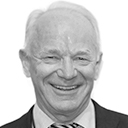
Steinar Helland

Joanitta Ndawula
| First name | Last name | Country | Affiliation |
|---|---|---|---|
| Bamforth | Philipp | United Kingdom | Construction Consultancy |
| Mai-Nhu | Jonathan | France | CERIB |
| Gilbert | Raymond Ian | Australia | School of Civil and Environmental Engineering |
| Kovler | Konstantin | Israel | Technion - Israel Institute of Technology |
| Von Greve-Dierfeld | Stefanie | Switzerland | Office fédéral des routes OFROU |
| Helland | Steinar | Norway | S Helland Konsult |
| Toutlemonde | François | France | Université Gustave Eiffel |
| Fernández-Ordóñez | David | Switzerland | fib |
| Linger | Lionel | France | Vinci Construction Grand Projets |
| Papworth | Frank | Australia | BCRC |
| Bartholomew | Michael | United States | CH2M HILL |
| Beushausen | Hans-Dieter | South Africa | University of Cape Town |
| Curtis | Stuart | Australia | RTR Bridge Construction Services |
| Torrenti | Jean Michel | France | Univ Gustave Eiffel |
| Bigaj-van Vliet | Agnieszka | Netherlands | TNO - Buildings, Infrastructures and Maritime |
| Ndawula | Joanitta | South Africa | University of Cape Town |
| Matthews | Stuart | United Kingdom | Matthews Consulting |
| Paull | Rodney | Australia | Member Concrete Institute of Australia (CIA), Chair CIA Durability Technical Committee; ACI 201 liaison member for CIA; ACI 321 liaison member |
| Georgescu | Dan | Romania | Techn. Univ. of Civil Engineering |
| Caspeele | Robby | Belgium | Ghent University |
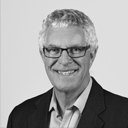
| First name | Last name | Country | Affiliation |
|---|---|---|---|
| Paull | Rodney | Australia | Member Concrete Institute of Australia (CIA), Chair CIA Durability Technical Committee; ACI 201 liaison member for CIA; ACI 321 liaison member |
| Fernández-Ordóñez | David | Switzerland | fib |
| Matthews | Stuart | United Kingdom | Matthews Consulting |
| Papworth | Frank | Australia | BCRC |

| First name | Last name | Country | Affiliation |
|---|---|---|---|
| Ndawula | Joanitta | South Africa | University of Cape Town |
| Fernández-Ordóñez | David | Switzerland | fib |
| Angst | Ueli | Switzerland | ETH Zurich |
| Bastidas-Arteaga | Emilio | France | Universite de Nantes |
| Beushausen | Hans-Dieter | South Africa | University of Cape Town |
| Helland | Steinar | Norway | S Helland Konsult |
| Kessler | Sylvia | Germany | Helmut-Schmidt-University/ University of the Federal Armed Forces Hamburg |
| Linger | Lionel | France | Vinci Construction Grand Projets |
| Martin-Perez | Beatriz | Canada | |
| Papworth | Frank | Australia | BCRC |
| Santhanam | Manu | India | Department of Civil Engineering |
| Sykora | Miroslav | Czech Republic | Czech Technical University in Prague, Klokner Institute |
| Titus | Alice | South Africa | Bakera University of Cape Town |
| Khan | Inam | Australia | BCRC |
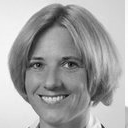
Stefanie Von Greve-Dierfeld
Frank Dehn

Bruno Huet
| First name | Last name | Country | Affiliation |
|---|---|---|---|
| Von Greve-Dierfeld | Stefanie | Switzerland | Office fédéral des routes OFROU |
| Fernández-Ordóñez | David | Switzerland | fib |
| Janota | Magdalena | United Kingdom | |
| Angst | Ueli | Switzerland | ETH Zurich |
| BOUMAAZA | Mouna | France | Vinci Construction |
| Ferreira | Nuno | United Kingdom | Arup |
| Helland | Steinar | Norway | S Helland Konsult |
| Kamali-Bernard | Siham | France | Institut National des Sciences Appliquées (INSA-Rennes) |
| Kessler | Sylvia | Germany | Helmut-Schmidt-University/ University of the Federal Armed Forces Hamburg |
| Liu | Qing-feng | China | Shanghai Jiao Tong University |
| Campos e Matos | José | Portugal | University of Minho |
| Santhanam | Manu | India | Department of Civil Engineering |
| Teixeira | Elisabete | Portugal | ISISE |
| Ukrainczyk | Neven | Germany | Technical University of Darmstadt |
| Wang | Junjie | China | |
| Edvardsen | Carola K. | Denmark | Cowi AS |
| Moro | Fabrizio | Switzerland | |
| De Belie | Nele | Belgium | |
| Van Mullem | Tim | Belgium | Ghent University |
| Gruyaert | Elke | Belgium | KU Leuven |
| Visser | Jeanette | Netherlands | Strukton Engineering |
| Geiker | Mette | Norway | NTNU - Trondheim Norwegian Univ. |
| Julio | Eduardo | Portugal | Instituto Superior Tecnico, Universidade de Lisboa |
| Juhart | Joachim | Austria | Graz University of Technology |
| Kanavaris | Fragkoulis | United Kingdom | Arup |
| Bogas | Jose Alexandre | Portugal | Universidade de Lisboa |
| Gates | Will | Australia | Deakin University |
| Paglia | Christian | Switzerland | |
| Vanoutrive | Hanne | Belgium | Faculty of Engineering Technology |
| Dehn | Frank | Germany | KIT Karlsruher Institut für Technologie |
| Huet | Bruno | France | |
| Wigum | B. J. | Iceland | Mannvit Reykjavik |
| Costa | António | Portugal | Instituto Superior Técnico |
| Georgescu | Dan | Romania | Techn. Univ. of Civil Engineering |
| Eckhardt | Rafaela | Brazil |
- Basic information associated to the overall bridge based on design documentation and visual inspection activities.
- Material data (mechanical and chemical properties) estimated with the use of nondestructive or destructive tests of some dismantled structural components.

Carlo Beltrami

Nicoletta Russo
| First name | Last name | Country | Affiliation |
|---|---|---|---|
| Fernández-Ordóñez | David | Switzerland | fib |
| Beltrami | Carlo | Italy | Lombardi Ingegneria |
| Russo | Nicoletta | Italy | Lombardi Ingegneria |
| Belletti | Beatrice | Italy | Univ. degli Studi di Parma - Engineering and Architecture |
| Biondini | Fabio | Italy | Politecnico di Milano |
| Andrade | Carmen | Spain | Centre Internacional de Mètodes Numèrics en l’Ènginyeria (CIMNE) |
| Campos e Matos | José | Portugal | University of Minho |
| Sas | Gabriel | Sweden | Luleå University of Technology |
| Chaves de Rezende Martins | Paulo | Brazil | University of Brasilia |
| Panseri | Stefano | Italy | DESPE |
| Marini | Francesco | Italy | Nadeco |
| Shakil | Muzzamil | France | bouygues-construction |
TG8.9 - Deterioration Mechanisms Related to Corrosion
TG8.9 will investigate models for the following deterioration processes: Rebar Corrosion Initiation; Rebar Corrosion Propagation; Abrasion, Erosion and Cavitation; Freeze Thaw Attack; Leaching; Water and Water Vapour Migration and Chemical Attack.
In MC2010 and Bulletin 34, some of these mechanisms have only loosely defined models and some have no models. MC2010 also has limited advice for exposure classes, performance tests, deemed to satisfy requirements and avoidance approaches.
The scope:
- This Task Group shall investigate prediction tools (models)
- Derive revised design rules, which ensure sufficient durability close to broadly accepted reliability levels of limit states identified in TG8.8 and to be considered in TG8.9 and TG3.4
- The TG will provide specific input into MC2020 but is expected to continue as a COM8 TG to continuously develop the solutions for the issues listed.
| First name | Last name | Country | Affiliation |
|---|---|---|---|
| Bartholomew | Michael | United States | CH2M HILL |
| Andrade | Carmen | Spain | Centre Internacional de Mètodes Numèrics en l’Ènginyeria (CIMNE) |
| Fernández-Ordóñez | David | Switzerland | fib |
| Kasuga | Akio | Japan | School of Engineering |
| Angst | Ueli | Switzerland | ETH Zurich |
| Gulikers | Joost | Netherlands | Rijkswaterstaat Centre for Infrastructure |
| Bamforth | Philipp | United Kingdom | Construction Consultancy |
| Basheer | Muhammed | United Kingdom | University of Leeds |
| Bohner | Edgar | Finland | VTT Technical Research Centre of Finland |
| Bolzon | Gabriella | Italy | Politecnico di Milano |
| Bouteiller | Véronique | France | University Gustave Eiffel |
| Coronelli | Dario | Italy | Politecnico di Milano |
| Edvardsen | Carola K. | Denmark | Cowi AS |
| Ferreira | Rui Miguel | Finland | VTT Techn. Research Centre of Finland |
| Ferreira | Nuno | United Kingdom | Arup |
| Hallopeau | Xavier | France | SECCO Corrosion Consulting |
| Helland | Steinar | Norway | S Helland Konsult |
| Huet | Bruno | France | |
| Hunkeler | Fritz | Switzerland | TFB AG |
| Izquierdo Lopez | David | Spain | Universidad Politécnica de Madrid |
| Kamali-Bernard | Siham | France | Institut National des Sciences Appliquées (INSA-Rennes) |
| Kessler | Sylvia | Germany | Helmut-Schmidt-University/ University of the Federal Armed Forces Hamburg |
| Linger | Lionel | France | Vinci Construction Grand Projets |
| Liu | Qing-feng | China | Shanghai Jiao Tong University |
| Lollini | Federica | Italy | Politecnico di Milano |
| Maekawa | Koichi | Japan | Yokohama National University |
| Mai-Nhu | Jonathan | France | CERIB |
| Marie-victoire | Elisabeth | France | Laboratoire de Recherche des Monuments Historiques |
| Moro | Fabrizio | Switzerland | |
| Fjendbo | Simon | Denmark | DTI - Danish Technological Institute |
| . | . | Sweden | Luleå Universitetsbibliotek |
| Otieno | Mike | South Africa | Wits |
| Pacheco | Jose | United States | MJ2 Consulting |
| Papworth | Frank | Australia | BCRC |
| Prieto | Miguel | Sweden | RISE Research Institutes of Sweden |
| Pedrosa Ferreira | Miguel | Portugal | |
| Rafiq | Muhammad Imran | United Kingdom | University of Brighton |
| Rahimi | Amir | Germany | Bundesanstalt für Wasserbau |
| Raupach | Michael | Germany | RWTH Aachen University |
| Santhanam | Manu | India | Department of Civil Engineering |
| Torrent | Roberto | Switzerland | Quali- Ti-Mat Sagl |
| Torrenti | Jean Michel | France | Univ Gustave Eiffel |
| Toutlemonde | François | France | Université Gustave Eiffel |
| Andrade | Jairo | Brazil | Graduate Program in Materials and Engenheering Technology |
| Pedrosa | Filipe | Netherlands | TNO |
| Çevik | Onur | Turkey | |
| Lozano Valcarcel | Juan Mauricio | Germany | Technical University of Munich |
| Muhammad | Usman | Japan | Nagoya University Japan and University of Engineering and Technology Lahore Pakistan |
- This WP shall develop prediction tools (models) more accurate than present ones. Also, how to obtain the correct input parameters for the model, either of the environment or of the material.
- The discussion should end in revised design rules, in particular with the probabilistic treatment The WP will provide specific input for the continuous updating of MC2020.
Amir Rahimi

Juan Lozano Varcarcel
| First name | Last name | Country | Affiliation |
|---|---|---|---|
| Papworth | Frank | Australia | BCRC |
| Lollini | Federica | Italy | Politecnico di Milano |
| Ferreira | Rui Miguel | Finland | VTT Techn. Research Centre of Finland |
| Rahimi | Amir | Germany | Bundesanstalt für Wasserbau |
| Fernández-Ordóñez | David | Switzerland | fib |
| Lozano Valcarcel | Juan Mauricio | Germany | Technical University of Munich |
| Andrade | Carmen | Spain | Centre Internacional de Mètodes Numèrics en l’Ènginyeria (CIMNE) |
| Gastaldi | Matteo | Italy | Politecnico of Milano |
| Gulikers | Joost | Netherlands | Rijkswaterstaat Centre for Infrastructure |
| Moro | Fabrizio | Switzerland | |
| Raupach | Michael | Germany | RWTH Aachen University |
| Kessler | Sylvia | Germany | Helmut-Schmidt-University/ University of the Federal Armed Forces Hamburg |
| Helland | Steinar | Norway | S Helland Konsult |
| Torrent | Roberto | Switzerland | Quali- Ti-Mat Sagl |
| Huet | Bruno | France | |
| Liu | Qing-feng | China | Shanghai Jiao Tong University |
| Ueda | Tamon | China | Shenzhen University |
| Otieno | Mike | South Africa | Wits |
| Proverbio | Edoardo | Italy | University of Messina, Italy |
| Casas Rius | Joan | Spain | Tech. Univ. of Catalunya, UPC-BarcelonaTech |
| Rafiq | Muhammad Imran | United Kingdom | University of Brighton |
| Çevik | Onur | Turkey | |
| Campos e Matos | José | Portugal | University of Minho |
| Khan | Inam | Australia | BCRC |
| Torabian Isfahani | Forood | Italy | Lombardi Group |
| Nilsson | Lars-Olof | Sweden | Chalmers University |
| Pedersen | Malene Thostrup | Norway | Norwegian University of Science and Technology |
| Linger | Lionel | France | Vinci Construction Grand Projets |
| Huang | Zhewen | Italy | Politecnico di Milano |
- This WP will deal with models on corrosion propagation. This subject was not treated in detail by the MC2010 but has been incorporated into MC2020 due to it deals with new and existing structures.
- The propagation model however needs further development for the correct selection of the model input parameters in the aspect to have not only average values in each exposure class but also for more particular environments. This would need the collection of data and the development of a procedure on how to deduce these input parameters.
- Other aspects needed further development is the statistical treatment and the models for calculating the “deterioration limit state” as defined in MC2020.
- Also, will be revised the design rules in the MC2020, in particular the adequacy to the LoA there defined and the statistical and spatial variations.
- The WP will provide specific input for the continuous updating of MC2020.
| First name | Last name | Country | Affiliation |
|---|---|---|---|
| Andrade | Carmen | Spain | Centre Internacional de Mètodes Numèrics en l’Ènginyeria (CIMNE) |
| Fernández-Ordóñez | David | Switzerland | fib |
| Kessler | Sylvia | Germany | Helmut-Schmidt-University/ University of the Federal Armed Forces Hamburg |
| Liu | Qing-feng | China | Shanghai Jiao Tong University |
| Nilsson | Lars-Olof | Sweden | Chalmers University |
| Prieto | Miguel | Sweden | RISE Research Institutes of Sweden |
| Rahimi | Amir | Germany | Bundesanstalt für Wasserbau |
| Pedrosa | Filipe | Netherlands | TNO |
| Bohner | Edgar | Finland | VTT Technical Research Centre of Finland |
| Lollini | Federica | Italy | Politecnico di Milano |
| Papworth | Frank | Australia | BCRC |
| Bouteiller | Véronique | France | University Gustave Eiffel |
| Izquierdo Lopez | David | Spain | Universidad Politécnica de Madrid |
| Pillai | Radhakrishna | India | Indian Institute of Technology Madras |
| Ueda | Tamon | China | Shenzhen University |
| Gulikers | Joost | Netherlands | Rijkswaterstaat Centre for Infrastructure |
| Raupach | Michael | Germany | RWTH Aachen University |
| Von Greve-Dierfeld | Stefanie | Switzerland | Office fédéral des routes OFROU |
| Huet | Bruno | France | |
| Torabian Isfahani | Forood | Italy | Lombardi Group |
| Otieno | Mike | South Africa | Wits |
| Proverbio | Edoardo | Italy | University of Messina, Italy |
| Rafiq | Muhammad Imran | United Kingdom | University of Brighton |
| Bolzoni | Fabio | Italy | Politecnico Milano |
| Castro | Pedro | Mexico | CINVESTAV |
| Çevik | Onur | Turkey | |
| Chen | Teresa E | China | |
| Muñoz | Juan J. | Spain | SAFECOR |
- This WP will discuss the subject of the corrosion onset due to chlorides and will try to update the knowledge,
- Also will gather information on corrosion resistant bars as means for avoidance of corrosion
- Derive revised design rules and recommended cover depths for teh different types of bars,
- Will make examples and case studies of application
Frank Papworth
Federica Lollini
| First name | Last name | Country | Affiliation |
|---|---|---|---|
| Lollini | Federica | Italy | Politecnico di Milano |
| Fernández-Ordóñez | David | Switzerland | fib |
| Papworth | Frank | Australia | BCRC |
| Andrade | Carmen | Spain | Centre Internacional de Mètodes Numèrics en l’Ènginyeria (CIMNE) |
| Angst | Ueli | Switzerland | ETH Zurich |
| Gastaldi | Matteo | Italy | Politecnico of Milano |
| Moro | Fabrizio | Switzerland | |
| Raupach | Michael | Germany | RWTH Aachen University |
| Rahimi | Amir | Germany | Bundesanstalt für Wasserbau |
| Pillai | Radhakrishna | India | Indian Institute of Technology Madras |
| Gulikers | Joost | Netherlands | Rijkswaterstaat Centre for Infrastructure |
| Huet | Bruno | France | |
| Burtscher | Stefan L. | Austria | Technical University Vienne |
| Kurtay Yıldız | Mine | Turkey | Sakarya University |
| Markeset | Gro | Norway | Oslomet |
| Sanchez | Javier | Spain | Spanish National Research Council |
- This WP shall develop guidance on how to deal with the corrosion of the fibers due to carbonation and chlorides from a structural point of view. It will try to propose modelling of the advance of the corroded zone, and which will eb the “sacrificial thickness” in the different exposure classes.
- Also the WP will study the impact of the presence of the fibers in the flexural crack widths and hoe the possible corrosion will affect them.
- Derive revised design rules, in particular with the probabilistic treatment The WP will provide specific input for the continuous updating of MC2020.

| First name | Last name | Country | Affiliation |
|---|---|---|---|
| Fernández-Ordóñez | David | Switzerland | fib |
| Conforti | Antonio | Italy | University of Brescia |
| Zerbino | Raul Luis | Argentina | LEMIT-CIC |
| Gil Berrocal | Carlos | Sweden | Chalmers University of Technology |
| De la Fuente | Albert | Spain | Universitat Politècnica de Catalunya |
| Andrade | Carmen | Spain | Centre Internacional de Mètodes Numèrics en l’Ènginyeria (CIMNE) |
| Edvardsen | Carola K. | Denmark | Cowi AS |
| Subbarao | Harshavardhan | India | Construma Consultancy Pvt. Ltd. |
| Muñoz | Juan J. | Spain | SAFECOR |
| Chen | Teresa E | China | |
| Vidal Sarmiento | Elena | Spain | Bekaert |
| Rossi | Laura | Germany | Karlsruhe Institute of Technology (KIT) |
| Thiebaut | Yvan | France | Vinci Construction |
| Russo | Nicoletta | Italy | Lombardi Ingegneria |
| Prieto | Miguel | Sweden | RISE Research Institutes of Sweden |
| Bernard | Erik | Australia | Victoria University |
| Papworth | Frank | Australia | BCRC |
TG8.11 - Testing and Monitoring
Durability design of concrete structures may incorporate a number of performance-based requirements depending on the deterioration mechanisms and exposure conditions to consider. While exposure definitions and performance-based requirements are dealt with in other fib TG’s, well documented test procedures for relevant materials properties are needed for support of the durability design and subsequent quality assurance. This includes well-founded probabilistic definitions for those properties.
The objective of Task Group 8.11 is to provide guidance on test methods and corresponding acceptance criteria and testing frequencies concerning quality assurance of concrete production. Furthermore, the objective is to link performance-requirements of concrete as yielded from durability design with the execution. For the latter, all stages of concrete production, i.e. pre-testing in the laboratory, trial testing in laboratory and on-site, and testing of running production are considered.
| First name | Last name | Country | Affiliation |
|---|---|---|---|
| Solgaard | Anders Ole Stubbe | Denmark | Cowi A/S |
| Fernández-Ordóñez | David | Switzerland | fib |
| Hooton | Doug | Canada | University of Toronto |
| Angst | Ueli | Switzerland | ETH Zurich |
| Beushausen | Hans-Dieter | South Africa | University of Cape Town |
| Bigaj-van Vliet | Agnieszka | Netherlands | TNO - Buildings, Infrastructures and Maritime |
| Casas Rius | Joan | Spain | Tech. Univ. of Catalunya, UPC-BarcelonaTech |
| Chatzi | Eleni | Switzerland | ETH Zurich |
| Dehn | Frank | Germany | KIT Karlsruher Institut für Technologie |
| Duprat | Frédéric | France | INSA Toulouse |
| Von Greve-Dierfeld | Stefanie | Switzerland | Office fédéral des routes OFROU |
| Kessler | Sylvia | Germany | Helmut-Schmidt-University/ University of the Federal Armed Forces Hamburg |
| Khartabil | Ahmad | United Arab Emirates | Transgulf Readymix Concrete Co. |
| Linger | Lionel | France | Vinci Construction Grand Projets |
| Lollini | Federica | Italy | Politecnico di Milano |
| Moro | Fabrizio | Switzerland | |
| Rafiq | Muhammad Imran | United Kingdom | University of Brighton |
| Rahimi | Amir | Germany | Bundesanstalt für Wasserbau |
| Sanchez | Javier | Spain | Spanish National Research Council |
| Spörel | Frank | Germany | BAW |
| Strauss | Alfred | Austria | BOKU University |
| Torrent | Roberto | Switzerland | Quali- Ti-Mat Sagl |
| Vogel | Michael | Germany | Karlsruher Institut für Technologie (KIT) - Universität (Campus Süd) |
| Wimmer | Johannes | Germany | Uni Munschen |
| Schmidt | Franziska | France | Université Gustave Eiffel, MAST/EMGCU |
| Andrade | Carmen | Spain | Centre Internacional de Mètodes Numèrics en l’Ènginyeria (CIMNE) |
| Yang | Yuguang | Netherlands | TU Delft |
- The objective of WP is to provide guidance on test methods and corresponding acceptance criteria and testing frequencies concerning quality assurance of concrete production.
- Furthermore, the objective is to link performance-requirements of concrete as yielded from durability design with the execution. For the latter, all stages of concrete production, i.e. pre-testing in the laboratory, trial testing in laboratory and on-site, and testing of running production are considered.
- As part of this process, several Webinars are held by different concrete experts on testing methods and procedures performed/experienced in different countries worldwide (e.g. Germany, Switzerland, China, Canada).
- The WP shall undertake a review of relevant test methods for assurance of concrete quality, including a review of their applicability, replicability and feasibility. Based on that review, feasible test methods are proposed.
| First name | Last name | Country | Affiliation |
|---|---|---|---|
| Schmidt | Franziska | France | Université Gustave Eiffel, MAST/EMGCU |
| Fernández-Ordóñez | David | Switzerland | fib |
| Solgaard | Anders Ole Stubbe | Denmark | Cowi A/S |
| Makhoul | Nisrine | France | |
| Helland | Steinar | Norway | S Helland Konsult |
| First name | Last name | Country | Affiliation |
|---|---|---|---|
| Casas Rius | Joan | Spain | Tech. Univ. of Catalunya, UPC-BarcelonaTech |
| Fernández-Ordóñez | David | Switzerland | fib |
TG8.12 - Deterioration mechanisms related to other phenomena
Task Group 8.12 has a focus of addressing all durability phenomena other than corrosion due to chlorides and carbonation. The phenomena include Freeze Thaw, Chemical Attack, Abrasion/Erosion/Cavitation, and Internal Attacks (ASR / DEF).
| First name | Last name | Country | Affiliation |
|---|---|---|---|
| Fernández-Ordóñez | David | Switzerland | fib |
| Moretti Sanchez | Leandro | Canada | University of Ottawa |
| Segura | Ignacio | Spain | |
| Medeiros | Rennan | Canada |
| First name | Last name | Country | Affiliation |
|---|---|---|---|
| Fernández-Ordóñez | David | Switzerland | fib |
| Vogel | Michael | Germany | Karlsruher Institut für Technologie (KIT) - Universität (Campus Süd) |
| Spörel | Frank | Germany | BAW |
Leandro Sanchez

Rennan Medeiros
| First name | Last name | Country | Affiliation |
|---|---|---|---|
| Fernández-Ordóñez | David | Switzerland | fib |
| Moretti Sanchez | Leandro | Canada | University of Ottawa |
| Medeiros | Rennan | Canada |