
Motivation
fib Commission 5 (COM5) gathers a balanced mix of experts coming from various fields (academics, owners, suppliers, government agencies and testing laboratories) who are volunteering their work into several task groups aiming to provide knowledge and information to students and the professional workforce for the best use of concrete.
Scope and objective of technical work
The scope of COM5 is to promote the technology for reinforcing and prestressing materials and systems and to improve their quality. This includes aspects from design, production, testing, up to the installation and final use of these materials and systems. The scope also includes maintaining and improving dialogue between producers, specifiers, and users of these materials and systems.
Finally, COM5 encourages new research and developments within its scope.
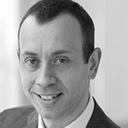
Antonio Caballero
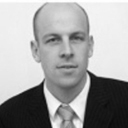
Hermann Weiher
| First name | Last name | Country | Affiliation |
|---|---|---|---|
| Ganz | Hans Rudolf | Switzerland | Ganz Consulting |
| Bastien | Josée | Canada | University Laval |
| Kasuga | Akio | Japan | School of Engineering |
| Nürnberger | Ulf | Germany | University of Stuttgart |
| Hosoi | Kiyotaka | Japan | Shinko Wire Company Ltd |
| Almeida | Pedro | Brazil | Sao Paulo University |
| Krauser | Larry | United States | General Technologies, Inc. |
| Ciccone | Tommaso | Italy | TENSA (Tensacciai s.r.l.) |
| Brand | Werner | Germany | DYWIDAG-Systems International GmbH |
| Caballero | Antonio | Switzerland | Consultant |
| Hayek | Carol | United States | CCL |
| Poston | Randall | United States | Pivot Engineers |
| Gläser | Christian | Germany | DYWIDAG-Systems International |
| Theryo | Teddy | United States | BCC Engineering |
| Fernández-Ordóñez | David | Switzerland | fib |
| Gálvez Ruiz | Jaime | Spain | Universidad Politecnica de Madrid |
| Mutsuyoshi | Hiroshi | Japan | Saitama University , Fac. of Eng. |
| Weiher | Hermann | Germany | matrics engineering GmbH |
| Gutsch | Alex | Germany | MPA Braunschweig |
| Matthys | Stijn | Belgium | Ghent University |
| Ikehata | Shinya | Japan | Central Nippon Expressway Co Ltd |
| Junge | Sven | Germany | ISB Institut für Stahlbetonbewehrung e.V. |
| Camci | Ladin | United Kingdom | CARES (Certification Authority for Reinforcing Steels) |
| Katsuda | Hirokazu | Japan | Sumitomo Electric Industries, Ltd. |
| Ramirez | Guillermo | Switzerland | VSL International Ltd |
| Prevedini | Cesare | Brazil | Protende Sistemas e Métodos de Construcoes |
| Holt | Reggie H. | United States | Federal Highway Administration |
| Hunsicker | Gregory | United States | OnPoint Engineering and Technology LLC |
| Wang | Xiaomeng | Switzerland | BBR VT international Ltd. |
| Delgado | Albert | United States | General Technologies, Inc. |
| Zivanovic | Ivica | France | Freyssinet |
- TG5.1 - FRP Reinforcement for concrete structures
- TG5.2 - Reinforcing steels and systems
- TG5.3 - Prestressing materials and systems
- TG5.4 - Recommendations for ground anchor systems
- TG5.5 - Cables for cable-supported bridges
- TG5.10 - Inspection and monitoring of reinforced/prestressed concrete structures
- TG5.12 - Ultra-high strength prestressing steels for post-tensioning kits and stay systems
- TG5.13 - Grouting of tendons in prestressed concrete
- TG5.14 - Durability of post-tensioning tendons
TG5.1 - FRP Reinforcement for concrete structures
The main objectives of TG5.1 are:
- The elaboration of design guidelines in accordance with the design format of the fib Model Code for Concrete Structures 2010 (“fib MC2010”) and Eurocode 2.
- Link with other initiatives regarding material testing and characterisation & development of standard test methods.
- Participation in the international forum in the field of advanced composite reinforcement, stimulating the use of FRP for concrete structures.
- Guidance on practical execution of concrete structures reinforced/prestressed/strengthened by FRP.
| First name | Last name | Country | Affiliation |
|---|---|---|---|
| Balázs | György L. | Hungary | Budapest Univ. of Techn. & Economics |
| Ceroni | Francesca | Italy | Universitá degli Studi di Napoli Parthenope |
| Pantazopoulou | Stavroula (S.J.) | Canada | The Lassonde Faculty of Engineering, York University |
| Bournas | Dionysios | United Kingdom | Nottingham University |
| Barris | Cristina | Spain | Universitat de Girona |
| Ferrier | Emmanuel | France | Université Lyon 1 |
| Garcia Lopez | Reyes | United Kingdom | School of Engineering, University of Warwick |
| Kisicek | Tomislav | Croatia | University of Zagreb |
| Nistico | Nicola | Italy | Sapienza Università di Roma |
| Proia | Alessandro | Belgium | Ghent University |
| de Sena Cruz | José Manuel | Portugal | University of Minho |
| Donchev | Ted | United Kingdom | Kingston University |
| Gremel | Douglas | United States | Owens Corning |
| Nanni | Antonio | Italy | Univ. degli Studi di Napoli Federico II |
| Berset | Thierry | Switzerland | SIKA Services AG |
| Thorhallsson | Eythor | Iceland | Reykjavik University |
| Weber | André | Germany | |
| Triantafillou | Thanasis | Greece | University of Patras |
| Oller Ibars | Eva | Spain | Technical University of Catalonia |
| Fernández-Ordóñez | David | Switzerland | fib |
| Torres | Lluis | Spain | University of Girona |
| Kriekemans | B. | Belgium | Fortius |
| Sólyom | Sándor | Hungary | Budapest Univ. of Techn. & Economics |
| Ueda | Tamon | China | Shenzhen University |
| Matthys | Stijn | Belgium | Ghent University |
| Kotynia | Renata | Poland | Lodz University of Technology |
| Guadagnini | Maurizio | United Kingdom | University of Sheffield |
| Rousakis | Theodoros | Greece | Democritus University of Thrace |
| A. O. Barros | Joaquim | Portugal | Universidade do Minho |
| Thermou | Georgia | United Kingdom | University of Nottingham |
| Verbaten | Mark | Netherlands | ABT bv |
| Del Zoppo | Marta | Italy | University of Naples Federico II |
| Akpinar | Erkan | Turkey | Kocaeli University |
| Baena | Marta | Spain | University of Girona |
| Barragan | Bryan | France | OCV Chambery International |
| Chen | Jian-Fei | Taiwan, Province of China | Southern University of Science and Technology |
| Ciupala | Mihaela Anca | United Kingdom | University of East London |
| Di Ludovico | Marco | Italy | University of Naples |
| Escolano Margarit | David | United Kingdom | The University of Sheffield |
| Florut | Sorin-Codrut | Romania | Politehnica University of Timisoara |
| Krajnović | Ivana | Belgium | Ghent University |
| Maazoun | Azer | Belgium | Ghent University |
| Pouwels | Niek | Netherlands | ABT |
| Roscini | Francesca | Italy | University of Sheffield |
| Tastani | Souzana | Greece | Democritus University of Thrace |
| Trochoutsou | Niki | Italy | Politecnico di Milano |
| Yaqub | Muhammad Arslan | Belgium | Ghent University |
| Lignola | Gian Piero | Italy | University of Naples Federico II |
| Rezazadeh | Mohammadali | Portugal | University of Minho |
| Czaderski-Forchmann | Christoph | Switzerland | EMPA, Structural Engineering |
| Correia | Luís | Portugal | University of Minho |
| Del Vecchio | Ciro | Italy | |
| Balconi | Gabriele | Italy | Sireg Geotech s.r.l. |
| Casadei | Paolo | Italy | Sireg Geotech s.r.l. |
| Franco | Annalisa | Italy | Italian National Research Council |
| Gowda | Chandan | United Kingdom | Atkins Global |
| Grzesiak | Szymon | Germany | RPTU Kaiserslautern |
| Kostova | Kaloyana | United Kingdom | National Composites Centre |
| Mohamed | Khaled | Canada | |
| Niedermeier | Ronald | Germany | Technische Universität München |
| Shayanfar | Javad | Portugal | University of Minho |
| Todisco | Leonardo | Spain | E.T.S.I. Caminos, Canales y Puertos |
| Tomai | Simone | United Kingdom | Richter Associates Ltd |
| Van Beek | Michel | Netherlands | BeVePro Consultancy |
| Yamamoto | Yoshiaki | Japan | |
| Yurdakul | Özgür | Czech Republic | Univerzita Pardubice |
| Čairović | Đorđe | Czech Republic | |
| Giaccio | Craig | United Kingdom | Arcadis |
| Nolan | Steven | United States | Florida Department of Transportation |
| AL MAHMOUD | Firas | France | Université de Lorraine, CNRS, IJL, F-54000 Nancy, France |
| Caro | Manjola | United Kingdom | University of Bristol |
| Mohammadi | Amirhossein | Portugal | Universidade de Minho |
| Wu | Chao | United Kingdom | |
| Szinvai | Szabolcs | Hungary | BME |
| Bilotta | Antonio | Italy | University of Naples Federico II |
| MAGAGNINI | Erica | Italy | |
| Bertolli | Veronica | Italy | |
| Chataigner | Sylvain | France | |
| Costa | Ines | Portugal | CiviTest, Portugal |
| D’Antino | Tommaso | Italy | Politecnico di Milano |
| de Felice | Gianmarco | Italy | Roma Tre University |
| Dias | Salvador | Portugal | University of Minho |
| Koutas | Lampros | Greece | University of Thessaly |
| Molkens | Tom | Belgium | KU Leuven |
| Pahn | Matthias | Germany | |
| PAVLOVIĆ | ANA | United Kingdom | |
| Petkova | Diana | United Kingdom | Kingston University |
| Smith | Scott | Australia | The University of Adelaide |
| Buehler | Adrian | Germany | Schöck |
| Del Rey Castillo | Enrique | Australia | University of Auckland |
| Fanaradelli | Theodora | Greece | Democritus University of Thrace |
| Genikomsou | Aikaterini | Canada | Queen’s University |
| Goldack | Arndt | Germany | Bergische Universität Wuppertal |
| Montalbano | Antonio | Switzerland | Sika |
| Firmo | Joao | Portugal | University of Lisbon |
| Durnwalder | Caroline | Austria | |
| Spagnuolo | Simone | Italy | University of Rome "Tor Vergata" |
- Introduction of strengthening by FRP in the Model Code 2020
- Introduction of strengthening by FRP in the upcoming Eurocode 2
- Development of design examples in follow-up of B90 and in support of MC2020.
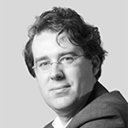
Stjin Matthys

Eva Oller Ibars
| First name | Last name | Country | Affiliation |
|---|---|---|---|
| Fernández-Ordóñez | David | Switzerland | fib |
| Todisco | Leonardo | Spain | E.T.S.I. Caminos, Canales y Puertos |
| Donchev | Ted | United Kingdom | Kingston University |
| Matthys | Stijn | Belgium | Ghent University |
| Nistico | Nicola | Italy | Sapienza Università di Roma |
| Oller Ibars | Eva | Spain | Technical University of Catalonia |
| Rezazadeh | Mohammadali | Portugal | University of Minho |
| de Sena Cruz | José Manuel | Portugal | University of Minho |
| Thorhallsson | Eythor | Iceland | Reykjavik University |
| Balázs | György L. | Hungary | Budapest Univ. of Techn. & Economics |
| Correia | Luís | Portugal | University of Minho |
| Costa | Ines | Portugal | CiviTest, Portugal |
| D’Antino | Tommaso | Italy | Politecnico di Milano |
| Damiani | Marco | Italy | Universita La Sapienza di Roma |
| A. O. Barros | Joaquim | Portugal | Universidade do Minho |
| Dias | Salvador | Portugal | University of Minho |
| Escolano Margarit | David | United Kingdom | The University of Sheffield |
| Kotynia | Renata | Poland | Lodz University of Technology |
| Triantafillou | Thanasis | Greece | University of Patras |
| Nanni | Antonio | Italy | Univ. degli Studi di Napoli Federico II |
| Petkova | Diana | United Kingdom | Kingston University |
| Rousakis | Theodoros | Greece | Democritus University of Thrace |
| Weber | André | Germany | |
| Yamamoto | Yoshiaki | Japan | |
| Zdanowicz | Katarzyna | Germany | Technische Universität Dresden |
- Introduction of provisions for internal FRP reinforcement in Model Code and future versions of Eurocode 2
- Development of design examples in accordance with Model Code and state-of-the-art approaches
- An updated state-of-the-art, building on Bulletin 40 and providing background information for Model Code 2020 and informing future developments

Maurizio Guadagnini

Cristina Barris
| First name | Last name | Country | Affiliation |
|---|---|---|---|
| Guadagnini | Maurizio | United Kingdom | University of Sheffield |
| Torres | Lluis | Spain | University of Girona |
| Fernández-Ordóñez | David | Switzerland | fib |
| Akpinar | Erkan | Turkey | Kocaeli University |
| Baena | Marta | Spain | University of Girona |
| Balázs | György L. | Hungary | Budapest Univ. of Techn. & Economics |
| Balconi | Gabriele | Italy | Sireg Geotech s.r.l. |
| Barragan | Bryan | France | OCV Chambery International |
| Barris | Cristina | Spain | Universitat de Girona |
| Bertolli | Veronica | Italy | |
| Bilotta | Antonio | Italy | University of Naples Federico II |
| Bies | Nora | Germany | TU Kaiserslautern |
| Carvelli | Valter | Italy | Politecnico di Milano |
| Casadei | Paolo | Italy | Sireg Geotech s.r.l. |
| Chołostiakow | Simon | United Kingdom | City University London |
| Czaderski-Forchmann | Christoph | Switzerland | EMPA, Structural Engineering |
| D’Antino | Tommaso | Italy | Politecnico di Milano |
| A. O. Barros | Joaquim | Portugal | Universidade do Minho |
| Donchev | Ted | United Kingdom | Kingston University |
| Escolano Margarit | David | United Kingdom | The University of Sheffield |
| Franco | Annalisa | Italy | Italian National Research Council |
| Gremel | Douglas | United States | Owens Corning |
| Gribniak | Viktor | Lithuania | Vilnius Gediminas Technical University |
| Kisicek | Tomislav | Croatia | University of Zagreb |
| Kotynia | Renata | Poland | Lodz University of Technology |
| Koutas | Lampros | Greece | University of Thessaly |
| Kriekemans | B. | Belgium | Fortius |
| Leone | Marianoela | Italy | Universita del Salento |
| Matthys | Stijn | Belgium | Ghent University |
| Molkens | Tom | Belgium | KU Leuven |
| Mohamed | Khaled | Canada | |
| Nanni | Antonio | Italy | Univ. degli Studi di Napoli Federico II |
| Nigro | Emidio | Italy | Università degli Studi di Napoli Federico II |
| Oller Ibars | Eva | Spain | Technical University of Catalonia |
| Pantazopoulou | Stavroula (S.J.) | Canada | The Lassonde Faculty of Engineering, York University |
| Petkova | Diana | United Kingdom | Kingston University |
| Roscini | Francesca | Italy | University of Sheffield |
| de Sena Cruz | José Manuel | Portugal | University of Minho |
| Sólyom | Sándor | Hungary | Budapest Univ. of Techn. & Economics |
| Tastani | Souzana | Greece | Democritus University of Thrace |
| Taranu | Nicolae | Romania | Technical University of Iasi |
| Thorhallsson | Eythor | Iceland | Reykjavik University |
| Trochoutsou | Niki | Italy | Politecnico di Milano |
| Veljkovic | Ana | Italy | Politecnico di Milano |
| Verbaten | Mark | Netherlands | ABT bv |
| Weber | André | Germany | |
| Zdanowicz | Katarzyna | Germany | Technische Universität Dresden |
| Zheng | Yu | China | |
| Preinstorfer | Philipp | Austria | Technische Universität Wien |
| Chataigner | Sylvain | France |
- Prestressed FRP for new structures
- Prestressing of FRP for strengthening purpose of RC and PC
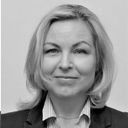
Renata Kotynia
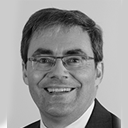
Christoph Czadersky
| First name | Last name | Country | Affiliation |
|---|---|---|---|
| Kotynia | Renata | Poland | Lodz University of Technology |
| Czaderski-Forchmann | Christoph | Switzerland | EMPA, Structural Engineering |
| Fernández-Ordóñez | David | Switzerland | fib |
| Bertolli | Veronica | Italy | |
| Balázs | György L. | Hungary | Budapest Univ. of Techn. & Economics |
| Akpinar | Erkan | Turkey | Kocaeli University |
| Baena | Marta | Spain | University of Girona |
| Barragan | Bryan | France | OCV Chambery International |
| Barris | Cristina | Spain | Universitat de Girona |
| Bilotta | Antonio | Italy | University of Naples Federico II |
| Carvelli | Valter | Italy | Politecnico di Milano |
| Bournas | Dionysios | United Kingdom | Nottingham University |
| Casadei | Paolo | Italy | Sireg Geotech s.r.l. |
| Ceroni | Francesca | Italy | Universitá degli Studi di Napoli Parthenope |
| Correia | Luís | Portugal | University of Minho |
| D’Antino | Tommaso | Italy | Politecnico di Milano |
| A. O. Barros | Joaquim | Portugal | Universidade do Minho |
| Dadason | Halldor Gunnar | Iceland | Reykjavik University, Orbicon Artic |
| Del Vecchio | Ciro | Italy | |
| Escolano Margarit | David | United Kingdom | The University of Sheffield |
| Donchev | Ted | United Kingdom | Kingston University |
| Del Zoppo | Marta | Italy | University of Naples Federico II |
| Di Ludovico | Marco | Italy | University of Naples |
| Garcia Lopez | Reyes | United Kingdom | School of Engineering, University of Warwick |
| Guadagnini | Maurizio | United Kingdom | University of Sheffield |
| Kisicek | Tomislav | Croatia | University of Zagreb |
| Kostova | Kaloyana | United Kingdom | National Composites Centre |
| Krajnović | Ivana | Belgium | Ghent University |
| Matthys | Stijn | Belgium | Ghent University |
| Maazoun | Azer | Belgium | Ghent University |
| Lignola | Gian Piero | Italy | University of Naples Federico II |
| Molkens | Tom | Belgium | KU Leuven |
| Nigro | Emidio | Italy | Università degli Studi di Napoli Federico II |
| Oller Ibars | Eva | Spain | Technical University of Catalonia |
| Pantazopoulou | Stavroula (S.J.) | Canada | The Lassonde Faculty of Engineering, York University |
| Pouwels | Niek | Netherlands | ABT |
| Proia | Alessandro | Belgium | Ghent University |
| Prota | Andrea | Italy | Universita di Napoli Federico II |
| de Sena Cruz | José Manuel | Portugal | University of Minho |
| Rousakis | Theodoros | Greece | Democritus University of Thrace |
| Sólyom | Sándor | Hungary | Budapest Univ. of Techn. & Economics |
| Shayanfar | Javad | Portugal | University of Minho |
| Tastani | Souzana | Greece | Democritus University of Thrace |
| Thorhallsson | Eythor | Iceland | Reykjavik University |
| Thermou | Georgia | United Kingdom | University of Nottingham |
| Tomai | Simone | United Kingdom | Richter Associates Ltd |
| Torres | Lluis | Spain | University of Girona |
| Trochoutsou | Niki | Italy | Politecnico di Milano |
| Triantafillou | Thanasis | Greece | University of Patras |
| Veljkovic | Ana | Italy | Politecnico di Milano |
| Verbaten | Mark | Netherlands | ABT bv |
| Yaqub | Muhammad Arslan | Belgium | Ghent University |
| Zheng | Yu | China |
TG5.2 - Reinforcing steels and systems
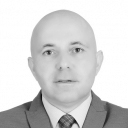
fib TG5.2 will consider all aspects related to reinforcing steels and systems from design to manufacturing, testing and final installation, use and maintenance. It will initially focus on developing a new manual which provides guidance and rules for detailing reinforcing steel. This document is intended to provide the general principles of good detailing practice and not to act as a comprehensive detailing manual. In addition, TG5.2 will address other topics considered high priority, and will create sub-groups to work on particular subjects as needed.
Areas of interest:
- review of the reinforcing steel grades available on the market (strength, ductility, bond, fatigue, durability properties) and relevant concrete structure design codes;
- manual for reinforcing materials and systems;
- technical report on fabrication of reinforcement;
- state of the knowledge on the bond properties of reinforcing steels;
- state of the knowledge on the fatigue resistance properties of reinforcing steels.
| First name | Last name | Country | Affiliation |
|---|---|---|---|
| Ganz | Hans Rudolf | Switzerland | Ganz Consulting |
| Nürnberger | Ulf | Germany | University of Stuttgart |
| McCabe | Steven | United States | Nat. Inst. of Standards & Technologies |
| Elices Calafat | Manuel | Spain | Universidad Politecnica de Madrid |
| Fernández-Ordóñez | David | Switzerland | fib |
| Krauser | Larry | United States | General Technologies, Inc. |
| Cairns | John | United Kingdom | Heriot-Watt University |
| Camci | Ladin | United Kingdom | CARES (Certification Authority for Reinforcing Steels) |
| Eligehausen | Rolf | Germany | IWB, Universität Stuttgart |
| Junge | Sven | Germany | ISB Institut für Stahlbetonbewehrung e.V. |
| Keogh | Dennis | United Kingdom | Laing O’Rourke Infrastructure Services |
| Truby | Andrew | United Kingdom | Truby Stevenson Ltd |
| Shekhovtsov | Vladyslav | Ukraine | Odesa State Academy of Civil Engineering and Architecture |
| Halliwell | Emily | United Kingdom | The Concrete Centre |
| Steux | Thierry | Belgium | |
| Ryser | Matthias | Germany | Dr. Vollenweider AG |
| Cadoni | Ezio | Switzerland | DynaMat SUPSI Laboratory |
TG5.3 - Prestressing materials and systems
Since Eugène Freyssinet’s first of use high-strength steel wire for prestressing concrete in the late 1920s, there have been many changes in prestressing systems used around the world. Current systems bear little resemblance to many of the older methods used in the past. Designers and contractors need information regarding these historical practices and materials to evaluate existing prestressed concrete in need of repair and to determine effective strategies to extend service life and enhance performance. Further, as new technologies are developed, they are often used in some countries but not in others.
TG5.3 has established two goals:
- to develop a state-of-the-art report describing the evolution and development of prestressing systems and to identify recent innovations and advances,
- to develop a new bulletin that provides recommendations for the installation of post-tensioning systems.

| First name | Last name | Country | Affiliation |
|---|---|---|---|
| Fernández-Ordóñez | David | Switzerland | fib |
| Ciccone | Tommaso | Italy | TENSA (Tensacciai s.r.l.) |
| Gläser | Christian | Germany | DYWIDAG-Systems International |
| Hayek | Carol | United States | CCL |
| Hosoi | Kiyotaka | Japan | Shinko Wire Company Ltd |
| Ikehata | Shinya | Japan | Central Nippon Expressway Co Ltd |
| Katsuda | Hirokazu | Japan | Sumitomo Electric Industries, Ltd. |
| Surendran | Nadarajah | United Kingdom | PRAETER Engineering Ltd |
| Civati | Luca | Italy | Tensacciai s.r.l. |
| Domage | Jean‐Baptiste | Switzerland | VSL |
| Steux | Thierry | Belgium | |
| Freeby | Gregg A. | United States | ASBI (American Segmental Bridge Institute) |
| Hunsicker | Gregory | United States | OnPoint Engineering and Technology LLC |
| Castiglioni | Andrea | Italy | Milano Serravalle S.p.A. |
| Gnägi | Adrian | Switzerland | VSL International Ltd. |
| Longo | Cosimo | Italy | Milano Serravalle |
| Skalska | Agnieska | United States | General Technologies Inc. |
| Ursery | Christopher | United States | ARUP |
TG5.4 - Recommendations for ground anchor systems
The overall motivation of TG5.4 is to establish a modern recommendation for the qualification of ground anchor systems.
The main objective of TG5.4 is to prepare a bulletin entitled “Recommendation for ground anchor systems” based on and updating earlier documents such as the “Recommendations for the design and construction of ground anchors”, 1996. The recommendations will include significant content for qualification of ground anchor systems covering prestressed permanent and temporary anchors.

Matthias Ryser
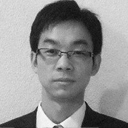
Xiaomeng Wang
| First name | Last name | Country | Affiliation |
|---|---|---|---|
| Nürnberger | Ulf | Germany | University of Stuttgart |
| Ripoll Garcia-Mansilla | Javier | Spain | Ripoll Consulting de Ing. |
| Gaucherand | Cyril | France | Freyssinet |
| Ericson | Gosta | Sweden | Sweco VBB AB |
| Sinclair | Mark | Australia | Structural Systems (Civil) Pty Ltd |
| Fernández-Ordóñez | David | Switzerland | fib |
| Neff | Theodore | United States | General Technologies, Inc. |
| Irvin | Chris | United Kingdom | DYWIDAG-SYSTEMS INTERNATIONAL Ltd. |
| Ryser | Matthias | Germany | Dr. Vollenweider AG |
| Weiher | Hermann | Germany | matrics engineering GmbH |
| Egger | Philipp | Switzerland | VSL International LTD |
| Manshadi | Behzad | Switzerland | |
| Gnägi | Adrian | Switzerland | VSL International Ltd. |
| Kido | Toshiro | Japan | Sumitomo (SEI) Steel Wire Corp. |
| Wang | Xiaomeng | Switzerland | BBR VT international Ltd. |
| Schiller | Andreas | Germany | Stahlwerk Annahütte |
| Wild | Matthias | Germany | DYWIDAG-Systems International |
TG5.5 - Cables for cable supported bridges
fib Bulletin 89, Acceptance of cable systems using prestressing steels, as an update of the previous fib Bulletin 30 was published in 2019.
The goal of TG5.5 is to work on selected individual topics related to cable systems for a further future update of Bulletin 89. The topics will be addressed one after the other and published in a few individual technical reports or recommendations before they will be included in a full revision of Bulletin 89.
Workflow and Timeline:
- Fire protection and fire testing of cables: 2020 - 2025
- Damper/damping requirements: 2022 - 2026
- Icing / ice mitigation of cables: 2026 - 2028
- Update on inspection technologies of cables
- SHMS for cable stayed bridges with post-data processing
- Illumination of stay cables
- Terrorism protection of cables
New recommendations on fire protection of stay cables is expected to be published in 2025.

| First name | Last name | Country | Affiliation |
|---|---|---|---|
| Kasuga | Akio | Japan | School of Engineering |
| Hosoi | Kiyotaka | Japan | Shinko Wire Company Ltd |
| Georgakis | Christos | Denmark | Aarhus University |
| Tejera | Adrian | Spain | Tycsa PSC Spain |
| Goodyear | David | United States | Consultant |
| Ciccone | Tommaso | Italy | TENSA (Tensacciai s.r.l.) |
| Brand | Werner | Germany | DYWIDAG-Systems International GmbH |
| Caballero | Antonio | Switzerland | Consultant |
| Meiss | Kathy | Germany | Stuttgart University of Applied Sciences |
| Fernández-Ordóñez | David | Switzerland | fib |
| Winkler | Jan | Denmark | AtkinsRéalis |
| Mutsuyoshi | Hiroshi | Japan | Saitama University , Fac. of Eng. |
| Gutsch | Alex | Germany | MPA Braunschweig |
| Ikehata | Shinya | Japan | Central Nippon Expressway Co Ltd |
| Escamilla García-Galán | Manuel | Spain | PONTEM |
| Widmann | Robert | Switzerland | EMPA |
| Hasbrouk | Gregory | United States | Parsons |
| Egger | Philipp | Switzerland | VSL International LTD |
| Fan | Haifeng | Switzerland | BBR Vt International Ltd. |
| Zivanovic | Ivica | France | Freyssinet |
| Manshadi | Behzad | Switzerland | |
| Katsuda | Hirokazu | Japan | Sumitomo Electric Industries, Ltd. |
| Mohareb | Sherif | Germany | KLÄHNE BUNG Ingenieure |
| Weber | Felix | Switzerland | Maurer Switzerland GmbH |
| Vollmering | Max | Germany | DYWIDAG-Systems Internationa |
| Bergman | Don | Canada | COWI |
| Larose | Guy | Canada | RWDI |
| Delgado | Albert | United States | General Technologies, Inc. |
| Bhattacharyya | Runal | India | IASTRUCTE, IRC, MIE |
| Castiglioni | Andrea | Italy | Milano Serravalle S.p.A. |
TG5.10 - Inspection and monitoring of reinforced/prestressed concrete structures
Maintenance of aging infrastructure (buildings, bridges, tunnels, etc.) is a significant part of both public, and private-entities’ budgets. The worldwide infrastructure and property maintenance costs are estimated to be EUR 180 billion per year. These costs depend on industry sector, age of the assets and governmental regulations. They highly affect the financial situation of public bodies and the profitability of enterprises.
There is a need to develop a guideline document to cover state-of-the-art inspection method statements, available sensor technologies including emerging digital solutions and remote sensing (e.g. drone inspection).
The required time for the development of this guideline is estimated between two to three years. The rough and high-level schedule is suggested as follows:
- First 6 to 9 months focused on building up the team and finalize the definition of the scope and content. Both are interlinked;
- Next 12 to 18 months working on developing the content of the different chapters;
- Final 6 to 9 months to finalize the first draft, including editorial review, before its submission to the TG 5.10 and C5;
- Finally, some time is expected to engage the peer reviewers and answer questions/comments received from the TG 5.10 and C5.
| First name | Last name | Country | Affiliation |
|---|---|---|---|
| Caballero | Antonio | Switzerland | Consultant |
| Winkler | Jan | Denmark | AtkinsRéalis |
| Fernández-Ordóñez | David | Switzerland | fib |
| Moreira de Sousa | Helder Filipe | Portugal | Brisa Group |
| Sas | Gabriel | Sweden | Luleå University of Technology |
| Farretas | Isaac | Denmark | COWI A/S. International Bridges |
| Subtil | Sara | United Kingdom | Arcadi Consulting (UK) Ltd. |
| Anzlin | Andrej | Slovenia | Slovenian National Building and Civil Engineering |
| Mundell | Chris | United Kingdom | ATKINS Limited |
| Layssi | Hamed | Canada | FprimeC Solutions Inc. |
| Longo | Cosimo | Italy | Anas S.p.A. |
| Romero | Ruben | Spain | Freyssinet S.A.U. |
| Castiglioni | Andrea | Italy | Milano Serravalle S.p.A. |
| McDonnell | Dara | Australia | Arup |
| Makita | Tohru | Japan | Central Nippon Expressway Company Limited |
| Medeiros Cruz | Ana Laura | Brazil | EVEHX; Oncrets |
TG5.12 - Ultra-high strength prestressing steels for post-tensioning kits and stay systems
The goal of sustainability involves a consensus among economic, environmental and social factors. Due to climate change, environmental concerns have increased in society. The construction sector is among the most active high environmental impact sectors. Emissions from building and infrastructure construction are expected to form the single largest category of consumption-based emissions for C40 cities between 2017 and 2050, producing 21% of consumption emissions. As this period is critical for reducing greenhouse gas (GHG) emissions in line with keeping global temperature rise to within 1.5ºC above pre-industrial averages, serious action is needed in this area.
According to the report Building and Infrastructure Consumption Emissions prepared by C40, Arup and the University of Leeds , material efficiency stands out as having the highest potential emission reduction impact, offering savings of 18% in cumulative emissions between 2017 and 2050. Ultra-High Strength Prestressing (UHSP) strands, namely strands with tensile strength of 2060 to 2360 MPa, has the potential to greatly reduce the quantity of steel necessary in concrete structures.
The goal of new proposed Task Group is the development of a guideline where the key aspects of introducing ultra-high strength strands at different prestressing applications (along with post-tensioning and stay cable systems) i.e. crucial material properties and risk of hydrogen induced stress corrosion failure, design recommendation, system and material testing, quality control, etc. are covered.

| First name | Last name | Country | Affiliation |
|---|---|---|---|
| Manshadi | Behzad | Switzerland | |
| Fernández-Ordóñez | David | Switzerland | fib |
| Benovic | Matus | Slovakia | Industrial Steel Wires EMEA |
| Makita | Tohru | Japan | Central Nippon Expressway Company Limited |
| Nürnberger | Ulf | Germany | University of Stuttgart |
| Park | Chan | Korea, Republic of | COWI Korea |
| Schneider | Wilhelm | Austria | Austrian Inst. of Constr. Eng. (OIB) |
| Wild | Matthias | Germany | DYWIDAG-Systems International |
| Hagen | Christian | Singapore | |
| Katsuda | Hirokazu | Japan | Sumitomo Electric Industries, Ltd. |
| Kollegger | Johann | Austria | Vienna University of Technology |
| Colombi | Pierluigi | Italy | Politecnico Milano |
| Fan | Haifeng | Switzerland | BBR Vt International Ltd. |
| Gil | H. | Korea, Republic of | Korea Expressway Corporation |
| Hong | Bruce | Korea, Republic of | Kiswire Ltd. |
| Shim | Byul | Korea, Republic of | DAOR E&C Co., Ltd |
| Meyer | Falk | Germany | Technische Universität München |
| Brand | Werner | Germany | DYWIDAG-Systems International GmbH |
TG5.13 - Grouting of tendons in prestressed concrete
Prestressed Concrete is a very efficient, reliable and durable form of construction. However, in the 1990’s it was discovered that grout was, in some cases, inadequate.
Major investigations followed, and new regulations and recommendations (The Concrete Society TR47, PTI, fib bulletin 20, EN 445-447) were published, representing major steps forward in materials and testing requirements.
Since then, the Concrete Society has released the technical report TR72, making the TR47 obsolete. PTI has published new issue of the M50.3 specification in 2012 and again in 2019.
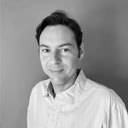
In 2022, time came to re-read and review the fib bulletin 20 and to collect the current state-of-the-art on grouting of multistrand tendons. The goal of Task Group was the development of a Guide to good practice, covering the same topics as the original bulletin 20.
A first draft should be presented to Commision 5 in December 2025.
| First name | Last name | Country | Affiliation |
|---|---|---|---|
| Ramirez | Guillermo | Switzerland | VSL International Ltd |
| Fernández-Ordóñez | David | Switzerland | fib |
| Andrade | Carmen | Spain | Centre Internacional de Mètodes Numèrics en l’Ènginyeria (CIMNE) |
| Ciccone | Tommaso | Italy | TENSA (Tensacciai s.r.l.) |
| Ganz | Hans Rudolf | Switzerland | Ganz Consulting |
| Gläser | Christian | Germany | DYWIDAG-Systems International |
| Manshadi | Behzad | Switzerland | |
| Theryo | Teddy | United States | BCC Engineering |
| Cordero Verge | Mariela | Spain | MK4 WORLD WIDE, S.L. |
| Merrill | Brian | United States | Wiss, Janney, Elstner Associates, Inc. |
| Gutsch | Alex | Germany | MPA Braunschweig |
| Niitani | Kyoji | Japan | Oriental Shiraishi Corporation |
| Wild | Matthias | Germany | DYWIDAG-Systems International |
| Shim | Byul | Korea, Republic of | DAOR E&C Co., Ltd |
| Colomiicenco | Tatiana | Austria | Werba |
| Gálvez Ruiz | Jaime | Spain | Universidad Politecnica de Madrid |
| Godart | Bruno | France | Gustave Eiffel University |
| Gonichon | Stéphane | France | Private |
| Moragues | Amparo | Spain | UPM |
| Paulus | Sylvie | France | Aiglon |
| Reinelt | Tobias | Austria | Werba |
| Santana | Helena | France | Aiglon |
| Zivanovic | Ivica | France | Freyssinet |
| Comet | Mélanie | France | Bouygues Construction Expertises Nucléaires |
| Peysson | Franck | France | Bouygues Construction Expertises Nucléaires |
| Rallo-Bremond | Sophie | France | EDF |
| Langella | Charlotte | France | EDF |
TG5.14 - Durability of post-tensioning tendons
fib Commission 5 has recently initiated a new Task group TG 5.14 to cover the Durability of Post-tensioning Tendons. The task group worked jointly with fib Commission 8 and in collaboration with the Federal Highway Administration (FHWA). The document is co-published with National Member Group partner, the Post-tensioning Institute (PTI). This effort established the initial goal to update and build upon the past work of fib Bulletin 33 Durability of Posttensioning Tendons which was published in 2005. The document has been widely referenced and valuable in establishing recommendations for durable post-tensioning systems with consideration of the application and aggressivity of the environment. This guidance included the use of the Protection Level (PL) concept and information on durable post-tensioning materials and their installation. There have been continued advances since the publication of the document, and therefore the need for an update.
The scope of work for TG 5.14 focuses on providing strategies for durable post-tensioning tendons in new structures. It includes guidance on determination of appropriate protection levels, detailing for durability, guidance on specifying components of post-tensioning systems, guidance on the installation of post-tensioning systems, and information on available monitoring methods to confirm the intended durability performance. The task group collected and reviewed international experience and examined the current guidance and specifications throughout the industry. While not a fully comprehensive list, some of the documents considered include: fib Bulletin 33 Durability of Post-tensioning Tendons, TR72 Durable bonded post-tensioned Concrete Bridge, PTI/ASBI M50.3-19 Specification for Multistrand and Grouted Post-tensioning, PTI M55.1-19 Specification for Grouting of Post-tensioned Structures, and FHWA-HIF- 20-041 Methodology for Risk Assessment of Post-Tensioning Tendons, and several current fib documents related to post-tensioning. This task group under fib Commission 5 and worked jointly with fib Commission 8. There are several related efforts, within fib and other organizations. Specifically, the significant work of WP 1.1.5 Management of Post-tensioned Bridges within fib TG 1.1 is recognized and recommended for further information relating to in-service bridges.
TG 5.14 comprised a cross-section of experts representing various roles (owners, designers, suppliers, government agencies, academics, contractors, and testing laboratories) and also representing different international perspectives. The contributions of the task group led to the updates and documentation of the state of practice. This guidance provides strategies toward ensuring durable post-tensioned concrete structures.

Gregory Hunsicker
Hans-Rudolf Ganz
| First name | Last name | Country | Affiliation |
|---|---|---|---|
| Ganz | Hans Rudolf | Switzerland | Ganz Consulting |
| Hunsicker | Gregory | United States | OnPoint Engineering and Technology LLC |
| Fernández-Ordóñez | David | Switzerland | fib |
| Ikehata | Shinya | Japan | Central Nippon Expressway Co Ltd |
| Holt | Reggie H. | United States | Federal Highway Administration |
| Potter | Will | United States | Florida Department of Transportation |
| Theryo | Teddy | United States | BCC Engineering |
| Evangelista | Luigi | Italy | Italferr SpA |
| Waldis | Walter | Switzerland | private |
| Massart | Pascal | Belgium | SPW Mobility and Infrastructure |
| Houel | Adrien | France | French Ministry of Transports |
| Marzahn | Gero | Cote d'Ivoire | Germany Federal Ministry for Digital and Transport |
| Pielstick | Brett | United States | Eisman & Russo |
| Clark | Gordon | United Kingdom | Consultant |
| Washer | Glenn | United States | University of Missouri |
| Gläser | Christian | Germany | DYWIDAG-Systems International |
| Krauser | Larry | United States | General Technologies, Inc. |
| Ciccone | Tommaso | Italy | TENSA (Tensacciai s.r.l.) |
| A Corven | John | United States | Hardesty & Hannover Convener |
| Cornelius | Jon | United States | |
| Proverbio | Edoardo | Italy | University of Messina, Italy |
| Delgado | Albert | United States | General Technologies, Inc. |
| Sward | Bob | United States | Structural Technologies |
| Christle | Tim | United States | PTI - Post-Tensioning Institute |
| Freeby | Gregg A. | United States | ASBI (American Segmental Bridge Institute) |
| Katsuda | Hirokazu | Japan | Sumitomo Electric Industries, Ltd. |
| Paspastergiou | Dimitrios | Switzerland | FEDRO |
| Brenkus | Natassia | United States | Florida Department of Transportation |
| Pichler | Niels | Switzerland |