
Motivation
Analysis and design are understood as core tasks of structural engineering. In this field, nine areas of interest have been identified; hence, nine task groups form the basis of the new structure of Commission 2. Today, the analysis – i.e. the detailed investigation of the stress and strain state – has gained in importance, and consequently refined and physically based models and calculation procedures are required. On the other hand, the design of new structures (comprising conception, dimensioning and detailing) still is fundamental for practicing engineers. In general, the respective approaches should be one and the same for the two levels of detail, but more practical and easier to apply for the latter case. Commission 2 supports and follows this line of development of structural engineering.
Scope and objective of technical work
The scope of Commission 2 is to develop models and calculation procedures for the analysis and design of structures and structural members under short term and long term static loading as well as under fatigue, fire and extreme events. Serviceability limit states and ultimate limit states as well as their interaction are considered, and both research results and recommendations for the practical application shall be presented. In the near future the activity of COM2 will focus on new and also on existing structures in order to support the development of the new fib Model Code 2020.
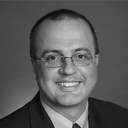
Oguzhan Bayrak

TBC
| First name | Last name | Country | Affiliation |
|---|---|---|---|
| Balázs | György L. | Hungary | Budapest Univ. of Techn. & Economics |
| Mancini | Giuseppe | Italy | Politecnico Torino |
| Pecce | Maria Rosaria | Italy | University of Naples Federico II |
| Walraven | Joost | Netherlands | Dutch fib Delegation |
| Braestrup | Mikael | Denmark | Rambøll |
| Bayrak | Oguzhan | United States | Univ. of Texas at Austin |
| Curbach | Manfred | Germany | Technische Univ. Dresden |
| Plizzari | Giovanni | Italy | University of Brescia |
| Vítek | Jan | Czech Republic | Metrostav a. s. |
| Kaufmann | Walter | Switzerland | ETH Zürich |
| Cairns | John | United Kingdom | Heriot-Watt University |
| Fernández-Ordóñez | David | Switzerland | fib |
| Eligehausen | Rolf | Germany | IWB, Universität Stuttgart |
| Sigrist | Viktor | Switzerland | vis Engineering |
| Hallgren | Mikael | Sweden | Tyréns Sverige AB |
| Muttoni | Aurelio | Switzerland | École polytechnique fédérale de Lausanne (EPF Lausanne) |
| Høj | Niels | Switzerland | HOJ Consulting GmbH |
| Foster | Stephen | Australia | UNSW Sydney |
| Kollegger | Johann | Austria | Vienna University of Technology |
| Maekawa | Koichi | Japan | Yokohama National University |
| Vollum | Robert | United Kingdom | Imperial College London |
- TG2.1 - Serviceability models
- TG2.2 - Ultimate limit state models
- TG2.3 - Fire design of concrete structures
- TG2.4 - Computer-based modeling and design
- TG2.5 - Bond and material models
- TG2.6 - Composite steel-concrete construction
- TG2.7 - Seismic Design
- TG2.8 - Safety and performance concepts
- TG2.9 - Fastenings to structural concrete and masonry
- TG2.10 - Textile reinforced concrete construction and design
- TG2.11 - Structures made by digital fabrication
- TG2.12 - Protective Concrete Structures against Hazards
- TG2.13 - Design and assessment for tsunami loading
- TG2.14 - Open-source code development by the fib
- TG2.15 - Bridges with combined reinforcement
TG2.1 - Serviceability models
Serviceability limit states (SLS) determine the applicability of concrete structures. When these criteria are met, the concrete structure can function properly during its service life. Correct design according to serviceability limit states is therefore essential for the construction of durable, robust and valuable structures. Violation of the SLS criteria leads to structures that do not function properly and/or to reduced durability, the consequences of which can be recognised very quickly. Therefore, the models for verification of the expected criteria are of primary importance.
The activity of the group is focused on the development of models for analysis of cracks and deformations of concrete structures. Beside the sophisticated numerical models, engineering practice requires practical engineering approaches, which are applicable in codes and in preliminary design stages when important decisions on the conceptual design are accepted. The activity will be focused on new structures and also on existing structures for assessment, rehabilitation or strengthening.
| First name | Last name | Country | Affiliation |
|---|---|---|---|
| Ceroni | Francesca | Italy | Universitá degli Studi di Napoli Parthenope |
| Gardner | Diane | United Kingdom | Cardiff University |
| Lacarrière | Laurie | France | INSA Toulouse |
| Kaklauskas | H. Gintaris | Lithuania | Vilnius Gediminas Technical Univ. |
| Burns | Clare | Switzerland | Walt+Galmarini AG |
| Bisch | Philippe | France | Egis Industries |
| Debernardi | Pier | Italy | Politecnico di Torino |
| Eckfeldt | Lars | Germany | Deutsches Institut für Bautechnik (DIBt) |
| Guiglia | Matteo | Italy | Politecnico di Torino |
| Borosnyoi-Crawley | Dorian | New Zealand | WSP Research |
| Sellin | Jean-Philippe | France | Cerema |
| Lark | Robert | United Kingdom | Cardiff University |
| El-Badry | Mamdouh | Canada | University of Calgary |
| Vráblík | Lukáš | Czech Republic | Novak & Partner Ltd |
| Taliano | Maurizio | Italy | Politecnico di Torino |
| Gribniak | Viktor | Lithuania | Vilnius Gediminas Technical University |
| Ghali | Amin | Canada | University of Calgary |
| Windisch | Andor | Germany | |
| Toutlemonde | François | France | Université Gustave Eiffel |
| Pecce | Maria Rosaria | Italy | University of Naples Federico II |
| Torrenti | Jean Michel | France | Univ Gustave Eiffel |
| Fehling | Ekkehard | Germany | IBB Fehling + Jungmann GmbH |
| Cervenka | Vladimir | Czech Republic | Cervenka Consulting |
| Chiorino | Mario Alberto | Italy | Politecnico di Torino |
| Pérez Caldentey | Alejandro | Spain | FHECOR Ingenieros Consultores/Universidad Politécnica de Madrid |
| Vítek | Jan | Czech Republic | Metrostav a. s. |
| Fernández-Ordóñez | David | Switzerland | fib |
| Burdet | Olivier | Switzerland | |
| Torres | Lluis | Spain | University of Girona |
| Wan-Wendner | Roman | Belgium | Ghent University |
| Duprat | Frédéric | France | INSA Toulouse |
| Mari Bernat | Antonio | Spain | Uni. Politéc. Catalunya |
| Barris | Cristina | Spain | Universitat de Girona |
| Kohoutkova | Alena | Czech Republic | Czech Technical University - CVUT |
| Menétrey | Philippe | Switzerland | IngPhi sa |
| Oller Ibars | Eva | Spain | Technical University of Catalonia |
| Ueda | Tamon | China | Shenzhen University |
| Balázs | György L. | Hungary | Budapest Univ. of Techn. & Economics |
| Tošić | Nikola | Spain | Universitat Politècnica de Catalunya |
| McLeod | Christina | South Africa | University of Kwazulu - Natal |
| Rimkus Vilnius | Arvydas | Lithuania | Gediminas Technical University |
| Schlicke | Dirk | Austria | Technische Universität Graz |
| Brioist | Jean-Jacques | France | SIAM, AFGC |
| Alam | Syed Yasir | France | Ecole Central de Nantes |
| Tan | Reignard | Norway | NTNU Trondheim |
| Vollum | Robert | United Kingdom | Imperial College London |
| van den bos | ab | Netherlands | NLyse |
| Moreira de Sousa | Helder Filipe | Portugal | Brisa Group |
| Brisard | Sébastien | France | LMA - UMR 7031 AMU CNRS - Centrale Marseille |
| First name | Last name | Country | Affiliation |
|---|---|---|---|
| Balázs | György L. | Hungary | Budapest Univ. of Techn. & Economics |
| Sellin | Jean-Philippe | France | Cerema |
| Chiorino | Mario Alberto | Italy | Politecnico di Torino |
| Pérez Caldentey | Alejandro | Spain | FHECOR Ingenieros Consultores/Universidad Politécnica de Madrid |
| Vítek | Jan | Czech Republic | Metrostav a. s. |
| Fernández-Ordóñez | David | Switzerland | fib |
| Burdet | Olivier | Switzerland | |
| Wan-Wendner | Roman | Belgium | Ghent University |
| Mari Bernat | Antonio | Spain | Uni. Politéc. Catalunya |
| Duprat | Frédéric | France | INSA Toulouse |
| El-Badry | Mamdouh | Canada | University of Calgary |
| Lark | Robert | United Kingdom | Cardiff University |
| Menétrey | Philippe | Switzerland | IngPhi sa |
| Vráblík | Lukáš | Czech Republic | Novak & Partner Ltd |
| Barris | Cristina | Spain | Universitat de Girona |
| McLeod | Christina | South Africa | University of Kwazulu - Natal |
| Oller Ibars | Eva | Spain | Technical University of Catalonia |
| Schlicke | Dirk | Austria | Technische Universität Graz |
| First name | Last name | Country | Affiliation |
|---|---|---|---|
| Balázs | György L. | Hungary | Budapest Univ. of Techn. & Economics |
| Bajo Pavia | Carlos | Spain | Ferrovial Agromán S. A. |
| Câmara | José | Portugal | Inst. Superior Tecnico |
| Torrenti | Jean Michel | France | Univ Gustave Eiffel |
| Vítek | Jan | Czech Republic | Metrostav a. s. |
| Pérez Caldentey | Alejandro | Spain | FHECOR Ingenieros Consultores/Universidad Politécnica de Madrid |
| Fernández-Ordóñez | David | Switzerland | fib |
| Torres | Lluis | Spain | University of Girona |
| Vráblík | Lukáš | Czech Republic | Novak & Partner Ltd |
| Gribniak | Viktor | Lithuania | Vilnius Gediminas Technical University |
| Lacarrière | Laurie | France | INSA Toulouse |
| Mari Bernat | Antonio | Spain | Uni. Politéc. Catalunya |
| Taliano | Maurizio | Italy | Politecnico di Torino |
| Corres | Hugo | Spain | FHECOR Ingenieros Consultores |
| Schlicke | Dirk | Austria | Technische Universität Graz |
TG2.2 - Ultimate limit state models
Task Group 2.2 was established to evaluate and develop models for the conception, design and analysis of concrete structures. Topics within the scope of the work may include models that deal with the ultimate limit state and with ductility as to their affect on peak and post peak behaviours.
The objective of TG2.2 is to synthesise available results from research, testing and design experience. Therefore, research and development in this field is monitored, documented and evaluated. For the time being, the work is focused on the behaviour of slabs and beams in shear, shear aspects in the design of members reinforced with steel bars, steel fibres or a combination of steel fibres and bars and the punching behaviour of slabs. Moreover, strut-and-tie modelling is treated as a specific method to capture ultimate limit states.

| First name | Last name | Country | Affiliation |
|---|---|---|---|
| Denton | Steve | United Kingdom | WSP |
| Walraven | Joost | Netherlands | Dutch fib Delegation |
| Bayrak | Oguzhan | United States | Univ. of Texas at Austin |
| Hegger | Josef | Germany | RWTH Aachen |
| Minelli | Fausto | Italy | University of Brescia |
| Vollum | Robert | United Kingdom | Imperial College London |
| Fernández Ruiz | Miguel | Spain | Universidad Politécnica de Madrid |
| Fernández-Ordóñez | David | Switzerland | fib |
| Muttoni | Aurelio | Switzerland | École polytechnique fédérale de Lausanne (EPF Lausanne) |
| Lourenço | Miguel | Portugal | JSJ Structural Engineering |
| Foster | Stephen | Australia | UNSW Sydney |
| di Prisco | Marco | Italy | Politecnico di Milano |
| Bentz | Evan | Canada | University of Toronto |
| Simões | João Tiago | Switzerland |
| First name | Last name | Country | Affiliation |
|---|---|---|---|
| Walraven | Joost | Netherlands | Dutch fib Delegation |
| Bayrak | Oguzhan | United States | Univ. of Texas at Austin |
| Belletti | Beatrice | Italy | Univ. degli Studi di Parma - Engineering and Architecture |
| Hegger | Josef | Germany | RWTH Aachen |
| Vollum | Robert | United Kingdom | Imperial College London |
| Fernández Ruiz | Miguel | Spain | Universidad Politécnica de Madrid |
| Kaufmann | Walter | Switzerland | ETH Zürich |
| Fernández-Ordóñez | David | Switzerland | fib |
| Sigrist | Viktor | Switzerland | vis Engineering |
| Muttoni | Aurelio | Switzerland | École polytechnique fédérale de Lausanne (EPF Lausanne) |
| Cladera Bohigas | Antoni | Spain | University of Balearic Islands |
| Huber | Patrick | Austria | Vienna University of Technology |
| Hrynyk | Trevor | United States | University of Waterloo |
| Foster | Stephen | Australia | UNSW Sydney |
| Hong | Sung-Gul | Korea, Republic of | Seoul National University |
| Mihaylov | Boyan | Belgium | University of Liege |
| Sagaseta | Juan | United Kingdom | University of Surrey |
| Uzel | Almila | Turkey | Yeditepe University |
| Bentz | Evan | Canada | University of Toronto |
| Yang | Yuguang | Netherlands | TU Delft |
| First name | Last name | Country | Affiliation |
|---|---|---|---|
| Minelli | Fausto | Italy | University of Brescia |
| Fernández-Ordóñez | David | Switzerland | fib |
| Foster | Stephen | Australia | UNSW Sydney |
| di Prisco | Marco | Italy | Politecnico di Milano |
| First name | Last name | Country | Affiliation |
|---|---|---|---|
| Orlando | Maurizio | Italy | Università degli Studi di Firenze |
| Rombach | Günter | Germany | Techn. Univ. of Hamburg-Harburg |
| Ramos | António | Portugal | NOVA School of Science &Technology |
| Halvonik | Jaroslav | Slovakia | Slovak University of Technology in Bratislava |
| Hueste | Mary Beth | United States | Texas A&M University |
| Kueres | Dominik | Germany | RWTH Aachen University |
| Walkner | Rupert | Austria | University of Innsbruck |
| Parra-Montesinos | Gustavo | United States | University of Michigan |
| Melo | Guilherme | Brazil | Universidade de Brasilia |
| Walraven | Joost | Netherlands | Dutch fib Delegation |
| Bayrak | Oguzhan | United States | Univ. of Texas at Austin |
| Hegger | Josef | Germany | RWTH Aachen |
| Vollum | Robert | United Kingdom | Imperial College London |
| Fernández Ruiz | Miguel | Spain | Universidad Politécnica de Madrid |
| Laaksonen | Anssi | Finland | Tampere University of Technology |
| Ospina | Carlos | United States | Moffatt & Nichol |
| Vill | Markus | Austria | Vill ZT GmbH |
| Fernández-Ordóñez | David | Switzerland | fib |
| Hallgren | Mikael | Sweden | Tyréns Sverige AB |
| Feix | Jürgen | Austria | University of Innsbruck |
| Muttoni | Aurelio | Switzerland | École polytechnique fédérale de Lausanne (EPF Lausanne) |
| Hoang | Linh | Denmark | Danmarks Tekniske Universitet |
| Sagaseta | Juan | United Kingdom | University of Surrey |
| Park | Hong-Gun | Korea, Republic of | Seoul National University |
| Polak | Maria | Canada | University of Waterloo |
| Yang | Yuguang | Netherlands | TU Delft |
| Simões | João Tiago | Switzerland |
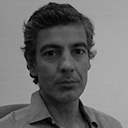
Lourenço, Miguel Filipe Passos Sério
| First name | Last name | Country | Affiliation |
|---|---|---|---|
| Almeida | João | Portugal | Instituto Superior Técnico Lisboa |
| Fernández Ruiz | Miguel | Spain | Universidad Politécnica de Madrid |
| Bousias | Stathis | Greece | |
| Fernández-Ordóñez | David | Switzerland | fib |
| Mata-Falcón | Jaime | Spain | Universitat Politècnica de València |
| Lourenço | Miguel | Portugal | JSJ Structural Engineering |
| Mihaylov | Boyan | Belgium | University of Liege |
| Hoang | Linh | Denmark | Danmarks Tekniske Universitet |
| Meléndez | Carlos | Spain | Esteyco SA |
| Faria | Duarte | Switzerland | Muttoni et Fernández, ingénieurs conseils SA |
| Pedrosa Ferreira | Miguel | Portugal | |
| Muttoni | Aurelio | Switzerland | École polytechnique fédérale de Lausanne (EPF Lausanne) |
TG2.3 - Fire design of concrete structures
Task Group 2.3 welcomes active members with expertise in theory and practice in relation to fire design of concrete structures. The scope of TG2.3 comprises a discussion of theoretical and practical problems in relation to fire design and the development of the state-of-the-art and best practices for fire design of concrete structures. It is the goal that the results of the task group will not only serve as a reference for the experts within the topic of fire design, but also will be helpful for the members of the fib in general.
The scope of the work of TG2.3 is based on the previous achievements, which include Bulletins 38 and 46 on fire design of concrete structures: materials, modelling, structural behaviour and assessment, as well as contributions to the fib Model Code and various workshops and special sessions on these topics.
In the next phase, TG2.3 will concentrate on a number of topical issues within fire design, with the objective of providing general engineering guidance within these fields. The work is organised in three working parties, with the following titles and scope.
| First name | Last name | Country | Affiliation |
|---|---|---|---|
| Dehn | Frank | Germany | KIT Karlsruher Institut für Technologie |
| Bamonte | Patrick | Italy | Politecnico di Milano |
| Felicetti | Roberto | Italy | Politecnico di Milano |
| Franssen | Jean Marc | Belgium | Université de Liège |
| Rodrigues | João | Portugal | University of Coimbra - Polo II |
| Gambarova | Pietro | Italy | Politecnico di Milano |
| Kodur | Venkatesh | United States | Michigan State University |
| Phan | Long | United States | NIST |
| Fernández-Ordóñez | David | Switzerland | fib |
| Van Coile | Ruben | Belgium | Ghent University |
| Taerwe | Luc | Belgium | Ghent University |
| Maluk | Cristian | United Kingdom | |
| Lakhani | Hitesh | Germany | University of Stuttgart |
| Gernay | Thomas | United States | Johns Hopkins University |
| Elhami Khorasani | Negar | United States | University at Buffalo |
| Naser | M.Z. | United States | Clemson University |
| Hänsel | Frederik | Germany | |
| Kalaba | Nataša | France | Cerib |
| Lo Monte | Francesco | Italy | Politecnico di Milano |
| Michelini | Elena | Italy | University of Parma |
| Stucchi | Riccardo | Switzerland | Lombardi SA |
| Agrawal | Ankit | United States | Integral Research Solutions Group |
| Molkens | Tom | Belgium | KU Leuven |
| Boxheimer | Moritz | Germany | Karlsruhe Institute of Technology |
| Gao | Peng | China | Hefei University of Technology |
| Cashell | Katherine | United Kingdom | University College London |
| Blumauer | Urska | Slovenia | Slovenian Building Research Institute |
| Szymkuc | Wojciech | Poland | Poznan University of Technology |
| Roosefid | Mohsen | France | IRSN |
| Yang | Hua | China | School of Civil Engineering, Harbin Institute of Technology |
The aim of WP2.3.1 is to prepare a technical report providing guidance on the structural fire engineering design for concrete structures with a high probability and/or sensitive to the occurrence of concrete spalling during or after a fire.

| First name | Last name | Country | Affiliation |
|---|---|---|---|
| Felicetti | Roberto | Italy | Politecnico di Milano |
| Fernández-Ordóñez | David | Switzerland | fib |
| Rodrigues | João | Portugal | University of Coimbra - Polo II |
| Lakhani | Hitesh | Germany | University of Stuttgart |
| Maluk | Cristian | United Kingdom | |
| Phan | Long | United States | NIST |
| First name | Last name | Country | Affiliation |
|---|---|---|---|
| Franssen | Jean Marc | Belgium | Université de Liège |
| Fernández-Ordóñez | David | Switzerland | fib |
| Gernay | Thomas | United States | Johns Hopkins University |
| Bamonte | Patrick | Italy | Politecnico di Milano |
| Lakhani | Hitesh | Germany | University of Stuttgart |
| Maluk | Cristian | United Kingdom | |
| Elhami Khorasani | Negar | United States | University at Buffalo |
| Naser | M.Z. | United States | Clemson University |
| Rodrigues | João | Portugal | University of Coimbra - Polo II |
| Van Coile | Ruben | Belgium | Ghent University |
| Achenbach | Marcus | Germany | LGA KdöR |
| Roosefid | Mohsen | France | IRSN |

| First name | Last name | Country | Affiliation |
|---|---|---|---|
| Bamonte | Patrick | Italy | Politecnico di Milano |
| Hänsel | Frederik | Germany | |
| Kalaba | Nataša | France | Cerib |
| Lo Monte | Francesco | Italy | Politecnico di Milano |
| Michelini | Elena | Italy | University of Parma |
| Stucchi | Riccardo | Switzerland | Lombardi SA |
| Fernández-Ordóñez | David | Switzerland | fib |
| First name | Last name | Country | Affiliation |
|---|---|---|---|
| Van Coile | Ruben | Belgium | Ghent University |
| Felicetti | Roberto | Italy | Politecnico di Milano |
| Gernay | Thomas | United States | Johns Hopkins University |
| Kodur | Venkatesh | United States | Michigan State University |
| Lakhani | Hitesh | Germany | University of Stuttgart |
| Molkens | Tom | Belgium | KU Leuven |
| Rodrigues | João | Portugal | University of Coimbra - Polo II |
| Agrawal | Ankit | United States | Integral Research Solutions Group |
| Fernández-Ordóñez | David | Switzerland | fib |
| Maluk | Cristian | United Kingdom |
TG2.4 - Computer-based modelling and design
Task Group 2.4 (TG2.4) aims to bridge the gap between complex and advanced analyses and practical design applications. The current state of knowledge on nonlinear methods, thermomechanical analyses as well as the application of holistic 3D building models will be prepared for practical use.
The scope and objectives of TG2.4 are to:
- survey the current state of knowledge on computer-based modelling and design;
- develop guidance documents related to the application of non-linear computer-based analysis methods for assessing performance and aiding the design of concrete members;
- develop guidance documents related to the application of thermomechanical computer-based analysis methods for assessing the cracking risk respectively the mode of cracking and the required minimum reinforcement due to imposed and restrained deformations;
- establish frameworks and methods to incorporate the application of holistic 3D building models in the static analysis and design in practice;
- provide guidance on the application of computational modelling procedures to post-construction assessments, forensic engineering, and rehabilitation work relating to existing concrete structures.
Moreover, the Task Group 2.4 shall become a platform for researchers and practical users to:
- propose criteria for calibrating or validating computer-based procedures employed for concrete structure design or assessment;
- discuss the extension of computer-based modelling procedures to structures employing high performance concretes, fibre-reinforced concretes, and composite concrete structures;
- work toward integrating computer-based analysis-related provisions within the Model Code.

| First name | Last name | Country | Affiliation |
|---|---|---|---|
| Lowes | Laura | United States | University of Washington |
| Pantazopoulou | Stavroula (S.J.) | Canada | The Lassonde Faculty of Engineering, York University |
| Spacone | Enrico | Italy | Università G. D’Annunzio |
| Bayrak | Oguzhan | United States | Univ. of Texas at Austin |
| Curbach | Manfred | Germany | Technische Univ. Dresden |
| Cervenka | Vladimir | Czech Republic | Cervenka Consulting |
| Kaufmann | Walter | Switzerland | ETH Zürich |
| Fernández-Ordóñez | David | Switzerland | fib |
| Foster | Stephen | Australia | UNSW Sydney |
| Monti | Giorgio | Italy | Sapienza Università di Roma |
| Polak | Maria | Canada | University of Waterloo |
| Allaix | Diego Lorenzo | Netherlands | TNO Neitherlands |
| Ayoubi | Mazen | Germany | Jordahl GmbH |
| Belletti | Beatrice | Italy | Univ. degli Studi di Parma - Engineering and Architecture |
| Mata-Falcón | Jaime | Spain | Universitat Politècnica de València |
| Guner | Serhan | Canada | Morrison Hershfield Ltd |
| Hendriks | Max | Netherlands | Delft University of Technology |
| Vecchio | Frank | Canada | University of Toronto |
| Weber | Marius | Switzerland | ETH Zurich |
| Strand | Bjørn William | Norway | Multiconsult AS |
| Bentz | Evan | Canada | University of Toronto |
| Engen | Morten | Norway | Multiconsult AS |
| Ishida | Tetsuya | Japan | Department of Civil Engineering |
| Schlicke | Dirk | Austria | Technische Universität Graz |
| van den bos | ab | Netherlands | NLyse |
| Unger | Jörg | Germany | Bundesanstalt für Materialforschung und -prüfung, BAM |
| Wan-Wendner | Roman | Belgium | Ghent University |
Discrete fibres are being added to cement based materials (Fibre reinforced concrete, FRC) in order to increase the post-cracking residual strength of concrete structures. The fibre reinforcement mechanisms are mainly activated after crack initiation of the binder paste, so modelling the behaviour of FRC requires numerical approaches able of simulating the crack initiation and crack propagation in cement based materials. However, the designers that have the responsibility to design FRC structures face several challenges for selecting the most appropriate constitutive model, such is the case when intended to use sophisticated computer programs based on the finite element method (FEM). The values of the parameters of the constitutive models, and how to assure that these values are representative of the behaviour of the real structure are key aspects that designers face.
The main aim of this WG is to propose reliable methodologies for the application of FEM-based computer models for the design of FRC structures by considering their serviceability and ultimate limit state exigencies.
| First name | Last name | Country | Affiliation |
|---|---|---|---|
| A. O. Barros | Joaquim | Portugal | Universidade do Minho |
| Fernández-Ordóñez | David | Switzerland | fib |
| van den bos | ab | Netherlands | NLyse |
| Carpinteri | Alberto | Italy | Politecnico di Torino |
| Fantilli | Alessandro | Italy | Politecnico di Torino |
| Sanz | Beatriz | Spain | Technical University of Madrid |
| GAL | Erez | Israel | Ben-Gurion University of the Negev |
| Vecchio | Frank | Canada | University of Toronto |
| Cervenka | Jan | Czech Republic | Cervenka Consulting Ltd |
| Ferrara | Liberato | Italy | Politecnico di Milano |
| Rossi | Pierre | Brazil | |
| Caggiano | Antonio | Germany | Univ. of Buenos Aires/Univ. of Darmstadt |
| Dias-da-Costa | Daniel | Australia | The Univ. of Sydney |
| Cendon | David | Spain | Universidad Politécnica de Madrid |
| Poveda Bautista | Elisa | Spain | University of Castilla-La Mancha |
| Schlangen | Erik | Netherlands | Delft University of Technology |
| Neu | Gerrit | Germany | Ruhr University Bochum |
| Meschke | Gunther | Germany | Ruhr University Bochum |
| Planas | Jaime | Spain | Technical University of Madrid |
| Juhasz | Peter | Hungary | JKP Static - Budapest |
| Cremonesi | Massimiliano | Italy | Politecnico di Milano |
| Özyurt Zihnioğlu | Nilüfer | Turkey | Boğaziçi University |
| Kabele | Petr | Czech Republic | Czech Technical University in Prague |
| Yu | Rena C. | Spain | University of Castilla-La Mancha |
| Chasioti | Stamatina | Canada | Yorku University |
| Gouveia | Ventura | Portugal | Polytechnic Institute of Viseu |
| Cunha | Vitor | Portugal | University of Minho |
| Chi | Yin | China | Wuhan University |
| Matos | Luis | Portugal | University of Minho |
| Accornero | Federico | China |
Accurate prediction of the durability and long-term performance of concrete structures is a challenging task due to numerous influencing factors involved and their complex combinations. Despite these complexities, the majority of current standard specifications deal with the durability of concrete on the basis of a rather simple, prescriptive approach, where a set of requirements are usually applied to at the design stage and serve mainly as the basis of quality control. The durability and long-term performance of concrete structures are also essential for evaluating sustainability aspects such as the life-cycle emissions of carbon dioxide (CO2). Therefore, we should be able to accurately predict the service life of a structure for given materials and processes. To improve our capability to predict the service life of concrete structures, we intend to use a multi-scale approach taking into account the time-dependent properties of concrete, externally applied loads and exposure environments in a holistic manner. To this end, such analysis models and simulation frameworks are still under development, and we aim to showcase its applicability, calculation procedures, required parameters, and appropriate ways of interpreting the simulation results.
The main scope of WP 2.4.2 is developing accurate and reliable models and simulation frameworks for life-span numerical simulation of concrete structures. The primary objective of the activity is to couple material and structural behaviors with their durability and sustainability. The developed numerical models should cover mechanical behaviors, durability issues, and sustainability aspects such as CO2 emissions.
| First name | Last name | Country | Affiliation |
|---|---|---|---|
| Ishida | Tetsuya | Japan | Department of Civil Engineering |
| Fernández-Ordóñez | David | Switzerland | fib |
| Ohno | Motohiro | Japan | The University of Tokyo |
| Benboudjema | Farid | France | ENS Paris-Saclay, Université Paris-Saclay |
| Bishnoi | Shashank | India | Indian Institute of Technology Delhi |
| Dai | Jie | China | Henan University of Technology |
| Gong | Fuyuan | China | Zhejiang University |
| Suryanto | B. | United Kingdom | Heriot-Watt University Edinburgh |
| Azenha | Miguel | Portugal | Civil UMinho - Universidade do Minho |
| Li | Kefei | China | |
| Rasul | Mehboob | Japan | Technology Development Division |
TG2.5 - Bond and material models
The overall motivation of TG2.5 is to advance theoretical and practical developments in topics related to bond and anchorage of reinforcing and prestressing materials, and to present these developments in an understandable and code-type formulated manner.
TG2.5 undertakes activities which stimulate and advance modelling of the influence of bond and anchorage of reinforcement on structural performance, as well as the development of design provisions related to bond behaviour and detailing of laps and anchorages.
| First name | Last name | Country | Affiliation |
|---|---|---|---|
| Balázs | György L. | Hungary | Budapest Univ. of Techn. & Economics |
| Ceroni | Francesca | Italy | Universitá degli Studi di Napoli Parthenope |
| Gambarova | Pietro | Italy | Politecnico di Milano |
| Pantazopoulou | Stavroula (S.J.) | Canada | The Lassonde Faculty of Engineering, York University |
| Aiello | Maria Antonietta | Italy | University of Lecce |
| Pellegrino | Carlo | Italy | Università di Padova |
| Faleschini | Flora | Italy | University of Padova |
| Sedlmair | Roman | Germany | Karlsruher Institut für Technology (KIT) |
| Čitek | David | Czech Republic | CTU Klokner Institute |
| Bolzon | Gabriella | Italy | Politecnico di Milano |
| Sharma | Akanshu | United States | Purdue University |
| Metelli | Giovanni | Italy | University of Brescia |
| Lundgren | Karin | Sweden | Chalmers University of Technology |
| Plizzari | Giovanni | Italy | University of Brescia |
| Cairns | John | United Kingdom | Heriot-Watt University |
| Goodchild | Charles | United Kingdom | The Concrete Centre |
| Fernández-Ordóñez | David | Switzerland | fib |
| Eligehausen | Rolf | Germany | IWB, Universität Stuttgart |
| Muttoni | Aurelio | Switzerland | École polytechnique fédérale de Lausanne (EPF Lausanne) |
| Massicotte | Bruno | Canada | Ecole Polytechnique de Montréal |
| Coronelli | Dario | Italy | Politecnico di Milano |
| Leone | Marianoela | Italy | Universita del Salento |
| Lequesne | Remy | United States | The University of Kansas |
| Muciaccia | Giovanni | Italy | Politecnico di Milano |
| Genesio | Giovacchino | Germany | Hilti Entwicklungsges. mbH |
| Bosnjak | Josipa | Germany | Universität Stuttgart |
| Palmisano | Fabrizio | Italy | PPV Consulting Studio Palmisano Perilli Associati |
| Murcia-Delso | Juan | Spain | Universitat Politècnica de Catalunya (UPC) |
| Koschemann | Marc | Germany | Technische Universität Dresden |
TG2.6 - Composite steel-concrete construction
Steel-concrete composite construction allows various structural solutions that optimize the performances of the two-component materials through a well-assessed design that takes into account all the particularities of steel and RC constructions as well as interaction problems.
The use of composite construction is widely spread all around the world, and its use for the construction of medium-sized bridges is a very frequent technical choice. In this historical period, the concrete industry must take this into account.
The motivation of the fib TG2.6 is to identify the meaningful characteristics of composite steel- concrete structures with respect to typical aspects of RC structures in order to provide technical knowledge and design provisions.
The activity of the group is focused on the analyses of the structural behaviour of RC parts constituting steel-concrete composite members and the modeling of their interaction with the steel parts.
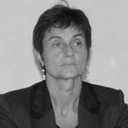
Maria Rosaria Pecce
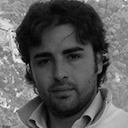
Antonio Bilotta
| First name | Last name | Country | Affiliation |
|---|---|---|---|
| Napoli | Paolo | Italy | Politecnico di Torino |
| Fabbrocino | Giovanni | Italy | University of Molise |
| di Sarno | Luigi | Italy | Università degli studi del Sannio |
| Dezi | Luigino | Italy | Università Politecnica delle Marche |
| Faella | Ciro | Italy | University of Salerno |
| Amadio | Claudio | Italy | University of Trieste |
| del Prete | Iolanda | United Kingdom | BuroHappold Engineering |
| Lam | Dennis | United Kingdom | University of Bradford |
| Leoni | Graziano | Italy | University of Camerino |
| Wang | Yong | United Kingdom | University of Manchester |
| Zandonini | Riccardo | Italy | University of Trento |
| Bertagnoli | Gabriele | Italy | Politecnico di Torino |
| Nigro | Emidio | Italy | Università degli Studi di Napoli Federico II |
| Elghazouli | Ahmed | United Kingdom | Imperial College London |
| Mancini | Giuseppe | Italy | Politecnico Torino |
| Pecce | Maria Rosaria | Italy | University of Naples Federico II |
| Bilotta | Antonio | Italy | University of Naples Federico II |
| Pérez Caldentey | Alejandro | Spain | FHECOR Ingenieros Consultores/Universidad Politécnica de Madrid |
| Triantafillou | Thanasis | Greece | University of Patras |
| Fernández-Ordóñez | David | Switzerland | fib |
| Wan-Wendner | Roman | Belgium | Ghent University |
| Martinelli | Enzo | Italy | University of Salerno |
| Le Pourry | Clémence | France | Ingenova |
| Su | Meini | United Kingdom | University of Manchester |
| Corres | Hugo | Spain | FHECOR Ingenieros Consultores |
| Giraldo Soto | Alejandro | Switzerland | |
| Yang | Hua | China | School of Civil Engineering, Harbin Institute of Technology |
TG2.7 - Seismic Design
The motivation for the work of Task Group 2.7 (TG2.7) is the promotion of the use and improvement in safety of concrete structures under accidental (e.g. seismic) actions and/or in exposed regions worldwide.
| First name | Last name | Country | Affiliation |
|---|---|---|---|
| Franchin | Paolo | Italy | Sapienza Università di Roma |
| Kappos | Andreas | United Arab Emirates | Khalifa Univ. |
| Fardis | Michael | Greece | University of Patras |
| Fernández-Ordóñez | David | Switzerland | fib |
| Calvi | Gian | Italy | Universita degli Studi di Pavia |
| Bairán | Jesús-Miguel | Spain | Universitat Politècnica de Catalunya (UPC-BarcelonaTECH) |
| Dolsek | Matjaz | Slovenia | Faculty of Civil and Geodetic Engineering |
| Iervolino | Iunio | Italy | Università degli Studi di Napoli Federico II |
| Wang | Tao | China | Institute of Engineering Mechanics |
| Bisch | Philippe | France | Egis Industries |
| Biskinis | Dionysis | Greece | University of Patras |
| Lu | Xilin | China | Tongji University |
| Panagiotakos | Telemachos | Greece | Private |
| Marinković | Marko | Serbia | University of Belgrade |
| Romão | Xavier | Portugal | University of Porto |
| Lucchini | Andrea | Italy | Sapienza University of Rome |
| Marchi | Andrea | Italy | Sapienza University of Rome |
| Zhao | Qiuhong | China | Tianjin University |
| Ilki | Alper | Turkey | ITU - Istanbul Technical University |
| Unjoh | Shigeki | China | Tohoku University |
| Kusunoki | Koichi | Japan | University of Tokyo |
| Murcia-Delso | Juan | Spain | Universitat Politècnica de Catalunya (UPC) |
| Erberik | Murat Altug | Turkey | Middle East Technical University |
| Jayamon | Jeena | United States | John A. Martin & Associates, Inc. |
| Furtado | André | Portugal | Instituto Superior Tecnico, Universidade de Lisboa |
| Rajeev | Pathmanathan | Australia | Swinburne University of Technology |
TG2.8 - Safety and performance concepts
The overall motivation of Task Group 2.8 (TG2.8) is based on the fact that structural systems are typically designed to stay in service for at least several decades. This implies that proper attention must be given to structural performance under various actions, both man-made and environmental, to the methodology of structural analysis and assessment, to material properties, to the inverse identification and monitoring of structural resistance among others. The main focus is the development of a holistic performance based design approach for new and existing structures and infrastructures.
The objective of TG2.8 is to promote and to provide on the basis of the guide to good practice “safety and performance concepts – reliability assessment of concrete structures” the theoretical and practical developments for the performance based design. This includes structural safety, serviceability and reliability, advanced methodology including probabilistic methods, inverse analyses techniques, monitoring methods, and performance and optimised life-cycle cost based design concepts.
Konrad Berg-meister
Luc Taerwe
| First name | Last name | Country | Affiliation |
|---|---|---|---|
| Proske | Dirk | Austria | Universität für Bodenkultur |
| Lehky | David | Czech Republic | Brno University of Technology |
| Nowak | Andrzej | United States | University of Nebraska |
| Frangopol | Dan | United States | Lehigh University |
| Novak | Drahomir | Czech Republic | Technical University of Brno |
| Fernández Gomez | Jaime | Spain | Universidad Politecnica de Madrid |
| Recupero | Antonino | Italy | |
| Bergmeister | Konrad | Austria | Univ. Bodenkultur |
| de Chefdebien | André | France | Rector Lesage |
| Strauss | Alfred | Austria | BOKU University |
| Steenbergen | Raphael | Netherlands | TNO Structures and Safety |
| Paeglitis | Ainars | Latvia | |
| Graubner | C.-A. | Germany | Techn. University Darmstadt |
| Fernández-Ordóñez | David | Switzerland | fib |
| Beushausen | Hans-Dieter | South Africa | University of Cape Town |
| Wan-Wendner | Roman | Belgium | Ghent University |
| Campos e Matos | José | Portugal | University of Minho |
| Bucher | Christian | Austria | Techn. Univ. Wien |
| Caspeele | Robby | Belgium | Ghent University |
| Zygouris | Nick | Greece | Lithos Consulting Engineers |
| Taerwe | Luc | Belgium | Ghent University |
TG2.9 - Fastenings to structural concrete and masonry
The modern fastening technique is employed extensively for the transfer of concentrated loads into concrete and masonry structures. Cast-in-place anchors, placed in the formwork before casting of the concrete, as well as post-installed anchors and reinforcing bars, which are installed in hardened structural concrete or masonry, are equally common. Loads are transferred into the concrete or masonry by mechanical interlock, friction, bond or a combination of these mechanisms. However, independently of the load-transfer mechanism, all anchorages rely on the tensile strength of the concrete or masonry, a fact which must be taken into account in both assessment and design. Despite the widespread use of cast-in-place as well as post-installed anchors and reinforcing bars in construction, the overall level of understanding in the engineering community regarding their behaviour remains quite limited.
In order to improve the general state of knowledge in this field, Task Group 2.9 “Fastenings to Structural Concrete and Masonry” (former Special Activity Group 4) was formed.
The aim of TG2.9 is to collect and discuss the latest research results in the field of fastening technology, to identify new areas of research and to synthesise the research results in harmonised provisions for the design of fastenings.
| First name | Last name | Country | Affiliation |
|---|---|---|---|
| Muciaccia | Giovanni | Italy | Politecnico di Milano |
| Sharma | Akanshu | United States | Purdue University |
| Nakano | Yoshiaki | Japan | University of Tokyo |
| Vintzileou | Elisabeth | Greece | National Technical University Athens |
| Akiyama | Tomoaki | Japan | Tokyo Soil Research CO., LTD |
| Grosser | Philipp | Liechtenstein | Hilti Corporation |
| Asmus | Jörg | Germany | IEA GmbH & Co. KG |
| Matsuzaki | Yasuhiro | Japan | Science University of Tokyo |
| Mallee | Rainer | Germany | |
| Lotze | Dieter | Germany | Universität Stuttgart, Materialprüfungsanstalt Otto-Graf-Institut |
| Block | Klaus | Germany | fobatec GmbH |
| Stochlia | Kurt | United States | ICC Evaluation Service |
| Yamamoto | Yasutoshi | Japan | GAL Building Consultant Office |
| Hoehler | Matthew | United States | Nat. Inst. of Standards & Technologies |
| Hosokawa | Yoji | Japan | The Tokyo University |
| Hörmann-Gast | Andra | United States | ICC Evaluation Service, LLC |
| Haüsler | Frank | Germany | Halfen GmbH |
| Bergkivist | Anders | Sweden | Vattenfall |
| Davis | Todd | United States | Milwaukee School of Engineering |
| Dorst | Jay | United States | Atlas Consulting Group |
| Ayoubi | Mazen | Germany | Jordahl GmbH |
| Ando | Shigehiro | Japan | Sumitomo Osaka Cement |
| Marasco | Jean-Paul | France | ITW-Spit |
| Schillinger | Peter | Germany | fischerwerke GmbH & Co. KG |
| Xiong | David | China | Hilti |
| Zeman | Oliver | Austria | Universität für Bodenkultur |
| Zhu | Feng | Germany | Fischerwerke GmbH & Co. KG |
| Gerber | Brian | United States | IAPMO |
| Kuhn | Thomas | Germany | Adolf Würth GmbH & Co KG |
| Turley | J. Bret | United States | Simpson Strong Tie Company, Inc. |
| Ziegler | Mark | United States | Powers Fasteners Inc. |
| Kolden | Thomas | United States | Element Materials Technology |
| Silverman | Howard | United States | ICC - Evaluation Service |
| Rostaind | Valerie | France | Spit |
| Mahrenholtz | Philipp | Germany | Stanley Black & Decker Deutschland GmbH |
| Nilforoush | Rasoul | Sweden | Luleå University of Technology |
| Wendt | Andreas | United States | Simpson Strong Tie Company, Inc. |
| Thiele | Catherina | Germany | Technische Universität Kaiserlautern |
| Pimienta | Pierre | France | CSTB - Centre Scien. et Techn. du Bâtiment |
| Lange | Gerhard | Germany | Deutsches Institut für Bautechnik |
| Pinoteau | Nicolas | France | CSTB |
| Stork | Jürgen | Germany | Consultant |
| Bergmeister | Konrad | Austria | Univ. Bodenkultur |
| Buhler | Jochen | Germany | Adolf Würth GmbH & Co KG |
| Guillet | Thierry | France | CSTB |
| Hofmann | Jan | Germany | IWB, Universität Stuttgart |
| Rutz | Torsten | Germany | MKT Metall-Kunststoff-Technik GmbH |
| Silva | John | United States | Hilti Inc. |
| Wall | Friedrich | Liechtenstein | Hilti AG |
| Strater | Philipp | Germany | Chemofast Anchoring GmbH |
| Cook | Ronald | United States | University of Florida |
| Li | Longfei | Germany | Dr. Li Anchor Profi GmbH |
| Fernández-Ordóñez | David | Switzerland | fib |
| Fletcher | Geoff | Australia | National Precast Concrete Assoc Australia |
| Randl | Norbert | Austria | Carinthia Univ. of Applied Sciences |
| Takahashi | Muneomi | Japan | Hilti Japan |
| Eligehausen | Rolf | Germany | IWB, Universität Stuttgart |
| Elfgren | Lennart | Sweden | Luleå University of Technology |
| Wan-Wendner | Roman | Belgium | Ghent University |
| Olsenv | Jake | United States | Powers Fasteners |
| Ilki | Alper | Turkey | ITU - Istanbul Technical University |
| Fuchs | Werner | Germany | Universität Stuttgart |
| Mahrenholtz | Christoph | Germany | Jordahl GmbH |
| Cebulla | Thomas | Germany | S&P Software Consulting & Solutions GmbH |
| Al-Mansouri | Omar | France | HILTI |
| Pregartner | Thilo | Germany | fischerwerke GmbH & Co. KG |
| Tóth | Máté | Germany | fischerwerke GmbH & Co. KG |
| Hsieh | Chiwan | Taiwan, Province of China | National Pingtung University of Science and Technology |
| Chui | Vincent | United States | ICC-Evaluation Service |
| Beer | Andreas | Germany | Halfen GmbH |
| Sippel | Thomas | Finland | Peikko Group Corp. |
| Adediran | Adeola | United States | Bechtel |
| Wittstock | Beatrix | Germany | Deutsches Institut für Bautechnik |
| Kuhlmann | Ulrike | Germany | University of Stuttgart |
| Fröhlich | Thilo | Germany | University of Stuttgart, Materials Testing Institute (Otto-Graf-Institut) |
| Bokor | Boglárka | Liechtenstein | Hilti Corporation |
| Umminger | Martin | Germany | Adolf Würth GmbH & Co. KG |
| Genesio | Giovacchino | Germany | Hilti Entwicklungsges. mbH |
| Kummerow | Andreas | Germany | Deutsches Institut für Bautechnik |
| Ghermanschi-Lungu | Emanuel | United Kingdom | ECAP |
| Pokharel | Tilak | Australia | Australian Engineered Fasteners and Anchors Council (AEFAC) |
| Stehle | Erik Johannes | Germany | |
| Waghmare | Dheeraj | United States | Purdue University |
| Quintana Gallo | Patricio | Germany | University of Rostock |
| Lee | Jessey | Australia |
| First name | Last name | Country | Affiliation |
|---|---|---|---|
| Sharma | Akanshu | United States | Purdue University |
| Asmus | Jörg | Germany | IEA GmbH & Co. KG |
| Hofmann | Jan | Germany | IWB, Universität Stuttgart |
| Silva | John | United States | Hilti Inc. |
| Fernández-Ordóñez | David | Switzerland | fib |
| Eligehausen | Rolf | Germany | IWB, Universität Stuttgart |
| Elfgren | Lennart | Sweden | Luleå University of Technology |
| Sippel | Thomas | Finland | Peikko Group Corp. |
| Adediran | Adeola | United States | Bechtel |
| Umminger | Martin | Germany | Adolf Würth GmbH & Co. KG |
| First name | Last name | Country | Affiliation |
|---|---|---|---|
| Mallee | Rainer | Germany | |
| Wendt | Andreas | United States | Simpson Strong Tie Company, Inc. |
| Pregartner | Thilo | Germany | fischerwerke GmbH & Co. KG |
| Stork | Jürgen | Germany | Consultant |
| Buhler | Jochen | Germany | Adolf Würth GmbH & Co KG |
| Wall | Friedrich | Liechtenstein | Hilti AG |
| Li | Longfei | Germany | Dr. Li Anchor Profi GmbH |
| Fernández-Ordóñez | David | Switzerland | fib |
| Sharma | Akanshu | United States | Purdue University |
| Tóth | Máté | Germany | fischerwerke GmbH & Co. KG |
| Bokor | Boglárka | Liechtenstein | Hilti Corporation |
| Umminger | Martin | Germany | Adolf Würth GmbH & Co. KG |
| First name | Last name | Country | Affiliation |
|---|---|---|---|
| Michler | Harald | Germany | Technische Universität Dresden |
| Stork | Jürgen | Germany | Consultant |
| Silva | John | United States | Hilti Inc. |
| Cook | Ronald | United States | University of Florida |
| Fernández-Ordóñez | David | Switzerland | fib |
| Eligehausen | Rolf | Germany | IWB, Universität Stuttgart |

| First name | Last name | Country | Affiliation |
|---|---|---|---|
| Lotze | Dieter | Germany | Universität Stuttgart, Materialprüfungsanstalt Otto-Graf-Institut |
| Block | Klaus | Germany | fobatec GmbH |
| Hofmann | Jan | Germany | IWB, Universität Stuttgart |
| Wall | Friedrich | Liechtenstein | Hilti AG |
| Li | Longfei | Germany | Dr. Li Anchor Profi GmbH |
| Fernández-Ordóñez | David | Switzerland | fib |
| Tóth | Máté | Germany | fischerwerke GmbH & Co. KG |
| Sippel | Thomas | Finland | Peikko Group Corp. |
| Fröhlich | Thilo | Germany | University of Stuttgart, Materials Testing Institute (Otto-Graf-Institut) |
| Eligehausen | Rolf | Germany | IWB, Universität Stuttgart |
| Pregartner | Thilo | Germany | fischerwerke GmbH & Co. KG |
| First name | Last name | Country | Affiliation |
|---|---|---|---|
| Guillet | Thierry | France | CSTB |
| Hofmann | Jan | Germany | IWB, Universität Stuttgart |
| Schätzle | Joachim | Germany | Fischerwerke GmbH & Co. KG |
| Wall | Friedrich | Liechtenstein | Hilti AG |
| Cook | Ronald | United States | University of Florida |
| Fernández-Ordóñez | David | Switzerland | fib |
| Eligehausen | Rolf | Germany | IWB, Universität Stuttgart |
| Al-Mansouri | Omar | France | HILTI |
| First name | Last name | Country | Affiliation |
|---|---|---|---|
| Sharma | Akanshu | United States | Purdue University |
| Silva | John | United States | Hilti Inc. |
| Fernández-Ordóñez | David | Switzerland | fib |
| Eligehausen | Rolf | Germany | IWB, Universität Stuttgart |
| Mahrenholtz | Christoph | Germany | Jordahl GmbH |
| First name | Last name | Country | Affiliation |
|---|---|---|---|
| Asmus | Jörg | Germany | IEA GmbH & Co. KG |
| Guillet | Thierry | France | CSTB |
| Cook | Ronald | United States | University of Florida |
| Fernández-Ordóñez | David | Switzerland | fib |
| Kummerow | Andreas | Germany | Deutsches Institut für Bautechnik |
| Al-Mansouri | Omar | France | HILTI |
| First name | Last name | Country | Affiliation |
|---|---|---|---|
| Stork | Jürgen | Germany | Consultant |
| Wall | Friedrich | Liechtenstein | Hilti AG |
| Cook | Ronald | United States | University of Florida |
| Li | Longfei | Germany | Dr. Li Anchor Profi GmbH |
| Fernández-Ordóñez | David | Switzerland | fib |
| Eligehausen | Rolf | Germany | IWB, Universität Stuttgart |
| Sharma | Akanshu | United States | Purdue University |
| Gerber | Brian | United States | IAPMO |
| Lotze | Dieter | Germany | Universität Stuttgart, Materialprüfungsanstalt Otto-Graf-Institut |
| Muciaccia | Giovanni | Italy | Politecnico di Milano |
| Pregartner | Thilo | Germany | fischerwerke GmbH & Co. KG |
| Zhu | Feng | Germany | Fischerwerke GmbH & Co. KG |
| Wittstock | Beatrix | Germany | Deutsches Institut für Bautechnik |
| Silva | John | United States | Hilti Inc. |
| Herve | Clement | France | EDF |
| Asmus | Jörg | Germany | IEA GmbH & Co. KG |
| Al-Mansouri | Omar | France | HILTI |
| Mallee | Rainer | Germany | |
| Bokor | Boglárka | Liechtenstein | Hilti Corporation |
| Umminger | Martin | Germany | Adolf Würth GmbH & Co. KG |

| First name | Last name | Country | Affiliation |
|---|---|---|---|
| Stochlia | Kurt | United States | ICC Evaluation Service |
| Pimienta | Pierre | France | CSTB - Centre Scien. et Techn. du Bâtiment |
| Lange | Gerhard | Germany | Deutsches Institut für Bautechnik |
| Pinoteau | Nicolas | France | CSTB |
| Guillet | Thierry | France | CSTB |
| Hofmann | Jan | Germany | IWB, Universität Stuttgart |
| Silva | John | United States | Hilti Inc. |
| Fernández-Ordóñez | David | Switzerland | fib |
| Takahashi | Muneomi | Japan | Hilti Japan |
| Eligehausen | Rolf | Germany | IWB, Universität Stuttgart |
| Sharma | Akanshu | United States | Purdue University |
| Al-Mansouri | Omar | France | HILTI |
| First name | Last name | Country | Affiliation |
|---|---|---|---|
| Elfgren | Lennart | Sweden | Luleå University of Technology |
| Muciaccia | Giovanni | Italy | Politecnico di Milano |
| Li | Longfei | Germany | Dr. Li Anchor Profi GmbH |
| Sharma | Akanshu | United States | Purdue University |
| Fernández-Ordóñez | David | Switzerland | fib |
| Asmus | Jörg | Germany | IEA GmbH & Co. KG |
| Eligehausen | Rolf | Germany | IWB, Universität Stuttgart |
| Matsuzaki | Yasuhiro | Japan | Science University of Tokyo |
| Nilforoush | Rasoul | Sweden | Luleå University of Technology |
| Silva | John | United States | Hilti Inc. |
| Al-Mansouri | Omar | France | HILTI |
| Guillet | Thierry | France | CSTB |
| Umminger | Martin | Germany | Adolf Würth GmbH & Co. KG |
| First name | Last name | Country | Affiliation |
|---|---|---|---|
| Muciaccia | Giovanni | Italy | Politecnico di Milano |
| Hofmann | Jan | Germany | IWB, Universität Stuttgart |
| Silva | John | United States | Hilti Inc. |
| Cook | Ronald | United States | University of Florida |
| Fernández-Ordóñez | David | Switzerland | fib |
| Eligehausen | Rolf | Germany | IWB, Universität Stuttgart |
| First name | Last name | Country | Affiliation |
|---|---|---|---|
| Muciaccia | Giovanni | Italy | Politecnico di Milano |
| Sharma | Akanshu | United States | Purdue University |
| Fernández-Ordóñez | David | Switzerland | fib |
| Al-Mansouri | Omar | France | HILTI |
| Sippel | Thomas | Finland | Peikko Group Corp. |
| Umminger | Martin | Germany | Adolf Würth GmbH & Co. KG |
| Calvi | Paolo Martino | United States |
TG2.10 - Textile reinforced concrete construction and design
New material composites such as concrete with non-metallic reinforcement have been intensively developed during the past 25 years. Usually, the composite material consists of concrete with a reduced maximum grain size and endless fiber-based textile or bar-shaped reinforcementstructures instead of classical steel reinforcement. Fibers made of carbon, alkali-resistant glass, or basalt (and similar) are currently the most suitable for use in structural concrete. Their resistance to corrosion and their high tensile bearing behavior and stiffness allows a clear reduction of concrete cover thickness and freedom of form in comparison to classical steel-reinforced concrete.
These developments offer new ways in concrete construction due to the possibility for curved, thinner and more filigree construction components. This might be a starting point for several new research works. And there is a need for recommendations or guidelines that secure and facilitate the use of the new material. Therefore, the work of a task group is considered meaningful.
The task group may contribute to working out rules and compiling guidelines for the design of(a) new constructions and (b) of strengthening, retrofitting and repair measures made of concrete with non-metallic reinforcement. The focus will be on grid-like (textile) endless-fiberbased reinforcement materials, as this is where the greatest differences lie compared to construction using reinforcing steel. Rod-shaped reinforcements are not considered for now. Due to the wide range of possible fiber materials, focusing is necessary. In any case, carbon and AR glass fibers will be a key focus. However, which types of fibers are particularly relevant depends heavily on local conditions and will be discussed in the group of experts. Basic principles can usually be applied to other fiber types as well.
| First name | Last name | Country | Affiliation |
|---|---|---|---|
| Dehn | Frank | Germany | KIT Karlsruher Institut für Technologie |
| Chudoba | Rostislav | Germany | RWTH Aachen University |
| GAL | Erez | Israel | Ben-Gurion University of the Negev |
| Peled | Alva | Israel | Ben-Gurion University of the Negev |
| Raupach | Michael | Germany | RWTH Aachen University |
| Scheerer | Silke | Germany | |
| Mobasher | Barzin | United States | Arizona State University |
| Michler | Harald | Germany | Technische Universität Dresden |
| Mancini | Giuseppe | Italy | Politecnico Torino |
| Curbach | Manfred | Germany | Technische Univ. Dresden |
| Hegger | Josef | Germany | RWTH Aachen |
| Mechtcherine | Viktor | Germany | Technical Univ. Dresden |
| Fernández-Ordóñez | David | Switzerland | fib |
| van den bos | ab | Netherlands | NLyse |
| Triantafillou | Thanasis | Greece | University of Patras |
| Will | Norbert | Germany | RWTH Aachen University |
| Tysmans | Tine | Belgium | Vrije Universiteit Brussel (VUB) |
| Alex | Rolf | Germany | Deutsches Institut für Bautechnik (DIBt) |
| Beckmann | Birgit | Germany | TU Dresden |
| Colombo | Isabella Giorgia | Italy | Politecnico di Milano |
| Bentur | Arnon | Israel | Technion - Israel Institute of Technology |
| Colombo | Matteo | Italy | Politecnico di Milano |
| De Andrade Silva | Flavio | Brazil | Pontificia Universidade Católica do Rio de Janeiro |
| Eckfeldt | Lars | Germany | Deutsches Institut für Bautechnik (DIBt) |
| Hajek | Petr | Czech Republic | Czech Technical University in Prague |
| Heppes | Oliver | Germany | Goldbeck Bauelemente Bielefeld SE |
| Kromoser | Benjamin | Austria | Universität für Bodenkultur Wien |
| Kunieda | Minoru | Japan | GIfu University |
| Müller | Steffen | Germany | TU Dresden |
| Muttoni | Aurelio | Switzerland | École polytechnique fédérale de Lausanne (EPF Lausanne) |
| Naaman | Antoine | United States | University of Michigan |
| Papanikolaou | Corina | Greece | University of Patras - VAT Nr 998219694 |
| Fernández Ruiz | Miguel | Spain | Universidad Politécnica de Madrid |
| Schladitz | Frank | Germany | TU Dresden |
| Schumann | Alexander | Germany | TU Dresden |
| Si Larbi | Amir | France | Civil Engineering Department, Ecole Nationale d'ingénieurs de Saint-Etienne |
| Wastiels | Jan | Belgium | Vrije Universiteit Brussel |
| Wagner | Juliane | Germany | TU Dresden |
| di Prisco | Marco | Italy | Politecnico di Milano |
| Butler | Marko | Germany | TU Dresden |
| Häußler-Combe | Ulrich | Germany | TU Dresden |
| Hunger | Martin | Germany | Master Builders Solutions Deutschland GmbH |
| Jehle | Peter | Germany | TU Dresden |
| Preinstorfer | Philipp | Austria | Technische Universität Wien |
| Weiland | Silvio | Germany | Loock & Weiland |
| Giese | Josiane | Germany | Dresden University |
| Ghiassi | Bahman | United Kingdom | University of Birmingham / School of Engineering |
| Mazzuca | Pietro | Italy | University of Calabria |
TG2.11 - Structures made by digital fabrication
Digital fabrication processes for fabricating concrete-like products, objects and/or structures are typically grouped into three main categories: (i) Layered Extrusion (e.g. contour crafting, concrete printing etc.), (ii) Binder Jetting (e.g. D-shape), (iii) Slip-forming (e.g. smart dynamic casting). However, to date, many important developments have been accomplished for layered extrusion technology, consisting of a digitally controlled moving printing head (or nozzle) that precisely lays down the concrete or mortar material layer-by-layer.
It is clear that the full understanding of the structural performances of digitally fabricated elements represents noteworthy progress in supporting the design of such innovative structures. In this way, reliable structural concepts and assessment methodologies could be integrated within existing international building codes/standards and adapted to the particularities of DFC, providing effective recommendations to the construction industry stakeholders.
The primary objective of the task group is to identify limiting aspects of the current design practice for the implementation of novel, digitally-fabricated concrete structures. Based on that, the task group will address fundamental structural issues related to the particularities of DFC with the final aim of providing effective guidelines for code-compliant applications.
Costantino Menna
Domenico Asprone
| First name | Last name | Country | Affiliation |
|---|---|---|---|
| Ferrara | Liberato | Italy | Politecnico di Milano |
| Asprone | Domenico | Italy | University of Naples Federico II |
| Menna | Costantino | Italy | University of Naples Federico II |
| Van Tittelboom | Kim | Belgium | University of Ghent |
| Mata-Falcón | Jaime | Spain | Universitat Politècnica de València |
| Salet | Theo | Netherlands | Witteveen + Bos Raadgev. Ing. |
| Fernández-Ordóñez | David | Switzerland | fib |
| Bos | Freek | Germany | Technische Universiteit Eindhoven |
| Buswell | Richard | United Kingdom | Loughborough University |
| Cavalaro | Sergio | United Kingdom | Loughborough University |
| de Schutter | Geert | Belgium | Ghent University |
| Kruger | Jacques | South Africa | Laboratory Manager & Researcher |
| Lowke | Dirk | Germany | Technische Universität Braunschweig |
| Martius-Hammer | Tor | Norway | SINTEF AS |
| Mechtcherine | Viktor | Germany | Technical Univ. Dresden |
| Morbi | Alessandro | Italy | ITALCEMENTI S.p.A. - HeidelbergCement Group |
| Moro | Sandro | Italy | BASF |
| Nerella | Venkatesh Naidu | Germany | TU-Dresden |
| Roussel | Nicolas | France | IFSTTAR |
| Šavija | Branko | Netherlands | Delft University of Technology |
| Schipper | Matthieu | Netherlands | Delft University of Technology |
| Schlangen | Erik | Netherlands | Delft University of Technology |
| Wang | Weiqiang | China | Hohai University |
| Cruz | Paulo J.S. | Portugal | University of Minho |
| Licciardello | Lucia | Italy | University of Brescia |
| Leal da Silva | Wilson Ricardo | Denmark | Teknologisk Institut |
| Tykodi | Paul | United States | |
| Vasilic | Ksenija | Germany | German Society for Concrete and Construction Technology |
| Rai | Navendu | United Arab Emirates | |
| Moreira de Sousa | Helder Filipe | Portugal | Brisa Group |
| Rajeev | Pathmanathan | Australia | Swinburne University of Technology |
| Tavera | Elias | Mexico | |
| Tao | Yaxin | China | Tongji University |
| Kovaleva | Daria | Germany |
TG2.12 - Protective Concrete Structures against Hazards
Concrete structures are suitable for the development and construction of protective structures against several kinds of hazards, like a blast, missiles, impact or thermal loads. The reasons for such extreme loadings may be different, but the structures under consideration have to provide conditions for safe and relatively comfortable survival of people inside. The TG2.12 will develop documents which specify the conditions of performance of protective structures and conditions for their design.
| First name | Last name | Country | Affiliation |
|---|---|---|---|
| Dancygier | Avraham | Israel | Technion-Israel Institute of Technology |
| Weerheijm | Jaap | Netherlands | TU Delft |
| Jäger | Peter | Switzerland | Peter Jäger Partner Bauingenieure AG |
| van Breugel | Klaas | Netherlands | Delft Univ. of Technology |
| Fernández-Ordóñez | David | Switzerland | fib |
| Meijers | Sander | Netherlands | Royal Haskoning / DHV |
| Beckmann | Birgit | Germany | TU Dresden |
| Stocchi | Alessandro | Germany | Fraunhofer EMI |
Marco Di Prisco
Ezio Cadoni
| First name | Last name | Country | Affiliation |
|---|---|---|---|
| di Prisco | Marco | Italy | Politecnico di Milano |
| Fernández-Ordóñez | David | Switzerland | fib |
| Pérez Caldentey | Alejandro | Spain | FHECOR Ingenieros Consultores/Universidad Politécnica de Madrid |
| Dancygier | Avraham | Israel | Technion-Israel Institute of Technology |
| Weerheijm | Jaap | Netherlands | TU Delft |
| Colombo | Matteo | Italy | Politecnico di Milano |
| SHU | JIANGPENG | Norway | Norwegian University of Science and Technology |
| Banthia | Nemkumar | Canada | Univ. of British Columbia |
| Kanstad | Terje | Norway | The Norwegian Univ.of Science & Tech |
| Dieteren | Gerrie | Netherlands | TNO |
| van Breugel | Klaas | Netherlands | Delft Univ. of Technology |
| Keuser | Manfred | Germany | BUNG Ingenieure A |
| Toutlemonde | François | France | Université Gustave Eiffel |
| Johansson | Kim | Finland | Concrete Assoc. of Finland |
| Mechtcherine | Viktor | Germany | Technical Univ. Dresden |
| Curbach | Manfred | Germany | Technische Univ. Dresden |
| Mobasher | Barzin | United States | Arizona State University |
| Cadoni | Ezio | Switzerland | DynaMat SUPSI Laboratory |
TG2.13 - Design and assessment for tsunami loading
The primary objective of the task group (TG) is to identify methodologies for: (i) the design of tsunami resistant structures/infrastructure, (ii) the assessment of existing assets against tsunami-induced loads and (iii) the design/assessment of existing assets towards the sequential hazards such as earthquakes and tsunami, or other triggering hazards. Assets under investigation include RC, masonry, steel and composite structures and infrastructure.
The TG plans to face structural issues by focusing on the structural response of reinforced concrete structures and infrastructure under tsunami loading, with main focus on:
- The definition and estimation of loads (i.e., hydrostatic and hydrodynamic horizontal and vertical loads induced by a tsunami, such as buoyancy) acting on structural members for design/assessment of structures and infrastructure;
- The behaviour of non-structural components, such as infill walls;
- The structural analysis methodology for design/assessment;
- Performance levels and safety checks at local and global levels.
The fundamental knowledge produced in this framework will support the introduction of reliable design/assessment criteria in the field of tsunami engineering. This will provide an improvement with respect to existing international codes and will represent the first guideline for Europe.
The TG will also address aspects related to the harmonization of tsunami design provisions with existing design provisions for other kind of hazards.
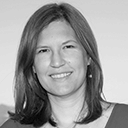
Rossetto Tiziana
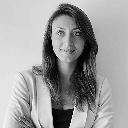
Del Zoppo Marta
| First name | Last name | Country | Affiliation |
|---|---|---|---|
| Rossetto | Tiziana | United Kingdom | University College London |
| Del Zoppo | Marta | Italy | University of Naples Federico II |
| Barbosa | Andre | United States | Structural Engineering |
| Robertson | Ian | United States | University of Hawaii at Manoa |
| Kabeyasawa | Toshikazu | Japan | Faculty of Urban Environmental Sciences |
| Nistor | Ioan | Canada | University of Ottawa |
| Lehman | Dawn | United States | University of Washington |
| Prota | Andrea | Italy | Universita di Napoli Federico II |
| Baiguera | Marco | United Kingdom | University of Southampton |
| Pitilakis | Kyriazis | Greece | Aristotle University of Thessaloniki |
| Dias | Priyan | Sri Lanka | University of Moratuwa |
| Goda | Katsu | Canada | Western University |
| Cox | Daniel | United States | Oregon State University |
| Chock | Gary | United States | Martin, Chock & Carden, Inc. |
| Palermo | Dan | Canada | York University |
| Catalan | Patricio | Chile | |
| Reis | Cláudia | United States | Instituto Superior Técnico |
| McGovern | David | United Kingdom | London South Bank University |
| Arikawa | Taro | Japan | Chuo University |
| Wüthrich | Davide | Netherlands | |
| Cels | Jonas | United Kingdom | |
| Foster | Andrew | United Kingdom | |
| Chandler | Ian | United Kingdom | HR Wallingford |
| Di Ludovico | Marco | Italy | University of Naples |
| De Risi | Maria Teresa | Italy | University of Naples Federico II |
| Thamboo | Julian | Sri Lanka | South Eastern University of Sri Lanka |
| Adams | Keith | United Kingdom | |
| Dimakopoulos | Angelos | Greece | University Campus, Rio, Patra |
| Hammer | Tim | Germany |
TG2.14 - Open-source code development by the fib
The fib has started developing an open-source Python package containing models from the fib Model Code. Github is used as a platform for version control and code collaboration. On the long-term, this package should contain all models in the fib Model Code. When sufficiently mature, the package should be published on PyPI.org to arrange for easy distribution. The package should be published with a license that grants the user flexible rights to use, study, edit and publish the source code, without warranty of any kind.
Primary objective of the TG: serve as a team of core developers or maintainers of the Python package. This includes, but is not limited to:
- Contribute code to the package.
- Respond to issues that are reported and initiate relevant actions.
- Maintain a CI/CD, continuous integration and continuous delivery, pipeline.
- Review contributions from the community, and merge these when properly matured.
The fib seeks contributions from the fib and the engineering community as a whole.

Morten Engen
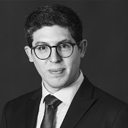
Diego Alexandro Talledo
| First name | Last name | Country | Affiliation |
|---|---|---|---|
| Engen | Morten | Norway | Multiconsult AS |
| Fernández-Ordóñez | David | Switzerland | fib |
| Talledo | Diego | Italy | University IUAV of Venice |
| González de la Morena | Daniel | Spain | Fhecor |
| García Hernando | Javier | Spain | Fhecor |
| Mestre | Carlos | Spain | Fhecor |
| Pérez Caldentey | Alejandro | Spain | FHECOR Ingenieros Consultores/Universidad Politécnica de Madrid |
| Slobbe | Arthur | Netherlands | TNO |
| Ehsman | Jemma | Australia | Rio Tinto - Dampier Salt |
| Eumelen | Gijs | Netherlands | TNO |
| Sawhney | Himanshu | India | Ramboll |
TG2.15 - Bridges with combined reinforcement
Unbonded – external post-tensioning (PT) tendons are gaining interest world-wide within the concrete bridge community. The ability to address unforeseen issues has always been valued by bridge engineers and unbonded external PT tendons provide bridge designers and owners the flexibility to address these issues through their ability to be replaced while the bridge is in-service. Four countries, France, Germany, Japan, and United States are using this technology to provide tendon replaceability.
The use of unbonded tendons has led to components with both bonded and unbonded prestressing and/or mild reinforcement. Research has shown that the use of mixed reinforcement conditions (i.e. bonded and unbonded PT with and without mild reinforcement) in concrete members has structural implications (UF Report). Most current specifications consider their design approach as conservative for the design of components with mixed reinforcement conditions. However, research has shown that the performance and appropriate design of these members is complex and comprehensive guidance is needed to educate engineers on the design of these unique components. Therefore, there is a great need for clear design guidance to bridge designers on this unique and increasingly popular posttensioned component.
This guidance can have at least four purposes: i) provide background information on the performance of mixed reinforced elements with varying amounts of unbonded to bonded PT ratios, ii) synthesize current codified design methods for members with mixed reinforcement, iii) develop guidance on appropriate analysis methods, and iv) develop design approach for flexural capacity, including resistance factors & associated ductility requirements.
The primary objective of the task group (TG) is to serve as a team of core technical reviewers for the development of this technical report. Expertise in the design of complex concrete elements and experience with design methods for mixed reinforced members is desired.
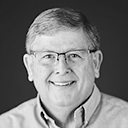
John Corven
Oguzhan Bayrak
| First name | Last name | Country | Affiliation |
|---|---|---|---|
| A Corven | John | United States | Hardesty & Hannover Convener |
| Bayrak | Oguzhan | United States | Univ. of Texas at Austin |
| Fernández-Ordóñez | David | Switzerland | fib |
| Gläser | Christian | Germany | DYWIDAG-Systems International |
| Gnägi | Adrian | Switzerland | VSL International Ltd. |
| Vítek | Jan | Czech Republic | Metrostav a. s. |
| Ciccone | Tommaso | Italy | TENSA (Tensacciai s.r.l.) |
| Holt | Reggie H. | United States | Federal Highway Administration |
| Potter | Will | United States | Florida Department of Transportation |
| Brice | Richard | United States | Washington DOT |
| Hunsicker | Gregory | United States | OnPoint Engineering and Technology LLC |
| Zivanovic | Ivica | France | Freyssinet |
| Pfutner | Jerry | United States | COWI |
| Paspastergiou | Dimitrios | Switzerland | FEDRO |
| Garber | David | United States | FHWA |
| Nakamura | Eisuke | Japan | Public Works Research Institute |