
Motivation
Commission 1 (COM1) seeks to encourage and develop good practices in the design of concrete structures, with a special emphasis on innovation and imagination. Its work should complement national, regional (e.g. Eurocodes), as well as international codes (e.g. the fib Model Code for Concrete Structures 2010), which in principle give only design specifications.
Scope and objective of technical work
COM1 examines all aspects of specific types of structures, from their structural and architectural design to construction and service life.
COM1 aims to provide state-of-the-art documentation and recommendations for all types of structures where structural concrete plays a significant role. This will apply in priority to fields of development where data and guidelines are not yet available, either new types of structures or implementation of new developments of materials, or a combination of both. COM1 endeavours to promote practices leading to sound, economical, durable and aesthetic design, with special attention to sustainable development principles.
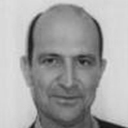
Alberto Meda

Arianna Minoretti
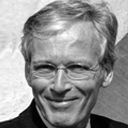
Aad van der Horst
| First name | Last name | Country | Affiliation |
|---|---|---|---|
| Bastien | Josée | Canada | University Laval |
| Kasuga | Akio | Japan | School of Engineering |
| Clark | Gordon | United Kingdom | Consultant |
| Plizzari | Giovanni | Italy | University of Brescia |
| van der Horst | Aad | Netherlands | |
| Truby | Andrew | United Kingdom | Truby Stevenson Ltd |
| Olsen | Tor Ole | Norway | T.O.Olsen AS |
| Meda | Alberto | Italy | University of Rome “Tor Vergata” |
| Forbes | Jim | Australia | Arcadis |
| Curbach | Manfred | Germany | Technische Univ. Dresden |
| Fernández-Ordóñez | David | Switzerland | fib |
| Moussard | Michel | France | Consultant |
| Ikeda | Shoji | Japan | Hybrid Research Inst. Inc. |
| Virlogeux | Michel | France | Virlogeux Consulting |
| Corres | Hugo | Spain | FHECOR Ingenieros Consultores |
| Delemont | Thierry | Switzerland | T-ingenierie SA |
| Minoretti | Arianna | Norway | Statens vegvesen |
- TG1.1 - Bridges
- TG1.2 - Concrete structures in marine environments
- TG1.3 - Buildings
- TG1.4 - Tunnels
- TG1.5 - Structural sustainability
- TG1.6 - History of concrete structures
- TG1.7 - Construction of concrete structures
- TG1.8 - Concrete industrial floors
TG1.1 - Bridges
Task Group 1.1 (TG1.1) is dedicated to bridge engineering. All types of bridges are concerned, with a predominance of concrete bridges. Theoretical and practical aspects are treated, as well as construction techniques. Innovations and recent developments but also established good practices are highlighted. Emphasis is placed on bridge architecture and design.
The general objective of the task group is to provide design guides, recommendations, practical design rules and technical advice on bridge design and related construction techniques. Rules of good practice and recommendations for the correct use of materials and techniques are formulated.
| First name | Last name | Country | Affiliation |
|---|---|---|---|
| Imberty | Florent | France | Razel SA |
| Morgenthal | Guido | Germany | Bauhaus University |
| Kasuga | Akio | Japan | School of Engineering |
| Curran | Peter | United Kingdom | Ramboll UK |
| Astiz Suarez | Miguel Angel | Spain | Carlos Fernandez Casado S. L. |
| Marx | Steffen | Germany | Technische Universität Dresden |
| Schlaich | Mike | Germany | Partner at sbp |
| Fernández-Ordóñez | David | Switzerland | fib |
| Delemont | Thierry | Switzerland | T-ingenierie SA |
| Sobrino | Juan | Spain | Pedelta, S. L. |
| Kashani | Mohammad Mehdi | United Kingdom | Associate Professor of Structural Engineering |
| First name | Last name | Country | Affiliation |
|---|---|---|---|
| Fackler | Thomas | Germany | Schlaich Bergermann und Partner GmbH |
| Seidl | Günter | Germany | SSF Ingenieure AG |
| Schmitt | Patrice | France | SNCF |
| Marx | Steffen | Germany | Technische Universität Dresden |
| Fernández-Ordóñez | David | Switzerland | fib |
| Astiz Suarez | Miguel Angel | Spain | Carlos Fernandez Casado S. L. |
| Sobrino | Juan | Spain | Pedelta, S. L. |
| Sun | Junling | China | Sun Engineering Consultants Intl., Inc. |
| Kang | Chongjie | Germany | |
| Ostwald | Lorenz | Germany |
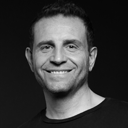
Alessandro Parlermo

Jessica Sanderberg
| First name | Last name | Country | Affiliation |
|---|---|---|---|
| Dicleli | Murat | Turkey | Middle East Technical University |
| Wenger | Philipp | Germany | schlaich bergermann partner |
| Breña | Sergio | United States | University of Massachusetts Amherst |
| Jandin | Philippe | France | CEREMA |
| Havy | Rémi | France | ARCADIS |
| Collin | Peter | Sweden | Luleå University of Technology |
| Champenoy | Damien | France | CEREMA |
| Almeida | João | Portugal | Instituto Superior Técnico Lisboa |
| Moussard | Michel | France | Consultant |
| Laaksonen | Anssi | Finland | Tampere University of Technology |
| Marx | Steffen | Germany | Technische Universität Dresden |
| Pérez Caldentey | Alejandro | Spain | FHECOR Ingenieros Consultores/Universidad Politécnica de Madrid |
| Palermo | Alessandro | United States | University of California, San Diego |
| Kaufmann | Walter | Switzerland | ETH Zürich |
| Fernández-Ordóñez | David | Switzerland | fib |
| Muttoni | Aurelio | Switzerland | École polytechnique fédérale de Lausanne (EPF Lausanne) |
| Inoue | Susumu | Japan | Osaka Institute of Technology |
| Sanchez | Marcos | Ireland | ARUP |
| Sandberg | Jessica | United Kingdom | Atkins |
| Stefanidou | Sotiria | Greece | Aristote University of Thessaloniki |
| Tej | Petr | Czech Republic | Czech Technical University |
| Herbers | Max | Germany | University of Dresden |
| Al-Ani | Moustafa | New Zealand | |
| Briseghella | Bruno | China | Fuzhou University |
| Tabatabai | Habib | United States | University of Wisconsin-Milwaukee |
| Michel | Jerome | France | Cerema |
| First name | Last name | Country | Affiliation |
|---|---|---|---|
| Fernández-Ordóñez | David | Switzerland | fib |
| Srinivasan | Gopal | United Kingdom | Arup |
| Ezzat | Sherif | Egypt | econstruct |
| Lam | Huy | France | Systra |
| Nihei | Tatsuya | Japan | Railway Technical Research Institute |
| Chen | Chiayu | Taiwan, Province of China | TYLIN International Group |
- Assessment of Structural Vulnerability
- Corrosion Impact on Remaining Service Life of Bridge
- Low-Carbon Repair and Strengthening Methods
- Integration with Sustainable Design and Assessment Practices
- Seismic Performance Consideration
- Collaboration and Knowledge Sharing
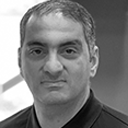
Mohammad Mehdi Kashani
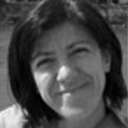
Zila Rinaldi
| First name | Last name | Country | Affiliation |
|---|---|---|---|
| Fernández-Ordóñez | David | Switzerland | fib |
| Kashani | Mohammad Mehdi | United Kingdom | Associate Professor of Structural Engineering |
| Rinaldi | Zila | Italy | University of Rome “Tor Vergata” |
| Meda | Alberto | Italy | University of Rome “Tor Vergata” |
| Delemont | Thierry | Switzerland | T-ingenierie SA |
| Pecce | Maria Rosaria | Italy | University of Naples Federico II |
| Hendy | Chris | United Kingdom | Atkins |
| O'Connor | Alan | Ireland | University of Dublin |
| Kasuga | Akio | Japan | School of Engineering |
| Belletti | Beatrice | Italy | Univ. degli Studi di Parma - Engineering and Architecture |
| Minelli | Fausto | Italy | University of Brescia |
| Minoretti | Arianna | Norway | Statens vegvesen |
| Martius-Hammer | Tor | Norway | SINTEF AS |
| Zhang | Fengqiao | Netherlands | TU Delft |
| Georgantzia | Evangelia | United Kingdom | City University of London |
| Salter | Alex | United Kingdom | Ramboll UK |
| Shafei | Behrouz | United States |
TG1.2 - Concrete structures in marine environments
Well-designed, well-built concrete structures are particularly suited for the marine environment. Task Group 1.2 has so far focused on structures for oil and gas fields in hostile marine environments (fib Bulletin 50) and on concrete structures in marine environments in general (fib Bulletin 91). A special focus has been done on floating tube bridges to help the designers to consider this promising alternative (fib Bulletin 96).
Significant experience has been gained from the design and construction of offshore concrete structures of the world and concrete has shown the possibility to design durable structures also in aggressive marine environment.
The topic of durability is, nowadays, more and more important, especially considering the goals on sustainability that the community is required to reach. Durable, safe and sustainable floating concrete structures will provide an important alternative in a future with lack of space on land and new technological solutions, for example for renewable energy production, that are continuously approaching the market.
| First name | Last name | Country | Affiliation |
|---|---|---|---|
| Olsen | Tor Ole | Norway | T.O.Olsen AS |
| Fernández-Ordóñez | David | Switzerland | fib |
| Haugerud | Stein Atle | Norway | Dr. techn. Olav Olsen a.s. |
| Minoretti | Arianna | Norway | Statens vegvesen |
| Komatsu | Satoshi | Japan | |
| Jackson | Gordon | United Kingdom | Arup Energy |
| Meda | Alberto | Italy | University of Rome “Tor Vergata” |
| van der Horst | Aad | Netherlands | |
| Perotti | Federico | Italy | Politecnico di Milano |
| Shanshan | Cheng | United Kingdom | University of Plymouth |
| Martinelli | Luca | Italy | Politecnico di Milano - Dep. of Civil and Environmental Engineering |
| Novello | Marco | Italy | Sapeim |
| Burgueño | Emilio | Argentina | BCD Ingeniería |
| Bamonte | Patrick | Italy | Politecnico di Milano |
| MENDOZA | RODOLFO JR | Philippines | PETRO JIKKEN / DE LA SALLE UNIVERSITY |
| First name | Last name | Country | Affiliation |
|---|---|---|---|
| Olsen | Tor Ole | Norway | T.O.Olsen AS |
| Esteban Lefler | Francisco | Spain | FCC Construction |
| Rogne | Harald | Norway | Olav Olsen |
| Gudmestad | Ove Tobias | Norway | University of Stavange |
| Godejord | Arnstein | United States | Arup |
| Østlund | Hilde Benedikte | Norway | Kværner |
| Paschalis | Mike | Belgium | BESIX |
| Rettedal | Wenche | Norway | Statoil |
| Wike | Tom | Norway | ØKAW |
| Larssen | Rolf | Norway | Aas Jacobsen |
| Vache | Michel | France | Doriseng |
| Hjorteset | Kåre | United States | BergerABAM |
| Zich | Milos | Czech Republic | Strasky, Husty and Partners |
| Jackson | Gordon | United Kingdom | Arup Energy |
| Thorsen | Kjetil | Norway | Snøhetta |
| Helland | Steinar | Norway | S Helland Konsult |
| Almeida | João | Portugal | Instituto Superior Técnico Lisboa |
| Gnägi | Adrian | Switzerland | VSL International Ltd. |
| Kanstad | Terje | Norway | The Norwegian Univ.of Science & Tech |
| Kalny | Milan | Czech Republic | Pontex Ltd. |
| Fernández-Ordóñez | David | Switzerland | fib |
| Haugerud | Stein Atle | Norway | Dr. techn. Olav Olsen a.s. |
| Muttoni | Aurelio | Switzerland | École polytechnique fédérale de Lausanne (EPF Lausanne) |
| Stucchi | Fernando | Brazil | ABECE/EGT |
| Peset Gonzales | Luis | Spain | Dragados SA |
| Hamon | Michel | France | Doris Engineering |
| Haynes | Scott | Hong Kong | VSL |
| Notenboom | Paul | Netherlands | Arcadis |
| Rozier | Christophe | France | Bouygues Travaux Publics |
| Van der Vliet | Coen | Netherlands | Arcadis |
| Corres | Hugo | Spain | FHECOR Ingenieros Consultores |
| Jenssen | Dag Nikolay | Norway |
| First name | Last name | Country | Affiliation |
|---|---|---|---|
| Jackson | Gordon | United Kingdom | Arup Energy |
| Fernández-Ordóñez | David | Switzerland | fib |
| Haugerud | Stein Atle | Norway | Dr. techn. Olav Olsen a.s. |
| Minoretti | Arianna | Norway | Statens vegvesen |
| Isaksen | Bjørn | Norway | Norwegian Road Administration |
| Corres | Hugo | Spain | FHECOR Ingenieros Consultores |
| Olsen | Tor Ole | Norway | T.O.Olsen AS |
| Novello | Marco | Italy | Sapeim |
| Kawabata | Yuichiro | Japan |
| First name | Last name | Country | Affiliation |
|---|---|---|---|
| Martinelli | Luca | Italy | Politecnico di Milano - Dep. of Civil and Environmental Engineering |
| Fernández-Ordóñez | David | Switzerland | fib |
| Perotti | Federico | Italy | Politecnico di Milano |
| Landolfo | Raffaele | Italy | Università degli Studi di Napoli "Federico II" |
| Mazzolani | Federico | Italy | Università degli Studi di Napoli "Federico II" |
| Faggiano | Beatrice | Italy | Università degli Studi di Napoli "Federico II" |
| Xiang | Yiqiang | China | Zhejiang University |
| Shen | Yonggang | China | Zhejiang University |
| Geuzaine | Margaux | Belgium | NatHaz Modeling Laboratory |
| Del Zoppo | Marta | Italy | University of Naples Federico II |
| Foti | Francesco | Italy | Politecnico di Milano |
| Dai | Jian | Norway | OsloMet – Oslo Metropolitan University |
| Lovane | Giacomo | Italy | Università degli Studi di Napoli "Federico II" |
| First name | Last name | Country | Affiliation |
|---|---|---|---|
| Massari | Giovanni | Italy | SAIPEM |
| Fernández-Ordóñez | David | Switzerland | fib |
| Novello | Marco | Italy | Sapeim |
| Fjendbo | Simon | Denmark | DTI - Danish Technological Institute |
| Gastaldi | Matteo | Italy | Politecnico of Milano |
| Samarakoon | Samindi | Norway | University of Stavanger |
| Corazza | Carola | Italy | HBK |
| Gennaro | Claudia | Italy | SISGEO |
| Lando | Thibaut | France | Antea Group |
| Maiah | Hadeel | United Arab Emirates | Gulf Survey |
| Blin | Régis | Switzerland | SMARTEC SA |
| First name | Last name | Country | Affiliation |
|---|---|---|---|
| Fernández-Ordóñez | David | Switzerland | fib |
| Olsen | Tor Ole | Norway | T.O.Olsen AS |
| Shanshan | Cheng | United Kingdom | University of Plymouth |
| Ferrara | Liberato | Italy | Politecnico di Milano |
| Bamonte | Patrick | Italy | Politecnico di Milano |
| Jackson | Gordon | United Kingdom | Arup Energy |
TG1.3 - Buildings
The use of concrete in Building Structures is widespread throughout the world and is generally well documented in the various national codes and standards. There are however a number of areas where guidance to designers is unclear or where significant interpretation is required. The aim of this task group is to review the current design and construction approaches used and to identify where additional guidance is required. Where it is felt necessary, the group will undertake the appropriate literature searches, review the available current guidance and produce new design advice and recommendations in the form of fib bulletins.
The main goals of TG1.3 main goals are to:
- identify how recent improvements in concrete knowledge and technology are, or could be, applied to building structures;
- prepare state-of-the-art reports, guidelines and recommendations on the use of concrete in the design and construction of concrete buildings.
| First name | Last name | Country | Affiliation |
|---|---|---|---|
| Keliris | George | United Kingdom | Buro Happold Ltd. |
| Mckechnie | Steve | United Kingdom | Arup |
| Jaeger | Jean Marc | France | SETEC TPI |
| Fraser | Andrew | United Kingdom | Ramboll UK |
| Leflour | Pierre | France | Setec tpi |
| Reynolds | Richard | United Kingdom | Buro Happold |
| Silva Lobo | Paulo | Portugal | University of Madeira-Funchal |
| Burridge | Jenny | United Kingdom | The Concrete Centre |
| Cammelli | Stefano | United Kingdom | BMT Fluid Mechanics Ltd. |
| Mansell | Phil | United Kingdom | Robert Bird |
| Banks | Colin | United Kingdom | Laing O’Rourke |
| Truby | Andrew | United Kingdom | Truby Stevenson Ltd |
| Surendran | Nadarajah | United Kingdom | PRAETER Engineering Ltd |
| Marsh | Stuart | United Kingdom | Skidmore Owings & Merrill LLP |
| Chiorino | Mario Alberto | Italy | Politecnico di Torino |
| Cairns | John | United Kingdom | Heriot-Watt University |
| Dahl | Kaare | Denmark | Rambøll |
| Fernández-Ordóñez | David | Switzerland | fib |
| Wells | Jeremy | United Kingdom | WSP |
| Zygouris | Nick | Greece | Lithos Consulting Engineers |
| Palmisano | Fabrizio | Italy | PPV Consulting Studio Palmisano Perilli Associati |
TG1.4 - Tunnels
Transports, mining, water management, energy network development, combined with environmental concern, are leading to a large increase of tunneling works around the World. As structural concrete plays a primary role, among other materials, for the realization of those works, it appears that many issues related to the use of concrete in tunnels ought to be addressed, in order to allow and promote the best use of structural concrete in this field of civil engineering.
The main goals of TG1.4 main goals are to:
- identify how recent improvements in concrete knowledge and technology are, or could be, applied to tunnels, and how new developments in tunnel construction can rely upon concrete technologies;
- prepare state-of-the-art reports, guidelines, recommendations for the use of concrete in tunnels design and construction.
| First name | Last name | Country | Affiliation |
|---|---|---|---|
| Dehn | Frank | Germany | KIT Karlsruher Institut für Technologie |
| Edvardsen | Carola K. | Denmark | Cowi AS |
| Meda | Alberto | Italy | University of Rome “Tor Vergata” |
| Fernández-Ordóñez | David | Switzerland | fib |
| De la Fuente | Albert | Spain | Universitat Politècnica de Catalunya |
| Tiberti | Giuseppe | Italy | University of Brescia |
| Giuliani-Leonardi | Sylvie | France | Vinci Construction Grands Projets |
| Psomas | Sotiris | United Kingdom | Morgan Sindall |
| van den bos | ab | Netherlands | NLyse |
| Bouteille | Sébastien | France | Développement durable |
| di Carlo | Fabio | Italy | University of Rome Tor Vergata |
| Eddie | Colin | United Kingdom | CECL |
| Mangione | Michele | United Kingdom | ARUP |
| Spagnuolo | Simone | Italy | University of Rome "Tor Vergata" |
| Spyridis | Panagiotis | Germany | |
| Cepok | Agnieszka | Poland |
TG1.5 - Structural sustainability
Recently, sustainability has been discussed with regard to materials, recycling and so on, relating to the reduction of CO2 emissions. However, sustainability has another aspect, for example, the structure, design and construction, which can lead to reducing energy consumption and non-renewable resources over the course of the full life-time of a structure. Minimising energy consumption and non-renewable resources, will be discussed in the context of environmental, social and economic aspects in order to provide sustainable solutions for our society. These discussions will be key for developing sustainable structures. This philosophy is defined as “Structural Sustainability”.
The aim of this Task Group is to focus on minimising energy consumption and non-renewable resources during the life-time of structures from the structural point of view. Basically, the structures built using current specifications are durable. Therefore, structural sustainability should be defined as the difference from existing technologies to new ones in order to make structural sustainability clear. Examples of structural type, detailing, design, special construction techniques and so on for structural sustainability will be collected to publish a state-of-the-art report.
| First name | Last name | Country | Affiliation |
|---|---|---|---|
| Clark | Gordon | United Kingdom | Consultant |
| Kalny | Milan | Czech Republic | Pontex Ltd. |
| Kasuga | Akio | Japan | School of Engineering |
| Arizón | José | Spain | Aguacanal |
| Kata | Kenichi | Japan | Sumitomo Mitsui Consctruction Co, Ltd. |
| Almeida | João | Portugal | Instituto Superior Técnico Lisboa |
| Fehling | Ekkehard | Germany | IBB Fehling + Jungmann GmbH |
| Moussard | Michel | France | Consultant |
| Palermo | Alessandro | United States | University of California, San Diego |
| Fernández-Ordóñez | David | Switzerland | fib |
| Hajek | Petr | Czech Republic | Czech Technical University in Prague |
| Vion | Philippe | France | VINCI Construction Grands-Projets |
| Corres | Hugo | Spain | FHECOR Ingenieros Consultores |
| Garcia Troncoso | Natividad | Ecuador | Escuela Superior Politecnica del Litoral |
| Hoang | Khuyen | Japan | |
| Reggia | Adriano | Italy | |
| Regúlez | Borja | Spain | |
| Bergmeister | Konrad | Austria | Univ. Bodenkultur |
| Bigaj-van Vliet | Agnieszka | Netherlands | TNO - Buildings, Infrastructures and Maritime |
| Rueda | Lara | Spain | |
| Makhoul | Nisrine | France | |
| Spyridis | Panagiotis | Germany | |
| Doniak | Ligia | Brazil | |
| Choi | Jongkwon | Korea, Republic of | Hongik University |
TG1.6 - History of concrete structures
During the long history of CEB, FIP and now fib, the main objectives of their commissions, task groups and special activity groups were and are actual topics of research, application and dissemination.
Construction history is a rapidly growing research field in the community of architects and civil engineers. The last conference on construction history took place in Paris in July 2012 and consisted of 66 sessions. Only two of them focused on concrete and concrete construction. Furthermore, none of the key lectures was related to concrete.
The task group intends to set up a process which shall result in the publication of a series of bulletins covering the global history of structural concrete, from its first developments to the present situation.
At the beginning, it is very important to organise the extremely broad field of historic research. It is suggested to start with a narrower approach, mainly with the collection of historic material. A broader approach implies the integration of concrete history within the time, including political, social, climatic, economic and ecological circumstances. This will require more time as well as the addition of historically educated experts.
Manfred Curbach
Michel Moussard
| First name | Last name | Country | Affiliation |
|---|---|---|---|
| Clark | Gordon | United Kingdom | Consultant |
| Fernández-Ordóñez | David | Switzerland | fib |
| Trout | Edwin | United Kingdom | The Concrete Society |
| Cussigh | François | France | Vinci Construction |
| Jahren | Per | Norway | Consultant |
| Greco | Rita | Italy | Technical University of Bari - DICATECH |
| Torrenti | Jean Michel | France | Univ Gustave Eiffel |
| Curbach | Manfred | Germany | Technische Univ. Dresden |
| Moussard | Michel | France | Consultant |
| León | F. Javier | Spain | FHECOR - Ingenieros Consultores |
| Taerwe | Luc | Belgium | Ghent University |
| Acker | Paul | France | Consulting |
| Borg | Ruben Paul | Malta | University of Malta |
| Cassinello | Pepa | Spain | Universidad Politécnica de Madrid |
| Thaesler-Garibaldi | Patricia | United States |
TG1.7 - Construction of concrete structures
The areas of interest have been developed from the viewpoint that the construction process has two main components: perception related aspects and process aspects. The perception related aspects comprise materials, workmanship, formwork and scaffolding, curing of concrete, concrete surface, testing and monitoring, high performance concrete, special technologies, specifications and training/education. The process related aspects comprise the construction process of concrete structures, quality management and life cycle management.
The task group addresses state-of-the-art basic principles of the construction process of concrete structures at site. Furthermore, the task group reflects on anticipated developments, which could have a significant influence on construction. The objective is to develop awareness regarding aspects which have an impact on safety, serviceability, durability and environmental issues of concrete structures to be built on site, and to provide information as how to handle the basic principles. The output will be presented as internationally harmonised reports.
| First name | Last name | Country | Affiliation |
|---|---|---|---|
| Cayron | Fabrice | France | Bouygues Travaux Publics |
| Turmo Coderque | José | Spain | Universitat Politecnica de Catalunya |
| van der Horst | Aad | Netherlands | |
| Fischer | Oliver | Germany | Technical University Munich |
| Fernández-Ordóñez | David | Switzerland | fib |
| Srinivasan | Gopal | United Kingdom | Arup |
| Sanchez | Marcos | Ireland | ARUP |
| Bernardo Gutiérrez | Héctor | Spain | Pontem Engineering Services |
| Walford | Corin | United Kingdom | |
| Spirkl | Sebastian | Germany | |
| Rauch | Fabian | Germany | Wayss & Freytag Ingenieurbau AG |
| Tošić | Nikola | Spain | Universitat Politècnica de Catalunya |
| Furtado | André | Portugal | Instituto Superior Tecnico, Universidade de Lisboa |
TG1.8 - Concrete industrial floors
Concrete is often used for industrial floors that are designed to withstand static and dynamic loads as well as the degradation caused by operations and the environment.
Industrial floor must be properly designed for resisting point and distributed loads due to shelves and vehicles present on the floor. Seismic action transmitted by shelves must be considered in seismic areas.
Shrinkage phenomena play a major role since they provoke early age cracks that can be controlled by contraction joints that are likely to damage due to wheel crossing.
Another important issue is represented by the top finishing layer that had to be properly designed to resist abrasion.
Main scope of the Task Group is to briefly describe the most important issues in concrete technology for industrial floors, give relevant references to important literature, describe important design premises, give guidance to potential improvements and maintenance. Some attention will be also devoted to refurbishing of existing floors.
| First name | Last name | Country | Affiliation |
|---|---|---|---|
| Pirovano | Gianluigi | Italy | |
| Pollet | Valérie | Belgium | BBRI-Rilem |
| Serna Ros | Pedro | Spain | Univ. Politecnica de Valencia-Icitech |
| Silfwerbrand | Johan | Sweden | KTH Royal Institute of Technology |
| Meda | Alberto | Italy | University of Rome “Tor Vergata” |
| Plizzari | Giovanni | Italy | University of Brescia |
| Fernández-Ordóñez | David | Switzerland | fib |
| Barragan | Bryan | France | OCV Chambery International |
| Holschemacher | Klaus | Germany | HTWK Leipzig |
| Bonakdar | Amir | United States | Euclid Chemical – ACI |
| Conforti | Antonio | Italy | University of Brescia |
| Corominas | Carles Cots | Spain | BASF |
| De la Fuente | Albert | Spain | Universitat Politècnica de Catalunya |
| Dieryck | Vinciane | Belgium | BBRI |
| Narayan | Navneet | India | Bekaert |
| Winterberg | Ralf | Malaysia | Managing Director |
| Zerbino | Raul Luis | Argentina | LEMIT-CIC |
| JOUFFREY | Francois | France | |
| Clarke | Todd | Australia | BarChip |